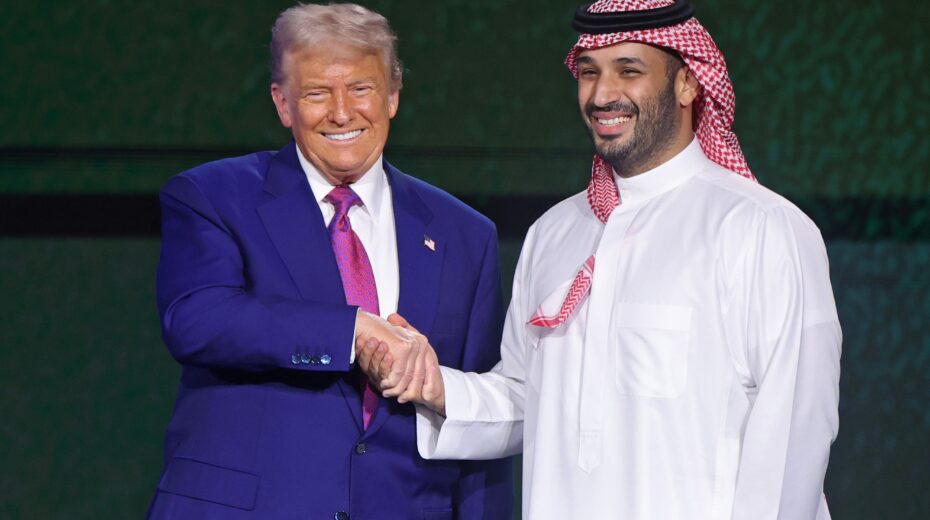

US President Donald Trump has put a clear condition on America’s emerging civilian nuclear agreement with Saudi Arabia: Riyadh must join the Abraham Accords.
The Trump administration announced this week that Washington and Riyadh had signed the legal framework for a long-term civil nuclear partnership, opening the door for American companies to help develop Saudi Arabia’s nuclear energy program. The Department of Energy described the agreement as a “decades-long, multi-billion-dollar partnership” aimed at advancing energy cooperation, US industry, and nuclear nonproliferation.
But Trump quickly added the missing political price tag.
Writing on Truth Social, the president said the deal would cover only civilian, non-military nuclear use and insisted there would be no enrichment of nuclear material. He said approval was “totally subject” to Saudi Arabia joining the Abraham Accords, the US-brokered normalization framework that began in 2020 and brought Israel into open diplomatic relations with several Arab and Muslim-majority states.
White House press secretary Karoline Leavitt reiterated that President Trump conditioned a civilian nuclear cooperation deal with Saudi Arabia on Riyadh normalizing relations with Israel, an action the kingdom has so far refused to take https://t.co/mTe43OGefS pic.twitter.com/brMGZkA1T5
— Reuters (@Reuters) July 23, 2026
Saudi Arabia has always been the big prize of the Abraham Accords process. It is the leading Sunni power, custodian of Islam’s two holiest sites, and a central player in the regional contest with Iran. Saudi normalization with Israel would further shift the region toward an Israel-centric alignment against Tehran and its proxies.
Just as importantly for Israel, it would further signal the end of Palestinian rejectionism that has for decades blocked regional advancement. Saudi Arabia had previously conditioned its joining the Abraham Accords on the establishment of a Palestinian state. Trump now insists that’s not a necessary condition, and Riyadh is likely to acquiesce in order to seal the nuclear deal.
But the emerging agreement raised some concerns in Israel. Critics warned that giving Riyadh access to American nuclear technology could complicate Israel’s qualitative military edge. Saudi Arabia says it wants nuclear power for peaceful energy purposes, but in a region shaped by Iran’s nuclear ambitions, even civilian nuclear cooperation demands strict limits and hard scrutiny.
Trump’s move restores the pressure where it belongs. If Saudi Arabia wants the benefits of a privileged strategic partnership with Washington, it should also take the step that would most transform the region: peace with Israel.
The Abraham Accords proved that Arab states do not need to wait for Palestinian vetoes before making peace with the Jewish state. Saudi Arabia now faces the same question. It can cling to old formulas, or it can help build a new Middle East.
Want more news from Israel?
Click Here to sign up for our FREE daily email updates