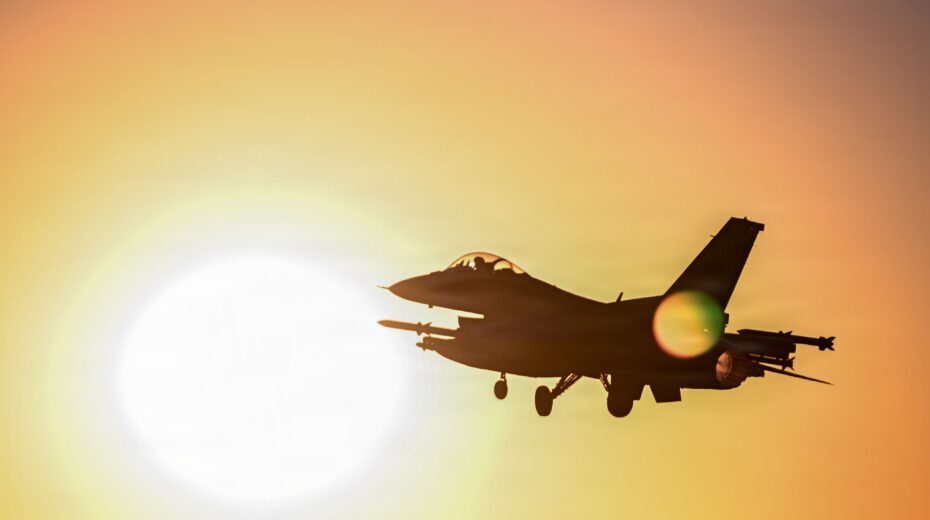

The United States intensified its air offensive against Iran overnight into Friday. According to US Central Command (CENTCOM), dozens of military targets were attacked for the sixth consecutive night. The operation was ordered by US President Donald Trump and is part of the ongoing American military campaign against the Islamic Republic.
CENTCOM reported that the attacks targeted coastal surveillance facilities, air defense sites, military logistics infrastructure, and Iranian naval installations. The operation aimed to further limit Iran’s military capabilities and reduce threats to American forces and international shipping in the Persian Gulf.
According to multiple media reports, some of the attacks targeted military installations in the Bandar Abbas area and on the strategically important island of Qeshm at the entrance to the Strait of Hormuz. Iran maintains significant naval and Islamic Revolutionary Guard Corps (IRGC) bases there.
In parallel with the air strikes, the United States is also intensifying its measures to enforce the naval blockade against Iran.
As CENTCOM reported, US Marines stopped the tanker M/T Wen Yao in the Gulf of Oman as part of an inspection operation. According to the US military, three merchant ships were also diverted, one ship was disabled for disobeying orders, and another was inspected. Washington emphasized that the Strait of Hormuz and the surrounding waters remain open to international shipping – except for vessels that violate the American blockade of Iranian ports.
U.S. Marines from the 11th Marine Expeditionary Unit conduct a verification boarding aboard M/T Wen Yao in the Gulf of Oman, July 16.
As of today, American forces have redirected 3 commercial vessels trying to run the blockade, disabled 1 that didn’t comply, and boarded 1 to… pic.twitter.com/vbjArHuLaO
— U.S. Central Command (@CENTCOM) July 16, 2026
The United States justifies its offensive with the continued Iranian attacks on international shipping and on American forces and their allies in the region. Washington emphasizes that the airstrikes are exclusively military targets and aim to significantly weaken the operational capability of the Iranian armed forces.
The evolution of American strategy is striking. While the initial attacks primarily targeted missile, drone, and air defense installations, the focus has now shifted to increasingly targeting military logistics centers, supply facilities, and transportation routes. According to multiple media reports, the American air offensive is now primarily directed against military logistics, supply facilities, and transportation routes. This is intended to restrict the Iranian armed forces’ ability to move personnel, ammunition, and equipment between their bases.
Iran responded with new missile and drone attacks on American facilities in Bahrain and Kuwait, according to Iranian state media. Reuters also reported further attacks on US positions in the Gulf region. Both sides blame each other for the escalation, while diplomatic contacts through regional mediators remain in place, according to Washington.
Trump declared that the attacks would continue as long as Iran did not cease its military actions against American forces and international shipping. At the same time, the White House emphasized that diplomatic channels remained open in principle, provided Tehran was willing to engage in serious negotiations.
In Israel, these developments are being followed with great interest. The American attacks are independent of Israeli military operations, but have immediate security implications. Any further weakening of Iran’s air defenses, navy, and military infrastructure simultaneously diminishes the capabilities of a regime that continues to openly threaten Israel with annihilation. At the same time, there is growing concern that Tehran might increasingly use its regional proxies—including the Houthis in Yemen and Shiite militias in Iraq and Syria—to further increase pressure on the US and its allies.
Want more news from Israel?
Click Here to sign up for our FREE daily email updates