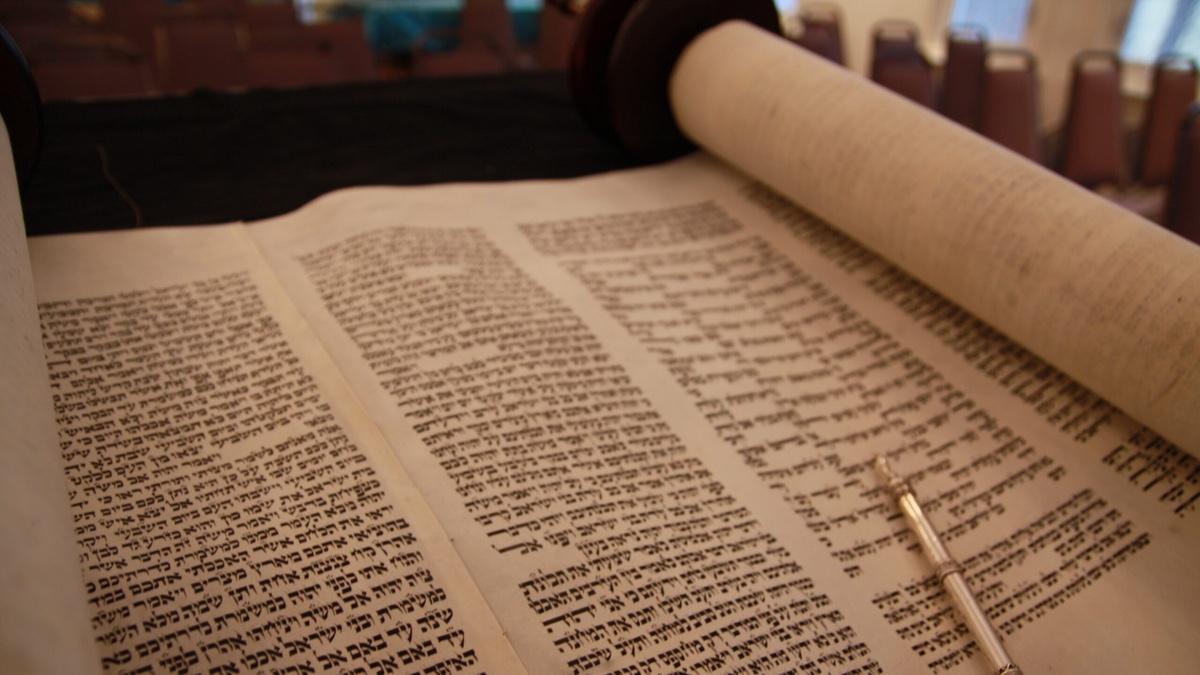
On the road to Emmaus, Yeshua met with two of His disciples and, beginning at Moses and all the Prophets, He expounded to them in all the Scriptures the things concerning Himself. (Luke 24:27). For our Torah studies this year, therefore, week by week we will seek to discover how all of Torah prepared the way for the coming Messiah.
24th January 2026 (6 Shevat)
Bo (Come): Exodus 10:1-13:16
Pesach is in just over two months’ time, when the events we are studying this week will have special remembrance in every Jewish home. It is amazing that what God commanded thousands of years ago retains its prominence. The remembrance is both testimony to the importance of Israel’s deliverance from Egypt and a testimony to the world, of the truth of what happened. It is, therefore, good to begin our meditations this week on what God has done, as an early preparation for this year’s Feast of Pesach.
This was the beginning of Israel as a nation. Israel still survives today, in fulfilment and continuance of the promises of God. This too is testimony to both God’s existence and His faithfulness to His promises to His people. If He has been faithful over thousands of years of history, we can depend on His faithfulness to complete His covenant purposes today and into the future.
The eighth and ninth plague continued to harden Pharaoh’s heart. Not even a deep and supernatural darkness, that sent awe and fear across the entire land of Egypt, broke his stubborn resolve. But this was the last opportunity before an even worse judgement came upon the Egyptians. Moses was commanded by Pharaoh never to be in his presence again (Exodus 10:28-29) lest he die, and so it was. The deliverance from Egypt was about to take place.
At the time appointed, twilight on 14 Nissan, Israel was to slaughter the Passover lambs, paint their blood on the doorposts, then roast and eat the lambs with unleavened bread and bitter herbs, in readiness for their Exodus from Egypt. The 14th day of Nissan was thereafter to be the beginning of a memorial week each succeeding year. Whilst the firstborn of all Egypt died on that awe-filled night, the firstborn of Israel lived and in that and future generations, were to be consecrated to God.
This was an unrepeatable moment in history. We must dig deeply into its implications.
A song is sung at Pesach called Dayenu, which means it would have been enough. It has been a tradition for many centuries, to sing this song. The earliest known full text of the song occurs in the first medieval Haggadah, taken from the ninth-century Seder Rav Amram. It is about being grateful to God for all of the gifts given to the Jewish people. It consists of 15 statements of what God did in freeing Israel from slavery, showing His miraculous provision and establishing them as His people. After each statement everyone around the seder table says together both solemnly and joyfully – Dayenu! The statements are:
If He had brought us out of Egypt – Dayenu (it would have been enough)
If He had executed justice upon the Egyptians – Dayenu (it would have been enough)
If He had executed justice upon their gods – Dayenu (it would have been enough)
If He had slain their first-born – Dayenu (it would have been enough)
If He had given to us their wealth – Dayenu (it would have been enough)
If He had split the sea for us – Dayenu (it would have been enough)
If He had led us through on dry land – Dayenu (it would have been enough)
If He had drowned our oppressors – Dayenu (it would have been enough)
If He had provided for our needs in the wilderness for 40 years – Dayenu (it would have been enough)
If He had fed us manna – Dayenu (it would have been enough)
If He had given us Shabbat – Dayenu (it would have been enough)
If He had led us to Mount Sinai – Dayenu (it would have been enough)
If He had given us the Torah – Dayenu (it would have been enough)
If He had brought us into the Land of Israel – Dayenu (it would have been enough)
If He built the Temple for us – Dayenu (it would have been enough)
What other nation remembers and celebrates in such a humble way what God has done? To begin with the awesome experience of what we read this week – what it took to bring Israel out of Egypt – and to declare that if this was all God did for us, it would be enough, yet to remember step by step that God did yet more: this is highly commendable.
There are other places, in Scripture, similar to this. For example, Psalm 136 begins:
Oh, give thanks to the Lord, for He is good!
For His mercy endures forever.
Then many wonderful things that God has done for Israel are recalled sentence by sentence, followed each time with the exclamation, for His mercy endures forever.
With these reflections and the attitude, it would have been enough, we might consider all God’s work as being complete in our lives and rest content on our privilege and His goodness.
But we must not stop here and limit God only to the past! He is ever-present today and He still does wondrous and new things. Indeed, He Himself declared that greater things were ahead.
To Isaiah He said:
Do not remember the former things,
Nor consider the things of old.
Behold, I will do a new thing,
Now it shall spring forth;
Shall you not know it?
I will even make a road in the wilderness
And rivers in the desert. (Isaiah 48:18-19)
Through Jeremiah God said:
Therefore, behold, the days are coming,” says the Lord, “that they shall no longer say, ‘As the Lord lives who brought up the children of Israel from the land of Egypt,’ but, ‘As the Lord lives who brought up and led the descendants of the house of Israel from the north country and from all the countries where I had driven them.’ And they shall dwell in their own land. (Jeremiah 23:7-8)
God also said through Jeremiah:
Behold, the days are coming, says the Lord, when I will make a new covenant with the house of Israel and with the house of Judah— not according to the covenant that I made with their fathers in the day that I took them by the hand to lead them out of the land of Egypt, My covenant which they broke, though I was a husband to them, says the Lord. But this is the covenant that I will make with the house of Israel after those days, says the Lord: I will put My law in their minds, and write it on their hearts; and I will be their God, and they shall be My people. No more shall every man teach his neighbour, and every man his brother, saying, ‘Know the Lord,’ for they all shall know Me, from the least of them to the greatest of them, says the Lord. For I will forgive their iniquity, and their sin I will remember no more. (Jeremiah 31:31-34)
We have a paradox – to look back and celebrate Passover, yet forget the former things and look to the new. God clearly said that Israel was always to celebrate, on 14 Nissan, the awesome things that were done for them in Egypt, and thus they have done. Yet He also points to greater things that are to come which will put even the deliverance from Egypt in a different light.
Where shall we begin? We will follow the journey of Israel from Egypt to the Promised Land, step by step in the coming weeks. We will consider how many of God’s provisions and deliverances, such as recalled in the song Dayenu, one by one, find greater fulfilment in the life and ministry of Yeshua HaMashaich. They all pointed to Him. This can be said of no other man in history.
Just as each year, the remembrance of God’s deliverance of Israel proves to us the existence of God and His character and purpose for His people, so we can simultaneously declare the fulfilment of God’s New Covenant purposes in Yeshua. This resolves the paradox. Each great thing that God did in the past brings higher and greater esteem to Yeshua, the sacrificial Lamb who, by His sacrifice, took away the sins of all who will believe in Him.
We can find relevance to our studies this week at the beginning of the Gospel account. In the days of the Second Temple, there were fields near Bethlehem where lambs were born and raised for sacrifice. The shepherds in the Bethlehem fields, who cared for these lambs to be sacrificed at Pesach and other Feasts of the Lord, were among the first to see the One who would be the sacrificial Lamb of God, as a new-born baby lying in a manger in Bethlehem. He had only just been born like one of their own lambs had so often been, to be raised spotless for sacrifice (Luke 2:8-12). Lambs like this had been raised for sacrifice since the first Passover in Egypt was inaugurated. These shepherds would be the first who could understand the higher purposes of God, focussed as they were daily on raising unblemished lambs.
Then on, through each Gospel account we, who have eyes to see and ears to hear, can see how all God’s purposes were brought to their highest fulfilment in Yeshua.
The centurion who stood by the Cross on which Yeshua was crucified said of Him, Certainly this was a righteous man (Luke 23:47). But Yeshua was more than just a righteous man. God the Father, the same God who brought Israel out of Egypt, said of Him, This is My beloved Son, in whom I am well pleased. (Matthew 3:17), and this understanding has come as a shaft of spiritual light to all who have since found faith in Yeshua, the Lamb of God who takes away the sin of the world (John 1:29).
It is right to obey God’s command to celebrate the Feast of Pesach on each 14 Nissan, remembering all that God has done, but it is now possible to raise the Feast to the highest level as we realise the how much more, of God’s purposes and also celebrate within the Feast, the greatness of God’s provision in Yeshua. This is as much true for the Christian Church as it is for Israel.
The greatness of God’s gathering, again in our day, the people of Israel into their own land, prophesied by Jeremiah, points to the special time that we are now in. We must not be stuck in the past. God’s ongoing purpose for Israel in the Land is the preparation for the return of Yeshua, as King.
Christians should not have separated the great fulfilment of Pesach – the sacrifice of Yeshua – to a different date as if disconnected from Israel’s release from Egypt. 14 Nissan is the appropriate day for the Israel of God and those grafted in, to celebrate all that God has done and look forward together to what is yet to be accomplished. This should be a point of unity for all of God’s covenant people. Pesach must no longer be only a celebration of a nation wonderfully led to their physical Promised Land: it is a foundation for the greater promise of eternal life.
Stephen, one of Yeshua’s early disciples may, if he had known it, have approved of the song Dayenu – but did not stop with only those truths when he was confronted by the council of the High Priest prior to his martyrdom. Beginning with Abraham, he recounted God’s deeds including the deliverance from Egypt, but also went on to the fulfilment of God’s New Covenant in Yeshua (Acts 7). He rebuked those who had witnessed the three and a half years’ ministry of the Son of God on earth and who had rejected what God was doing through Him.
Yeshua Himself taught how He was to be found in all the Scriptures: beginning at Moses and all the Prophets, He expounded to them in all the Scriptures the things concerning Himself. (Luke 24:27).
We have the opportunity, starting with our Bible study this week, to begin our preparations for Pesach this year, and to raise our Feast to the highest level – both believing Jew and believing Gentile.