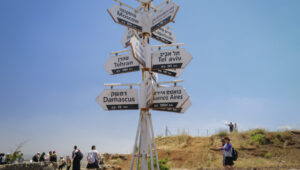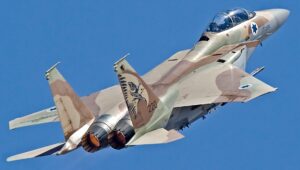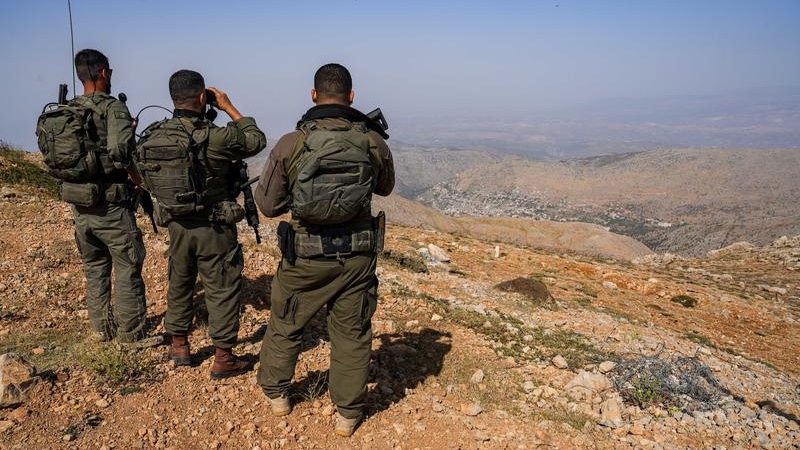
(JNS) Amid growing concerns of a new terror front opening on Israel’s northern border, the Israel Defense Forces has significantly bolstered its defenses on the Golan Heights since the fall of the Assad regime and its replacement with the Sunni al-Sharaa regime in December 2024.
This has included setting up nine IDF positions on the Syrian side of the buffer zone on the Golan Heights, launching intelligence-fueled security raids to prevent rocket and cross-border terror threats, fortifying engineering works, and digging new anti-tank trenches. Fortifying the border security fence is also part of the effort.
The Israeli objective is to prevent Sunni jihadist groups, including those who joined the new Syrian army framework, and those operating outside of it, from entrenching themselves in southern Syria, potentially planning a surprise attack on Israeli communities in the Golan Heights.
Defense Minister Israel Katz, speaking during a closed-door session of the Knesset Foreign Affairs and Defense Committee, reportedly stated on Nov. 25 that terrorists in Syria, Houthis included, plan to attack Israel.”
On November 27-28, the IDF raided the southern Syrian village of Beit Jinn to arrest terrorist operatives from the Jama Islamiyya terror organization, which is the armed faction of the Lebanese Sunni Muslim Brotherhood. The operation became entangled after the IDF unit came under fire, resulting in six IDF injuries and requiring Israeli air support. Some 20 terrorist operatives were eliminated, according to a report by the Meir Amit Intelligence and Terrorism Information Center.
Dina Lisnyansky, an expert on the Middle East and radical Islamic movements and a research fellow at the Moshe Dayan Center at Tel Aviv University, told JNS that Syrian President Ahmed Al-Sharaa is currently focused on stabilizing his rule and attracting economic investment, goals that would be shattered by a major conflict with Israel. At the same time, the border area contains jihadist forces operating outside of the regime’s directives, she assessed.
Regarding the IDF’s new fortifications, Lisnyansky stated, Unequivocally no, Israel should not remove positions,” adding, “I would not advise a withdrawal from any IDF position, from the Syrian side, certainly not at this stage.
“Now is really not in the interest of al-Sharaa to generate now invasion attacks into the State of Israel. That is, if we suddenly see any move from his side, it means that he is currently going against the will of Trump, and against the will of the Western and Arab countries that are with him currently.”
She added that “within the larger context, the interests of al-Sharaa currently are to stabilize Syria and to bring into it as many economic investments as possible.”
Lisnyansky cautioned, however, that there are indications of the presence of jihadist forces on the border with Israel. “We are talking not only about Shi’ite forces but also ISIS forces, Al-Qaeda forces,” she added, while noting that elements of the Islamist Tahrir al-Sham forces, the main rebel umbrella group headed by al-Sharaa, have amalgamated into the Syrian Army.
As a result, Lisnyansky assessed, immediate security threats to Israel certainly exist, but are unlikely to be orchestrated directly by Al-Sharaa in Damascus. Lisnyansky added, “Regarding al-Sharaa’s lack of control, it is true that he does not control certain parts that currently are also turning against him. But to say that his hand is not in the matter at all, regarding all that occurred on the border, that is simply incorrect.”
She specifically confirmed the presence of the Jamaa al-Islamiyya, a branch of the Muslim Brotherhood, operating in southern Syria independently of the regime.
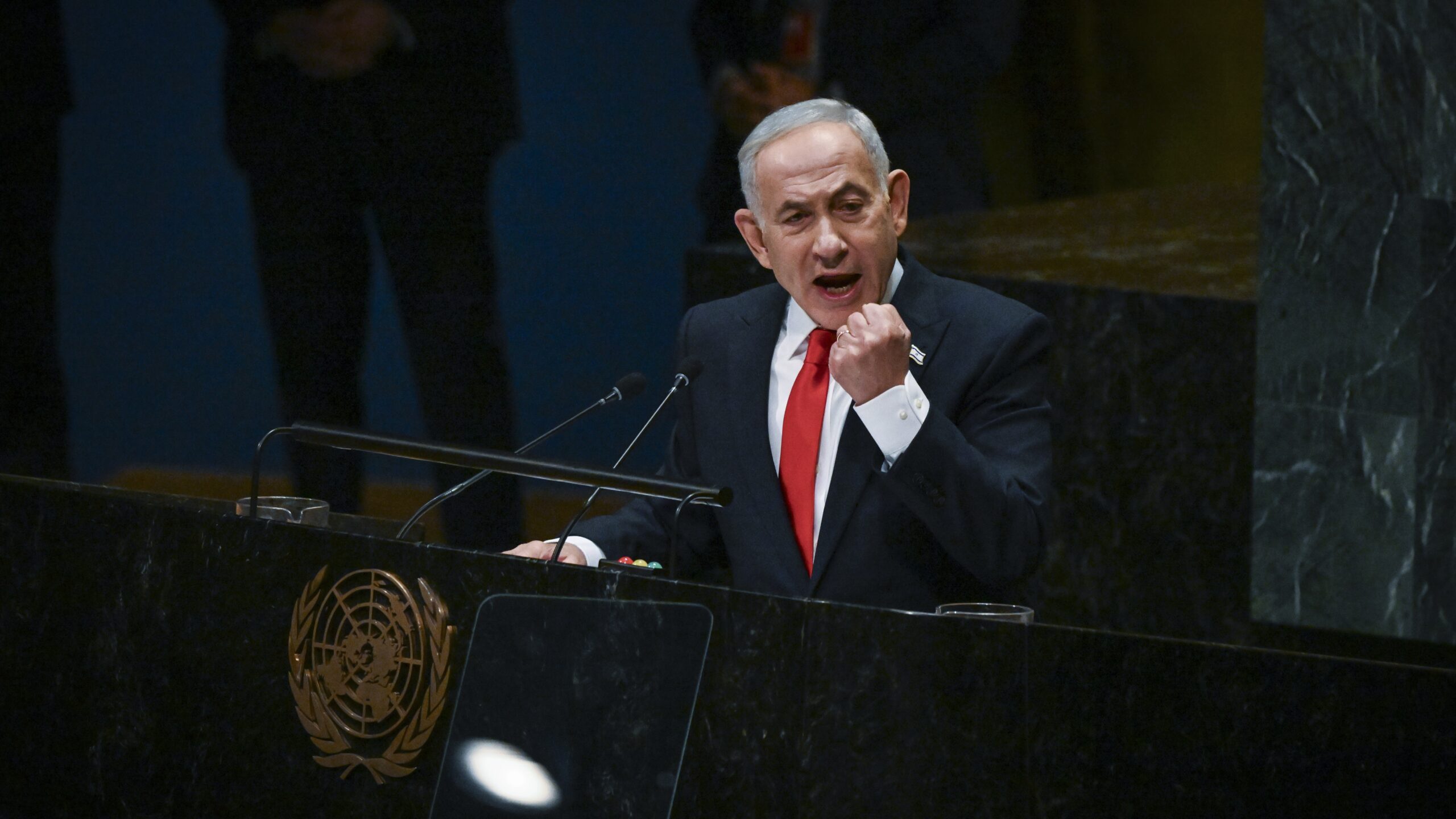
On Dec. 3, Israeli Prime Minister Benjamin Netanyahu visited soldiers wounded in recent clashes along the Syrian border, underscoring Israel’s determination to prevent hostile entrenchment near its northern communities and to safeguard its Druze allies.
Netanyahu said Israel was acting in direct response to the lessons of Oct. 7 and remained committed to defending border communities, blocking terrorist infrastructure and preventing ground and cross-border attacks. He stressed that Israel expects Syria to establish a demilitarized buffer zone extending from Damascus to the existing separation area, including the approaches to Mount Hermon and its summit.
“After Oct. 7, we are determined to defend our communities on our borders, including the northern border,” Netanyahu said. “We are determined to prevent the entrenchment of terrorists and hostile actions against us, to protect our Druze allies, and to ensure that the State of Israel is safe from ground attack and other attacks from the border areas.”
He said Israel’s continued presence in key areas was driven solely by security needs. “We hold these territories to ensure the security of the citizens of Israel, and that is what obligates us,” he added.
Netanyahu also left the door open to future diplomatic arrangements, noting, “In a good spirit and understanding of these principles, it is also possible to reach an agreement with the Syrians—but we will stand by our principles in any case.”
Prof. Eyal Zisser, a Syria expert and vice rector of Tel Aviv University and the university’s chair of contemporary Middle East history, agreed that a full-scale invasion is unlikely but warned that the chaos on the border creates a fertile ground for terror.
“I do not think there is a threat of invasion from Syria. It is not serious. But Israel does not take risks,” Zisser told JNS. “There is chaos along the border, among other things, because Israel does not let the Syrian regime establish itself there. So the vacuum is filled by all kinds of extremist groups. For example, the Jamaa al-Islamiyya that operates in Lebanon often in cooperation with Hamas and Islamic Jihad and even with Hezbollah, which established themselves in this village.”
He added, “It is a nuisance and can develop into a threat of a terror attack. [But] not a real invasion because they are isolated cells. In any case, Trump intervened and forbade Israel from acting in Syria because he is in favor of al-Sharaa. So we are limited in the ability to act. And therefore it is preferable to reach understandings with the Syrian regime, especially since it is supported by the United States.”
Zisser added that “caution is required,” stating that the threat at this time is at the level of targeted terror attacks.
Want more news from Israel?
Click Here to sign up for our FREE daily email updates