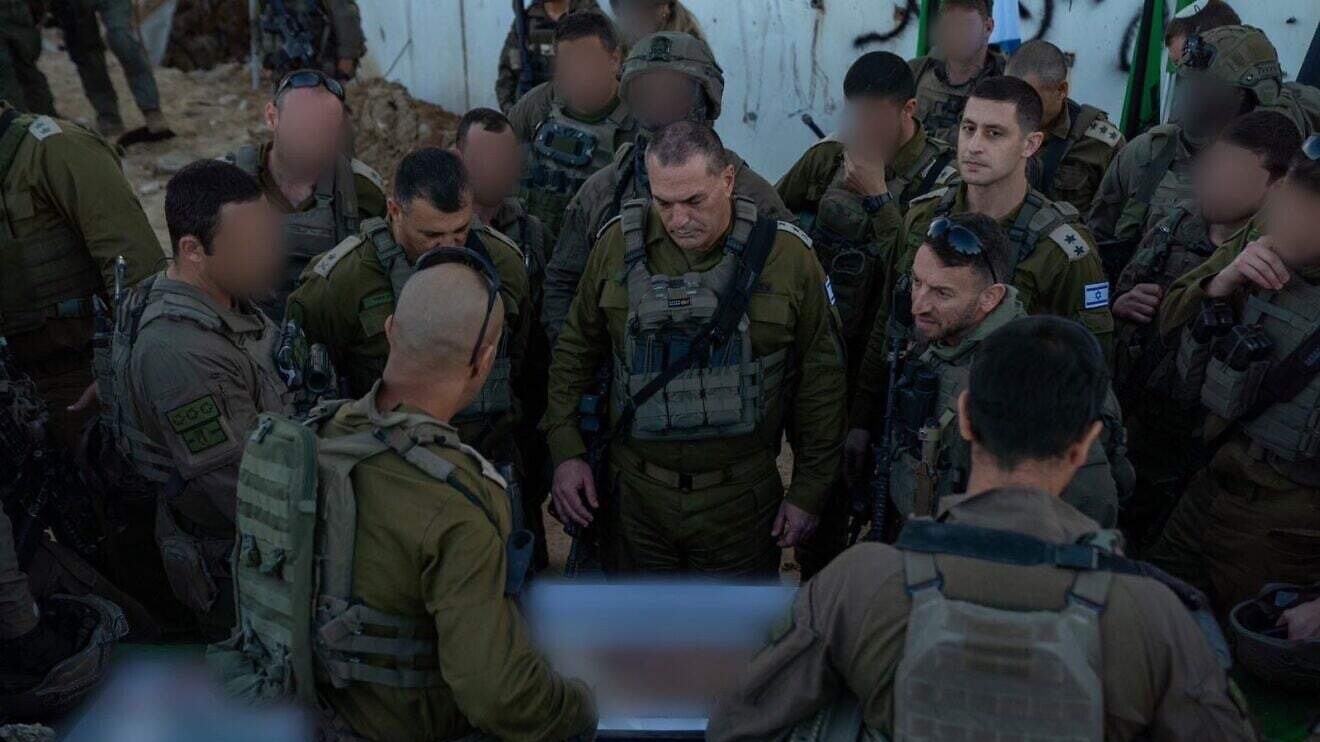
(JNS) Israel Defense Forces Chief of General Staff Lt. Gen. Eyal Zamir is heading up preparations to unveil a new multi-year plan designated “Hoshen” (Hebrew for the breastplate of the High Priest), marking a pivotal shift in the military’s strategic direction following two years of intense warfare.
The plan, being prepared by the IDF Planning Branch, is designed to steer the Israeli military’s development from 2026 to 2030.
The specific vision of the chief of staff regarding the dual efforts required by the military in the coming years: Activation of forces in all sectors and a significant buildup of forces.
The Hoshen plan will be built based on a series of IDF reviews of the Oct. 7, 2023, Hamas massacre in southern Israel and will implement lessons learned, in a process that will be led by Deputy IDF Chief of Staff Maj. Gen. Tamir Yadai.
Simultaneously with the assimilation of lessons, the multi-year plan will be built with a future outlook, based on near, medium, and long-term time slots.
For the purpose of planning the multi-year plan, the IDF chief defined a period of time for performing the staff work so that it will be concluded by the Passover holiday on April 1, and will subsequently be implemented.
The Hoshen plan derived its name from the breastplate worn by the High Priest in the Jerusalem Temples, which carried 12 stones representing the tribes of Israel, symbolizing a unified entity.
At the heart of the plan are 12 core themes, or “stones,” each led by a dedicated team headed by a major general. The symbolism of the name also relates to the critical asset of human personnel, who are seen as the heart of military command.
The 12 themes
The first and most critical theme is “People,” which the IDF identified as the foundation of its strength after years of conflict.
Specifically, conscripts, career officers and reserves are at the heart of this plan. An appointed team will formulate principles for a multi-year plan for the treatment, development, appreciation and compensation of IDF soldiers and commanders, in regular service and in reserves and IDF employees.
The second theme is “Readiness for War.” The IDF is required to strengthen and preserve its readiness for war, particularly for a surprise war in all arenas.
The plan calls for readiness with defensive and offensive plans to defeat enemies in all combat sectors and in a multi-arena war.
The third theme is a “Return to Qualification and Rehabilitation.” After two years of war, the IDF is required to deal with returning to combat qualification and a rehabilitation of combat platforms, munitions, stocks, and infrastructure. This effort is to be conducted alongside the maintenance of training while preserving alertness on the state’s borders.
The fourth theme, “Borders,” mandates a plan to fortify the borders to provide a response to a range of threats. This includes preventing enemy entrenchment near the borders, preventing infiltration, and readiness for a rapid response in the event of an attack at any border, at any time, and in all dimensions.
The fifth theme is “Air Defense and Ballistic Fire.” The IDF plans to continue operating in air defense and in the domain close to the ground in all sectors against various threats. This includes providing a response to emerging and developing threats in this field.
The sixth theme, “Third Circle and Depth,” focuses on distant threats. The IDF is required to cope with threats in distant arenas, with a focus on Iran as a central enemy. The military plans to strengthen capabilities for action and the management of campaigns in several distant arenas simultaneously.
The seventh theme is focused on “lethal Maneuver.” The war emphasized the importance of multi-domain military ground maneuvering, with an emphasis on ground forces, and the need and desire to strengthen these forces. The objective is to improve and preserve the ground maneuvering capabilities of the IDF, as well as the improvement of training and force competence.
The eighth theme of the plan is “Functional Continuity.” The IDF aims to preserve and improve its functional continuity as part of its ability to continue operating under fire in all domains. This involves ensuring the continuity of the IDF’s core arrays while using accumulated knowledge and realizing insights and lessons from the war.
The ninth theme is “Collection and Intelligence.” The IDF intends to learn its lessons in this field and increase intelligence and collection capabilities in all operational arenas.
The tenth theme is named “Digital, Information, and AI.” It calls for a plan for developing digital, information, and AI capabilities, with an emphasis on technological superiority. AI was designated as a central accelerator for IDF capabilities.
The eleventh theme is “Robotics and Autonomy.” The IDF plans to strengthen the use of robotic and autonomous tools in all domains and in every military branch.
The twelfth and final theme of the plan is named “Space.” The shift to viewing space as a warfare dimension requires a new type of IDF approach, according to the plan, and the IDF needs to prepare for this domain for many years ahead, beyond the scope of the currently forming plan.
Want more news from Israel?
Click Here to sign up for our FREE daily email updates