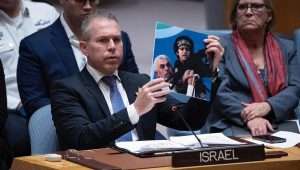

Jerusalem delivered an unusually blunt message to the United Nations this week—delivered not through another diplomatic note, but face-to-face.
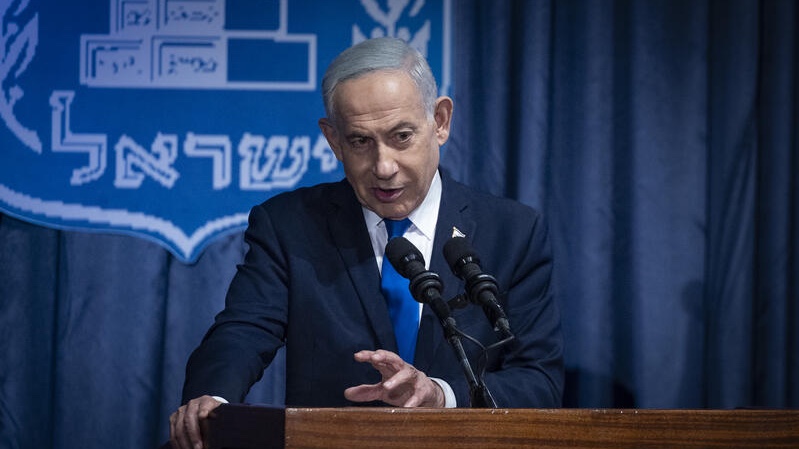
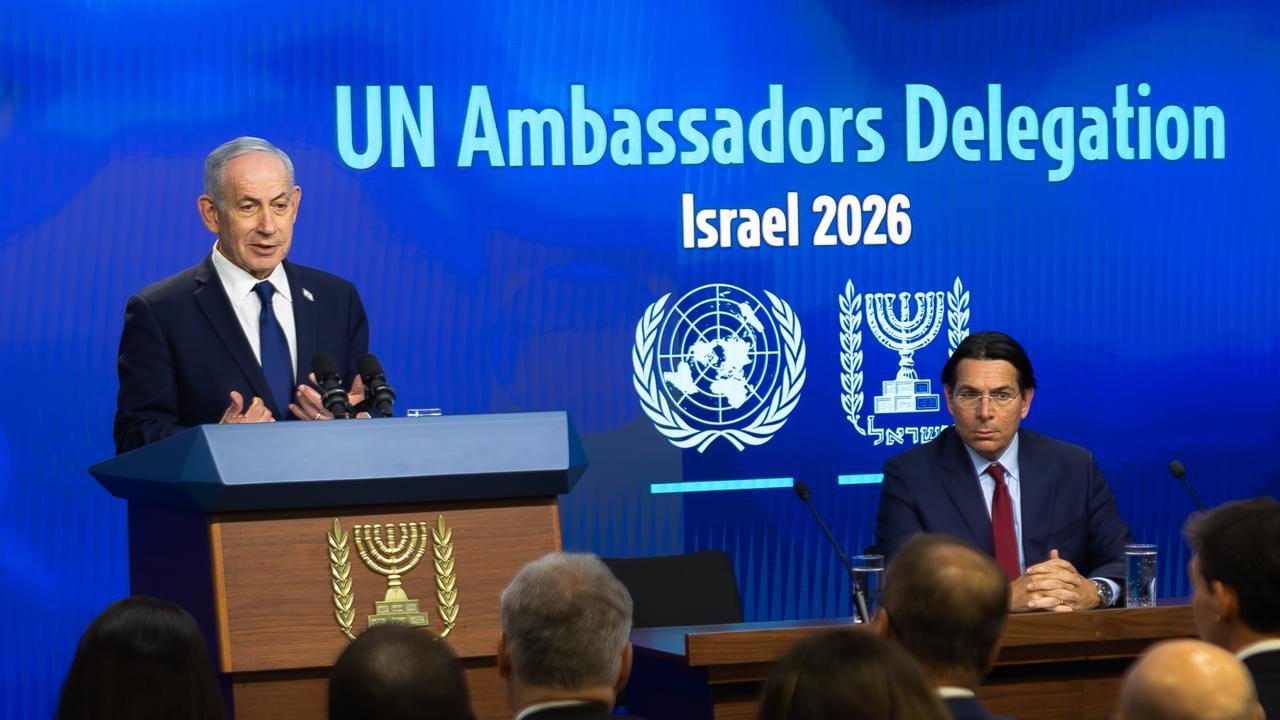
On Tuesday, Prime Minister Benjamin Netanyahu and President Isaac Herzog each met in Jerusalem with a delegation of UN ambassadors and diplomatic envoys, hosted alongside Israel’s representatives at the UN and in Washington. The theme across both meetings was consistent: Israel has survived a multi-front war, paid in blood, and learned—again—how thin the world’s “moral clarity” becomes when Jews defend themselves.
Netanyahu’s framing was historical and unapologetic. The world assumed the Holocaust would inoculate humanity against antisemitism, he told the ambassadors. Instead, he argued, it merely paused.
“People thought that after the Holocaust, antisemitism would disappear,” Netanyahu said. “No, it just took a rest, a brief respite. It has come back.”
The “only change,” he added, is that when enemies come to slaughter Jews now, Israel has the ability to stop them.
Netanyahu described the last stretch of conflict as a “seven-front war,” locating Hamas within a wider Iran-led network: Hamas, Hezbollah, the Assad regime, the Houthis, Iran itself, and associated militias. Whatever one thinks of the UN’s vocabulary preferences, Netanyahu’s point was strategic, not semantic: Israel is not dealing with isolated “flare-ups” but an ecosystem.
“We’ve just emerged from a seven-front war,” he said, describing Hamas’s chants of “Death to Israel, death to America,” and asserting Israel “rolled them back.”
In the prime minister’s telling, Israel’s deterrence rests on more than its well-known technological edge. It rests on something that doesn’t fit neatly into diplomatic communiqués: national spirit forged by civilizational memory.
“Today Israel is a very small country, but it’s a very powerful country,” Netanyahu told the delegation, crediting technology and science—but elevating the “spirit of the people” as the decisive factor. “We know that history is not going to give us another chance.”
Herzog: the UN system excuses terror, then prosecutes the response
If Netanyahu offered the strategic and historical thesis, Herzog supplied the institutional indictment.
“Nations at the UN should show moral clarity, which they don’t,” Herzog told the envoys, arguing the international system is weak because it lacks the will to fight terror without laundering it into grievance politics.
“The weakness of the international system is its lack of ability to fight terror without mercy — not justifying terror and then blaming those who fight against it, like Israel.”
That is the pattern Israel has confronted since October 7: a massacre occurs, horror is briefly acknowledged, and then the narrative machine warms up—shifting from perpetrators to “root causes,” from victims to “proportionality,” from disarmament of militias to pressure on the state trying to prevent a repeat.
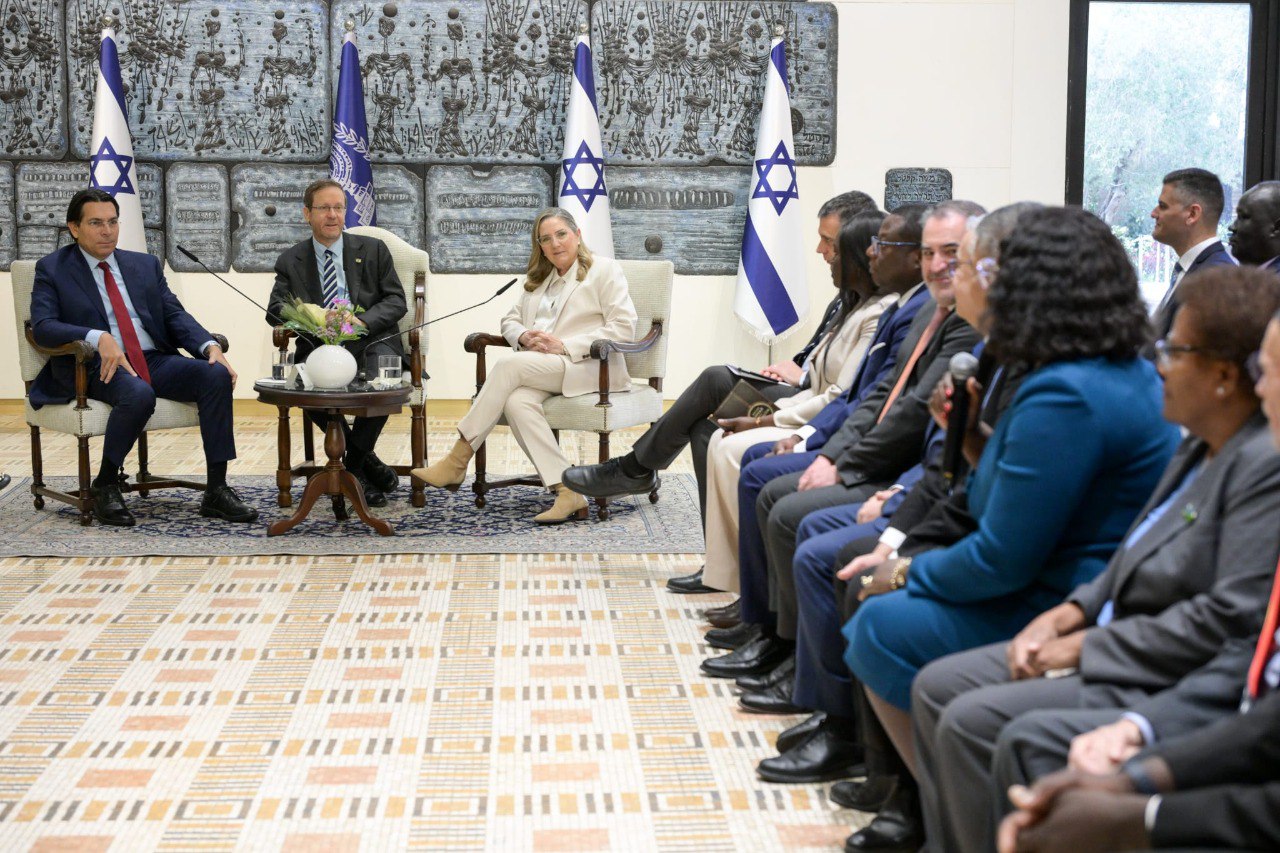
President Isaac Herzog takes UN delegates to task. Photo by Ma’ayan Toaf/GPO
Herzog’s remarks also moved from diagnosis to prescription: Gaza’s future cannot be built on slogans that ignore trauma, incentives, and the hard mechanics of enforcement.
“I vehemently support President Trump’s plan for Gaza,” Herzog said, describing what he called on-the-ground progress: hostages returning, the establishment of a “Board of Peace,” a Security Council resolution, and an operational mechanism he referred to as the CMCC, supported by multiple nations.
But Herzog added a condition that effectively separates serious plans from press-release fantasies: disarmament.
“Now the proof of the pudding is in the eating,” he said, “meaning that we will have to see that Hamas goes into the process of disarmament.”
That sentence is where most international proposals go to die. Because “disarmament” isn’t a mood. It’s coercion, verification, and consequences—precisely the things the UN system routinely avoids when the armed group in question is wrapped in the language of “resistance.”
Herzog also signaled a direct challenge to the reflexive recycling of the “two-state solution” as a diplomatic incantation.
“We cannot go to the old slogans of ‘two-state solution’ without understanding the pain, the trauma, and the new mechanisms that must be operational,” he said—an explicit demand that any political horizon be anchored in security realities rather than the comforts of international consensus.
The First Lady: denial of October 7 sexual violence is a moral scandal
The delegation also heard a pointed intervention from Israel’s First Lady, Michal Herzog, who addressed one of the most corrosive features of the post–October 7 discourse: denial.
She described frustration—among Israeli women and Jewish women—over the refusal of some international bodies, including UN-linked organizations, to clearly acknowledge sexual violence as a weapon of war used on October 7 and afterward.
“One of the things that has been very frustrating… is the denial by organizations, such as UN Women, of the use of sexual violence as a weapon of war,” she said. “And it cannot be denied.”
Her argument wasn’t merely parochial. It was universal: denial doesn’t stay contained to one conflict; it sets a precedent that empowers perpetrators elsewhere. She pointed to abuses against Druze women in Syria, Kurdish women, and the repression of Iranian women as part of a broader pattern of gendered violence in war and authoritarian contexts.
In other words: if international institutions can’t even say the obvious when Jews are the victims, they are not neutral—they are compromised.
What Israel is doing here
The aim of these meetings was to force a clear choice.
Israel is signaling that the era of “we condemn Hamas” while preserving Hamas’s political viability, military infrastructure, and narrative legitimacy is over. And it is warning UN envoys—particularly those who still imagine Gaza can be “stabilized” through cosmetic governance—that the central variable is armed power. Not speeches. Not conferences. Not carefully curated condemnations.
Netanyahu’s claim was essentially that Israel has already internalized the lesson of history: Jews cannot subcontract survival to international systems that treat moral clarity as optional.
Herzog’s claim was that a post-war Gaza plan can only work if it breaks the UN’s habit of justifying terror and then litigating the counter-terror response.
Put together, the message is simple: Israel is willing to work with nations that deal with reality. But it is done pretending that institutions that excuse armed jihadist rule are “partners for peace.”
Want more news from Israel?
Click Here to sign up for our FREE daily email updates