(JNS) For nearly 2,200 years, it lay hidden in a cave above the Dead Sea.
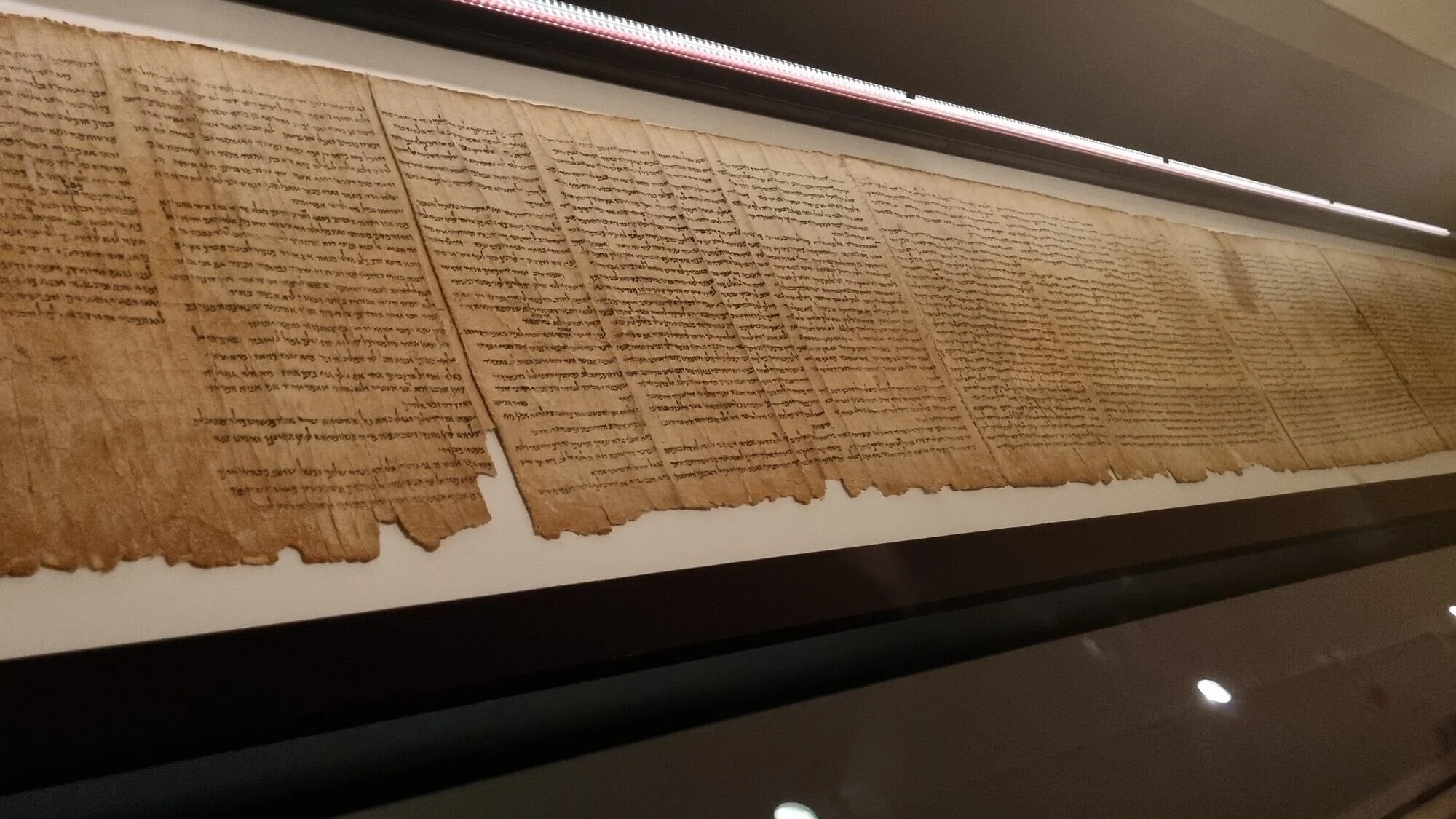
Now, for the first time since 1968, the Great Isaiah Scroll has been unrolled to its full 24-foot length and placed on public display at the Israel Museum in Jerusalem, a rare exhibition museum officials are calling a once-in-a-generation opportunity.
“A Voice from the Desert: The Great Isaiah Scroll” is a highlight of exhibitions marking the museum’s 60th anniversary. The manuscript will be presented in its entirety for only four months. Strict conservation requirements allow 25 visitors at a time to enter the temperature-controlled Scroll Gallery for 10 minutes.
“This is the only complete biblical manuscript ever found so far,” curator Hagit Moaz told JNS following a media tour on Thursday. “It contains all 66 chapters of Isaiah. It is a unique opportunity, once in a generation, to come and see this magnificent scroll.”
Crown jewel of the Dead Sea Scrolls
Designated 1QIsaᵃ, the scroll is widely considered the crown jewel of the Dead Sea Scrolls. Of the thousands of fragments discovered in the Judean Desert beginning in 1947, including multiple versions of Isaiah, this is the most complete biblical manuscript ever recovered and one of the most consequential archaeological finds of the 20th century.
The modern story began in 1947 when a young Bedouin shepherd entered a cave near Qumran while searching for a stray goat. Inside clay jars, he found ancient manuscripts wrapped in linen. The accidental discovery led to the recovery of more than 900 texts from 11 caves along the northwestern shore of the Dead Sea.
Displayed at the museum’s Shrine of the Book, dedicated in 1965, the original scroll is normally kept under highly controlled conditions, with only small portions shown at a time. A facsimile has been displayed in the central dome for decades.
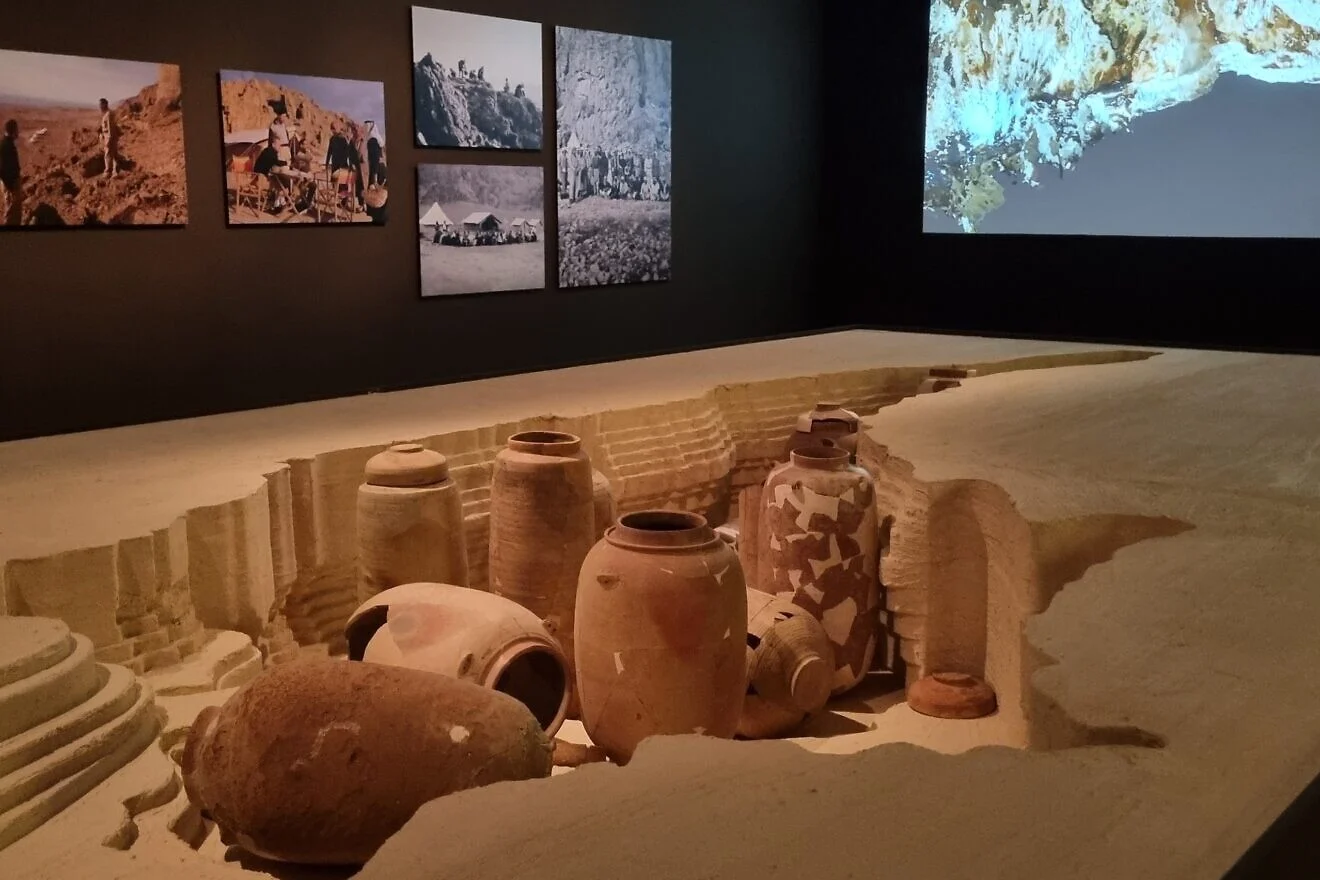
Visitors to the current exhibition first pass pottery jars resembling those in which the scrolls were discovered. A short introductory film traces the manuscripts’ journey from the caves of Qumran to Jerusalem before guests enter the stark white Scroll Gallery, where the parchment stretches across a specially designed case.
Column after column of Hebrew script flows across 17 sheets of stitched parchment measuring approximately 734 centimeters—more than 24 feet in length.
Radiocarbon dating and paleographic analysis place the Isaiah Scroll at approximately 125 BCE, roughly 1,000 years older than the previously known complete Hebrew manuscripts of Isaiah from the medieval Masoretic tradition.
Before the discovery of the Dead Sea Scrolls, the oldest complete Hebrew biblical manuscripts dated to the 10th century CE. The Great Isaiah Scroll allowed scholars to compare the Book of Isaiah across a full millennium of transmission.
Professor Noam Mizrachi of the Hebrew University’s Orion Center for the Study of the Dead Sea Scrolls noted that the ancient manuscript corresponds overwhelmingly to the version used today.
Textual comparison shows the scroll is approximately 95–98% identical to the Masoretic Text in modern Hebrew Bibles. Differences are largely spelling variations or minor grammatical shifts. There are no significant theological additions or deletions.
In academic circles, the implications were profound. At a time when some scholars suggested substantial alterations to the Hebrew Bible over centuries, the scroll demonstrated remarkable textual stability.
Written in Hebrew in a Herodian script, the manuscript preserves all 66 chapters of Isaiah with only minor damage, making it the only nearly complete biblical book among the Dead Sea Scrolls.
Marginal corrections and scribal notations reflect active engagement with the text. Recent technological analysis, including artificial-intelligence-assisted handwriting comparison, suggests two scribes were involved. Additional research proposes it remained in circulation for decades before being stored in the Qumran cave.
Scholars associate the Qumran manuscripts with a sectarian Jewish community, often identified as the Essenes, who emphasized prophetic themes of redemption, divine judgment and the “End of Days.”
Enduring message
Isaiah’s passages, including “Comfort, O comfort My people” and the vision of nations beating “their swords into plowshares” and
“The wolf shall dwell with the lamb,” resonated deeply in the religious atmosphere of the late Second Temple period.
Isaiah would later become one of the most frequently cited prophetic books in the New Testament, underscoring the shared scriptural heritage of early Judaism and Christianity.
Because parchment is highly sensitive to light and environmental change, the scroll can rarely be displayed in full. Carefully calibrated lighting and climate systems now protect the manuscript during this limited exhibition.
Discovered in the Judean Desert just months before the establishment of the State of Israel, the scroll has become more than an archaeological treasure. It stands as tangible testimony to continuity, linking the Jewish people of the Second Temple period to a sovereign Jewish state more than two millennia later.
From a cave near Qumran to a climate-controlled hall in Jerusalem, the Great Isaiah Scroll has endured conquest, exile, rediscovery and scrutiny. Its parchment bears the marks of age.
Its words, however, ring out across the ages and its message remains relevant today: “Shout for joy, you who dwell in Zion!” An ancient voice from the desert now lies fully unrolled and speaking once again.
Want more news from Israel?
Click Here to sign up for our FREE daily email updates