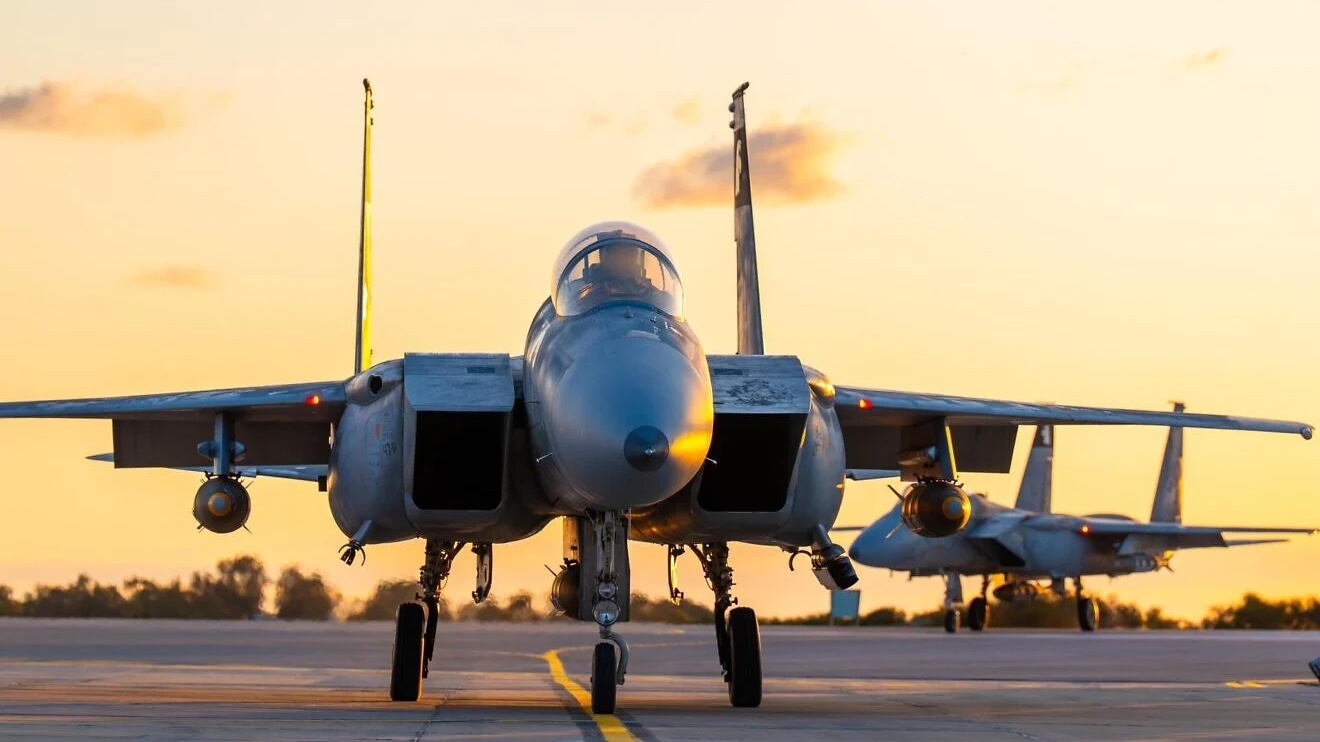
(JNS) Israeli warplanes conducted two waves of attacks over Iranian skies on Monday, striking regime targets as part of joint Jerusalem–Washington operations launched Feb. 28 to cripple the Islamic Republic’s grip on power, the Israel Defense Forces said.
According to the IDF, fighter jets from the Israeli Air Force unloaded more than 170 munitions across three central provinces in the first wave of strikes, with targets including an Islamic Revolutionary Guard Corps Quds Force command center in Tehran, missile and defense sites in Isfahan and additional military infrastructure in the Shiraz area.
The Quds Force is responsible for operating the Iranian regime’s regional terrorist proxies, advancing covert operations and planning, aiding and transferring weapons, as well as funding attacks throughout the Middle East, the IDF stated.
Israel also targeted the IRGC’s UAV headquarters, from which the “Iranian terror regime” launched drones at Israeli territory and stored additional unmanned drones for further firing.
“The combined effort to further degrade the regime’s firing and defense capabilities and defense is continuing, along with the ongoing expansion of strikes on the ballistic-missile production infrastructure throughout Iran,” the IDF said. “The completed strikes are part of the phase aimed at deepening the damage to the core military arrays and systems of the Iranian terror regime.”
IDF strikes six major Iranian military airfields
The IAF on Sunday night completed strikes on six major Iranian military airfields, according to the IDF, dismantling IRGC Quds Force aircraft and Iranian combat helicopters and hitting runways and detection systems.
“The airfields that were struck were used by the Iranian terror regime to arm and finance terrorist proxies across the Middle East, including Hezbollah, Hamas and the Houthi terrorist regime,” the military said. “These strikes impair the Iranian military’s ability to operate its air power against IAF aircraft and disrupt the regime’s ability to rearm—not only for the regime itself, but also for its terrorist proxies across the Middle East.”
Iranian foreign minister rules out renewed US talks
Iranian Foreign Minister Abbas Araghchi said on Monday that Tehran has no plans to resume talks with the United States following joint US-Israeli military strikes on the ayatollah regime.
In an interview with PBS’s “News Hour,” Araghchi said the Islamic Republic had a “very bitter experience” negotiating with Washington, and accused it and Jerusalem of “aggression” that has destabilized the region. He added that negotiations with the Americans are no longer on Iran’s agenda.
The Iranian regime has launched retaliatory attacks on Israel, US bases and Gulf Arab states—Bahrain, Kuwait, Oman, Qatar, Saudi Arabia and the United Arab Emirates—since the operation began.
The Arab League Council on Sunday condemned the strikes as “illegal Iranian aggressions” and a “serious threat to international peace and security.” The Arab foreign ministers called on Tehran to immediately stop all “hostile military operations and all provocative acts or threats against neighboring states.”
Want more news from Israel?
Click Here to sign up for our FREE daily email updates