(JNS) When Israel and the United States struck Iran’s nuclear facilities last summer, the goal was clear: cripple Tehran’s ability to produce a nuclear weapon. The attacks damaged key enrichment sites and infrastructure.
But the fate of Iran’s most sensitive material—hundreds of kilograms of uranium enriched to 60% purity—remains uncertain, and much of it may still be buried deep inside hardened underground complexes.
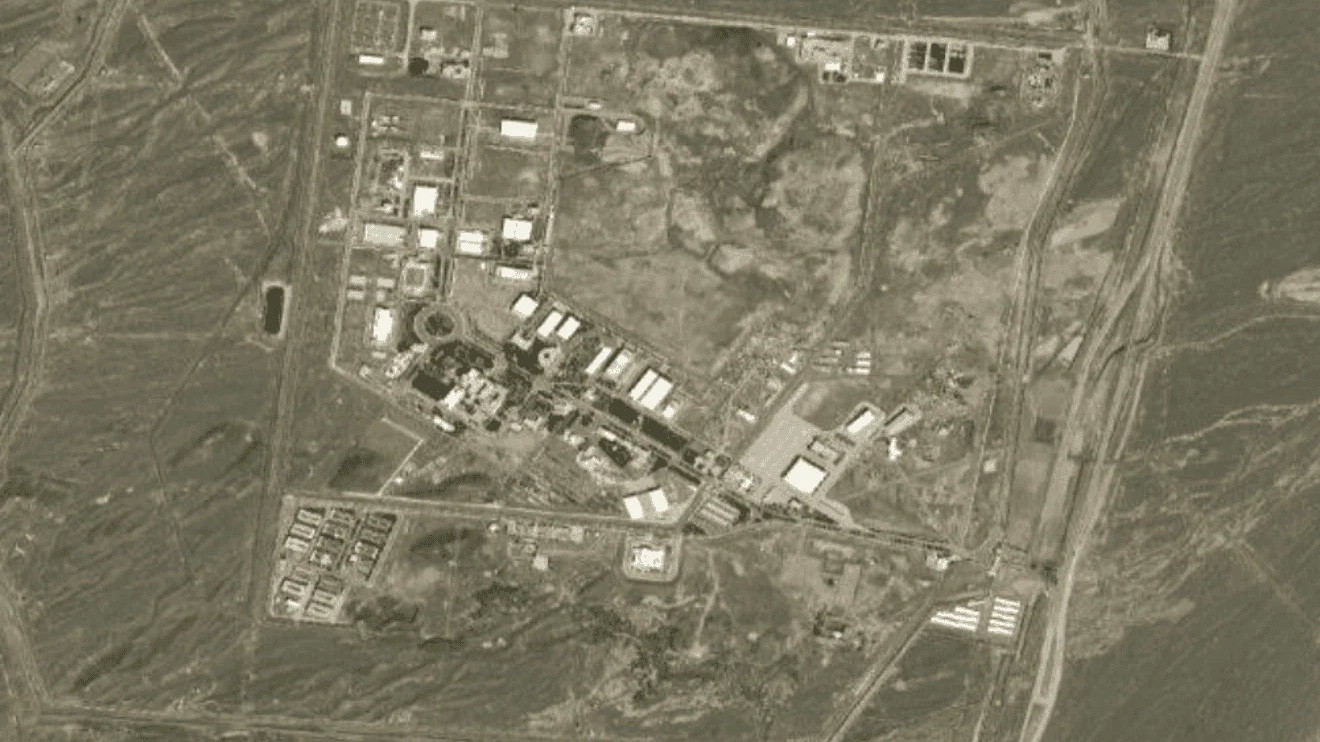
All three enrichment plants known to have been operating before the conflict—two at Natanz and one at Fordow—were reportedly destroyed or severely damaged.
Jonathan Ruhe, a fellow at the Jewish Institute for National Security of America, said the strikes dealt a major setback to Iran’s nuclear ambitions.
“The program was significantly set back compared to before the 12-day war,” Ruhe told JNS, referring to the Israel-Iran war in June 2025. “Its centrifuges, stockpiles, scientists and weaponization infrastructure were destroyed or buried last summer.”
According to Ruhe, Iran was not on the verge of an immediate nuclear breakout when the war began. However, it had been developing additional underground infrastructure designed to protect the program from precisely the type of attacks that ultimately occurred.
“Iran wasn’t ready for a breakout when this conflict started,” he said. “But it was installing two new subterranean enrichment-related sites that weren’t hit in June—one called Pickaxe near Natanz and another at Isfahan.”
These hardened sites have raised concerns among Western intelligence services and nuclear inspectors.
“Between June and now, the United States, Israel and the IAEA were concerned these facilities could secretly start rebuilding what Iran lost last summer,” Ruhe said.
Pinpointing the location
Despite extensive intelligence monitoring, analysts acknowledge that the exact location of Iran’s enriched uranium remains uncertain.
“Not with enough certainty,” Ruhe said when asked whether the material can be fully accounted for. “Likely most of it is still entombed in underground complexes at Isfahan and possibly Fordow and Natanz.”
He added that Tehran’s lack of transparency has long complicated monitoring efforts.
“Even before this war, the IAEA director warned that Iran’s obstruction of inspectors meant he couldn’t account for it,” Ruhe said.
Speculation has also arisen about whether Iran might attempt to move nuclear infrastructure or expertise abroad.
“Iran might try evacuating key infrastructure or personnel to Russia, given Moscow’s longstanding nuclear cooperation with Tehran,” Ruhe said. “But Iran also has good reason to believe that Putin is untrustworthy in dire straits like these.”
For now, however, military priorities appear to lie elsewhere.
“Because the program was so set back, Iran’s nuclear sites are not the top priority right now,” Ruhe said. “Once Iran’s launchers and leadership are seriously degraded, the United States and Israel will have to figure out how to deal with the newer sites.”
One challenge is the depth of certain facilities. Ruhe noted that the site known as Pickaxe was intentionally built deeper than many bunker-busting munitions can penetrate.
Rafael Grossi, director general of the International Atomic Energy Agency, said recently that a significant portion of the uranium stockpile was stored at a tunnel complex in Isfahan, although smaller amounts were believed to be held at other sites.
“There is an amount in Natanz also, which we believe is still there,” he said.
US President Donald Trump’s Special Envoy to the Middle East Steve Witkoff told Fox News recently that Iranian negotiators had openly boasted about the country’s enriched uranium stockpile.
“Both the Iranian negotiators said to us, directly, with no shame, that they controlled 460 kilograms of 60%, and they’re aware that that could make 11 nuclear bombs,” Witkoff said.
Even if the uranium remains underground, extracting or securing it would pose an enormous technical challenge.
Oded Ailam, a former head of the Counterterrorism Division in the Mossad, said the material may effectively be trapped beneath collapsed infrastructure.
“Extracting enriched uranium is an engineering, logistical and chemical nightmare that makes even the most complex operations in history look like a school field trip,” Ailam told JNS.
According to Ailam, now a researcher at the Jerusalem Centre for Security and Foreign Affairs, the destruction of underground facilities may have rendered them sealed vaults of rubble and reinforced concrete.
“Following the massive strikes, the nuclear facilities in Isfahan are no longer production halls,” he said. “They are concrete tombs.”
Operating in hostile territory
The enriched uranium is believed to be stored deep underground in structures designed to survive bunker-busting bombs. When such structures collapse, they create dense layers of debris requiring heavy engineering equipment to clear.
“To reach the uranium, forces would not only need rifles,” Ailam said. “They would need hydraulic excavators, diamond drills and engineering teams working for weeks.”
Conducting such an operation in hostile territory would be extraordinarily risky, he added, since heavy excavation would likely attract the attention of foreign intelligence satellites, including those of Russia and China.
Even if a force could reach the uranium, transporting it safely presents another challenge.
Iran typically stores enriched uranium in the form of uranium hexafluoride gas inside large industrial cylinders.
“These are not light suitcases,” Ailam said. “Each standard cylinder together with its protective casing can weigh between five and ten tons.”
Moving such cargo would require heavy transport helicopters hovering over the site while the containers are attached—a process that would expose aircraft and crews to both military and environmental hazards.
“In addition, even a few minutes of exposure to a damaged cylinder without heavy shielding would be a death sentence,” Ailam warned.
Rather than attempting to remove the uranium, some experts believe a more practical strategy would be to neutralize it where it lies.
Ailam described the possibility of injecting neutron-absorbing materials such as boron or gadolinium into underground storage areas through drilled boreholes.
“These materials act as poison for a nuclear reaction,” he said. “Once the enriched uranium physically mixes with these substances, it becomes useless as a weapon.”
Restoring the material for military use would then require building an entirely new chemical separation facility, a process that could take years and would likely be detected by Western intelligence.
Ailam said future diplomatic arrangements should focus less on removing the uranium and more on ensuring it remains permanently buried and monitored.
“The correct strategy is sealing and monitoring,” he said.
Such an approach could include filling storage shafts with boron-infused concrete and embedding sensors capable of detecting drilling or excavation attempts.
“It is much easier to bomb a bulldozer attempting to dig than to try to steal the uranium ourselves,” Ailam said.
Modern satellite technology would make concealment difficult, he added.
For now, Ailam believes the buried uranium poses less immediate danger than headlines might suggest.
“Right now, the uranium is not a ticking bomb,” he said. “It is more like an expensive grand piano buried deep inside a collapsed building.”
The key, he concluded, is to ensure it remains that way.
“The real victory does not lie in a heroic extraction,” Ailam said. “Sometimes the most effective strategy is simply to keep the danger buried deep underground.”
Want more news from Israel?
Click Here to sign up for our FREE daily email updates