(JNS) The recent controversy over allegedly stolen Ukrainian grain transiting through Israel has reignited the question: Where does Israel actually stand on Russia’s invasion of Ukraine?
For more than three years, Israel has maintained a posture that satisfies no one, nominally supportive of Ukraine’s territorial integrity while refusing the military cooperation Kyiv desperately wants. The original justification centered on operational necessity: The presence of Russian forces in Syria meant Israel needed to coordinate with them for IAF strikes on Iranian assets. But with the Assad regime’s collapse and Russia’s diminished Syrian footprint, that explanation has worn thin.
Two analysts offer starkly different diagnoses of what’s really driving Israeli policy and where it might be heading.
Blaise Misztal, vice president for policy at the Jewish Institute for National Security of America (JINSA), framed the relationship as one of unrealized potential between natural partners.
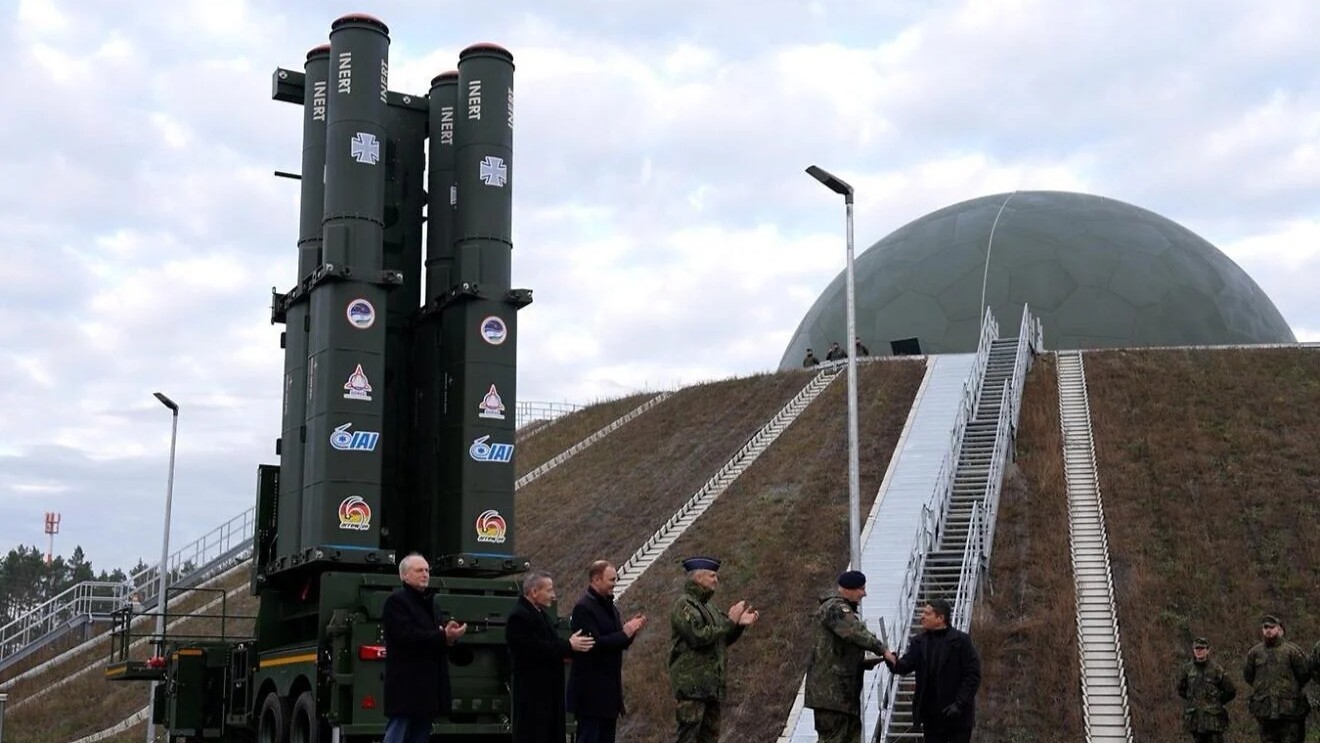
“Israel and Ukraine clearly share significant common interests,” Misztal told JNS. “Foremost among them, they have both been the victims of relentless aerial attack and have each developed impressive technologies to defend against them.”
The complementarity is striking. “Those technologies are largely complementary: Whereas Israel has impressive anti-missile defenses, it has found itself relatively more vulnerable to drones; for Ukraine the opposite is true,” Misztal added.
“A major obstacle still remains to closer cooperation between what should be two natural partners. Namely, Russia,” Misztal explained. “While it is true that the collapse of the Assad regime and Russia’s withdrawal from Syria removed the major reason for Israel’s early reticence to back Ukraine, Russia still remains a regional actor whom Israel is clearly being careful not to antagonize.”
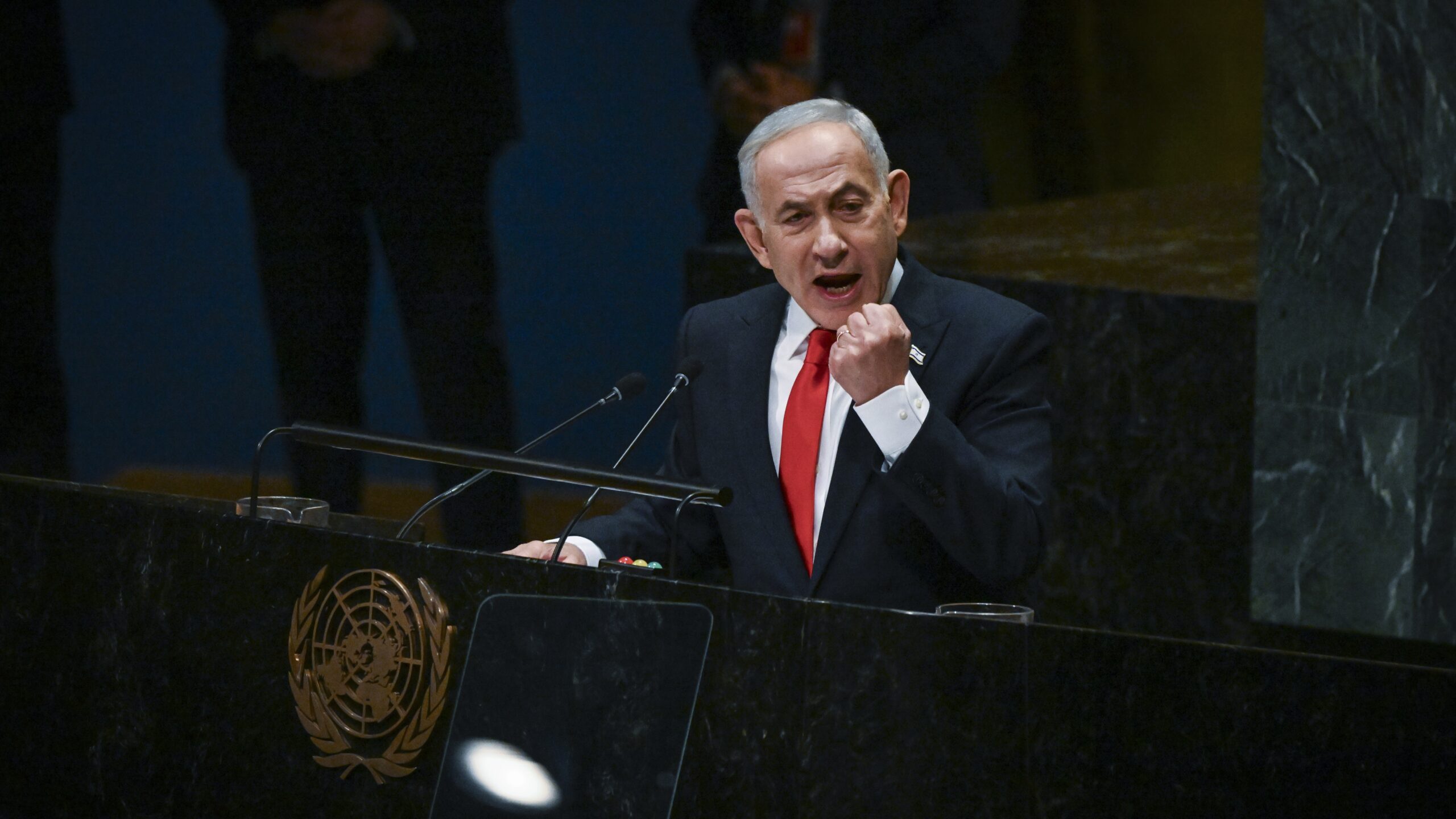
Evidence of this caution surfaced recently in one of Prime Minister Benjamin Netanyahu’s television appearances.
“Prime Minister Netanyahu’s non-answers on 60 Minutes to questions about Russian support for Iran during the war made clear that Israel believes that the best way to minimize Moscow’s involvement is to avoid talking about it,” Misztal said.
Misztal said he sees one development that could break the impasse.
“For both Israel and Ukraine, therefore, the best thing that could happen would be the fall of the Islamic Republic and the severing of Russia’s last major partner in the Middle East. That could pave the way to greater cooperation between Kyiv and Jerusalem without the risk of strategic fallout for Israel.”
Political cover for engagement
Geopolitical analyst Irina Tsukerman offered a far more critical reading of Israeli decision-making, arguing that the Syria rationale was always overstated.
“The long-standing explanation that Israel’s restraint toward Russia stemmed primarily from operational requirements in Syria always rested on a narrower foundation than it appeared to,” Tsukerman told JNS. “From the outset, Russia’s military weakness in the Syrian theater was visible to Israeli planners. Moscow lacked both the appetite and the operational coherence to escalate directly with Israel.”
In her analysis, the coordination narrative served political rather than military purposes. “What appeared as military pragmatism functioned in many respects as political cover for sustained engagement.”
The stakes have since intensified dramatically. “Russian intelligence sharing, technological transfers, cyber coordination, and logistical cooperation have enhanced Iran’s ability to refine targeting and operational planning,” Tsukerman explained. “During periods of escalation with Iran, this assistance has translated into improved Iranian capacity to identify and strike sensitive Israeli-linked military and strategic assets.”
Tsukerman identified several forces keeping Israel from aligning with Ukraine that rarely surface in public discussion.
First, economic entanglement: “Russia continues to be viewed in some circles as a state with which engagement remains valuable. This perception is shaped in part by longstanding financial flows involving Russian Jewish oligarchs, as well as formal and informal arrangements that have created enduring channels of influence.”
Second, commercial competition: “Ukraine’s rapid wartime adaptation, combined with its expanding integration into European defense ecosystems, introduces a new dynamic in areas where Israel has traditionally held a strong advantage.” Israeli defense institutions, she noted, “remain attentive to the possibility that Ukraine could emerge as a competitor in supplying advanced systems and battlefield-tested solutions.”
Third, a reading of American politics that may be outdated: “The perception that elements within the American political landscape, particularly those associated with Donald Trump and the broader MAGA movement, have shown tolerance toward Russia or a reduced urgency in confronting it” has “fed an assumption in some Israeli policy circles that maintaining flexibility toward Moscow would not trigger decisive backlash in Washington.”
That calculation is proving costly, Tsukerman warned. “Frustration is growing across parts of the American political system over Israel’s unwillingness to align more clearly with Ukraine, especially as Russia becomes a defining security concern for the United States and its allies.”
The consequences are becoming tangible. “Discussions that were once unthinkable are entering mainstream debate, including questions about the scale, conditions and sustainability of US defense funding for Israel.”
“The risk is not immediate abandonment, but gradual erosion,” Tsukerman said. “Conditionality, delays, or reductions in certain forms of military assistance are becoming part of the policy conversation.”
A narrowing window
Both analysts suggested they expect evolution rather than revolution in Israeli policy.
Misztal seemed to suggest the relationship will remain frozen until external circumstances, particularly Iran’s trajectory, force a change.
Tsukerman anticipated a more complex dynamic. “Quiet adjustments in intelligence sharing, cyber coordination and selective forms of support to Ukraine are more likely than overt policy declarations. The shift will take shape in practice before it is acknowledged in rhetoric.”
At the same time, she told JNS, “the political leadership will attempt to preserve a degree of ambiguity for as long as possible. Channels with Moscow will not be abruptly severed, even as their strategic value diminishes.”
The window for shaping events, however, is closing. “Israel will face a narrowing window in which to shape its relationship with Ukraine on favorable terms, particularly if it remains hesitant to engage more fully,” she said.
It is likely, according to Tsukerman, that Russia’s own behavior will accelerate this reckoning.
“Continued military cooperation with Iran, expanded intelligence sharing, and efforts to leverage influence in multilateral forums will reinforce the perception that Moscow is not a neutral actor in relation to Israel,” she said. “Each instance of Russian support that enhances Iran’s capabilities will further erode the logic of maintaining a cautious, balanced approach.”
The ultimate trajectory, Tsukerman concluded, points toward diminishing options: “A continued attempt to balance between Russia and Ukraine will become harder to sustain, especially as the costs of ambiguity extend into tangible security, financial and political consequences.”
Want more news from Israel?
Click Here to sign up for our FREE daily email updates