When people in Europe donate for Gaza, most believe they are helping the hungry, supporting medical care, or assisting families in need. But what happens to the money after the “donate” button is pressed? Who controls the channels through which millions flow? And who guarantees that humanitarian aid actually reaches those in need and does not end up in the hands of organizations that support terrorism? A new investigation by the Israeli Ministry of Diaspora Affairs and the Fight Against Antisemitism raises precisely these questions. The report paints the picture of a far-reaching network of donation campaigns, opaque financial flows, and inadequate oversight that extends far beyond individual aid operations. The findings are likely to spark considerable debate not only in Israel, but also in Europe.
A new investigation by the Israeli Ministry of Diaspora Affairs and the Fight Against Antisemitism paints a troubling picture of the financing of Gaza from Europe since October 7, 2023. According to the report, more than 9.5 million US dollars were collected through a far-reaching network of online donation campaigns, with numerous campaigns allegedly found to have connections to Hamas and other terrorist organizations.
The researchers identified more than 45 organizations, each of which raised at least 100,000 dollars. Seven campaigns each raised over one million dollars, and a further four raised between 500,000 and one million dollars. The investigation focused on the United Kingdom, France, Spain, and the Netherlands. The funds were collected via crowdfunding platforms, association websites, bank transfers, payment apps, and in some cases also through cryptocurrencies.
Particularly alarming, according to the Ministry, is that 23 of the campaigns examined were classified as directly or indirectly connected to Hamas or other terrorist organizations. Direct connections include organizations that are already classified as terrorist organizations, that employ individuals with ties to Hamas, or that engage in activities with a clearly terrorism-supporting character. Indirect connections exist, according to the report, through cooperation with Hamas-affiliated organizations, money transfers to corresponding entities, or public statements that justify or support terrorism.
In the United Kingdom alone, more than 11 million pounds sterling — equivalent to approximately 14 million US dollars — were raised for Gaza through crowdfunding platforms. In France, approximately 1.4 million euros were collected, while in Spain and the Netherlands several hundred thousand euros each were raised. Among the most widely used platforms are JustGiving, Big Give, HelloAsso, GoFundMe, and Global Giving. Individual campaigns reached sums of several hundred thousand pounds or euros, with some surpassing one million by a wide margin. In addition, direct donation channels via association websites, bank transfers, and PayPal are estimated to account for further amounts running into the millions. In several cases, cryptocurrencies were also identified as a donation instrument, though their actual volume could not be quantified.
A central finding of the investigation is the apparently inadequate oversight and transparency of many crowdfunding platforms. While donors can view the campaigns and payment channels, in most cases it remains unclear who ultimately receives the funds, through which intermediate stations they are forwarded, and with whom they end up in the Gaza Strip. According to the researchers, the bank details and financial information of the actual recipients in Gaza were frequently not traceable.
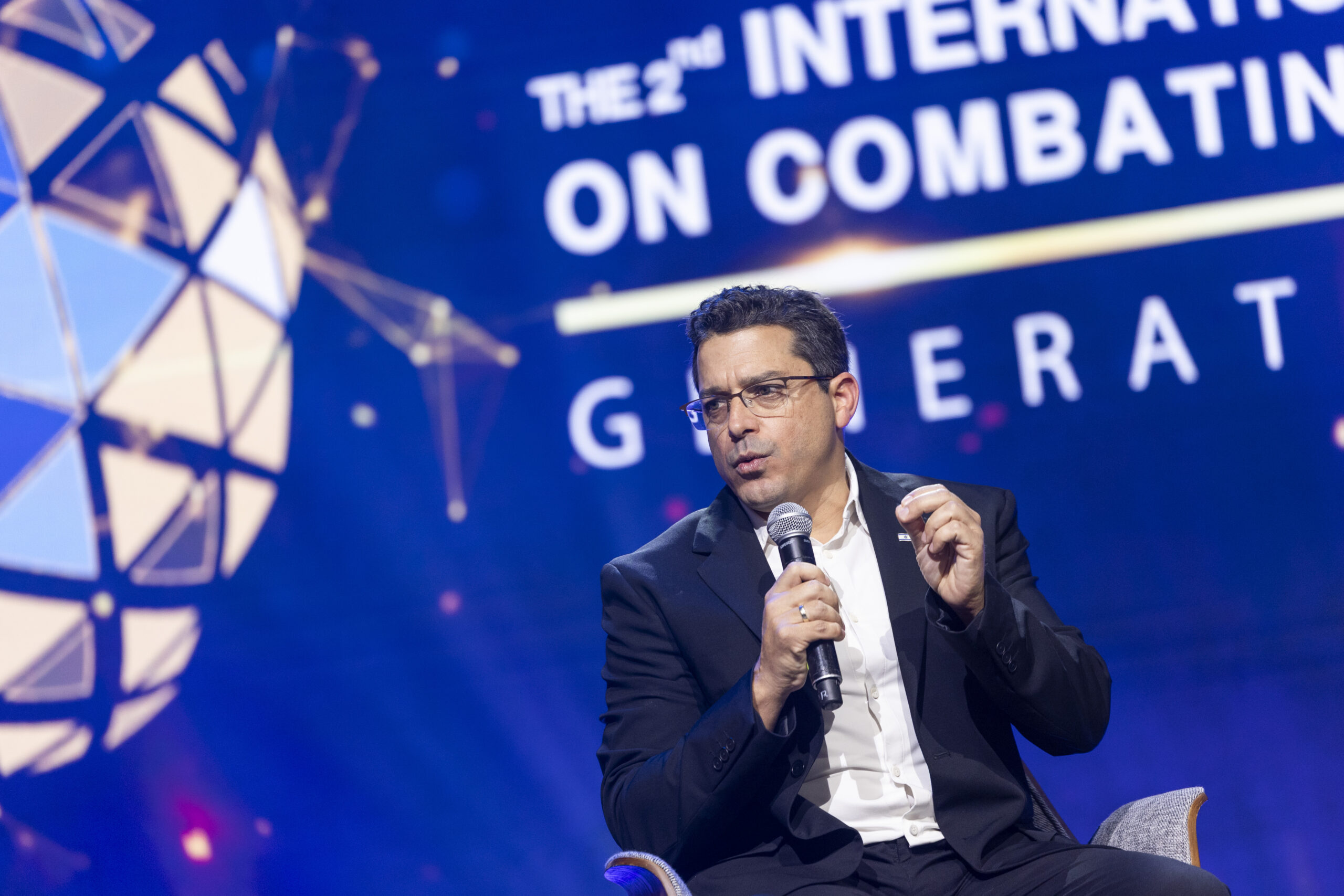
Diaspora Minister Amichai Chikli therefore warned of a security risk that cannot be ignored: “Europe must wake up. Funds collected under the guise of humanitarian aid can end up with Hamas-affiliated actors. We expect donation platforms to take decisive action against this phenomenon, and we expect European states to exercise effective oversight of such financial flows.”
The Ministry’s leadership also emphasized that the 9.5 million dollars identified so far likely represent only the tip of the iceberg. The investigation covers exclusively publicly visible campaigns. Covert financial flows through wealthy individual donors or non-transparent networks could not be taken into account. Since both Hamas and Islamic Jihad are classified as terrorist organizations by the European Union and the United Kingdom, the researchers assume that possible financing is typically disguised as humanitarian aid. In the Ministry’s assessment, this therefore constitutes not only a financial challenge, but also a security policy, diplomatic, and economic one that requires a coordinated international response.