
(JNS) Civilizations that last do so not only because of their strength but because of their memories. India and Israel are two such civilizations, each carrying thousands of years of history, identity and moral imagination.
Long before they became modern nation-states, India and Israel were “idea” states: India was shaped by the concept of dharma, and Israel was shaped by the covenantal tradition. Both believed that freedom was not merely a political arrangement but a moral responsibility. This shared belief in ethical nationhood is why the relationship between India and Israel feels less like a diplomatic innovation and more like a rediscovery.
Jewish communities lived in India for nearly two millennia without persecution, a rarity in the Jewish diaspora. The Cochin Jews of Kerala, the Bene Israel of Maharashtra and the Baghdadi Jews of Kolkata all found in India something they found almost nowhere else: safety, dignity and belonging.
These were not accidents of geography but expressions of civilizational character, and they created a reservoir of goodwill with profound implications once both nations emerged as modern states.
There is a moment in the book of Exodus that captures, with surprising clarity, the deeper meaning of the India-Israel relationship. In Exodus 17:11-12, Moses stands on a hill during a battle, and “whenever Moses held up his hand, Israel prevailed; and whenever he lowered his hand, Amalek prevailed.” As Moses’s arms grow weary, Aaron and Hur stand on either side of him, holding up his hands until the sun sets.
In my reading of this passage, Moses represents Israel, the ancient covenantal nation struggling to endure. Aaron symbolizes the United States, Israel’s indispensable strategic partner. Hur stands for India, the civilizational ally whose support strengthens Israel’s endurance.
The power of the passage lies in its simplicity: Israel prevails when supported, falters when isolated and endures when its allies steady its hands.
The democratic world increasingly depends on the alignment of three “idea” states: Israel, the United States and India. One provides moral clarity, one provides strategic weight and one provides civilizational depth. Together, they form a triad of democratic resilience. In this triad, India’s role is increasingly important, not as a substitute for the United States but as a partner whose geopolitical and other instincts align naturally with Israel’s own.
India’s connection to the Jewish people predates modern diplomacy by centuries. Jewish traders arrived on the Malabar Coast during the time of King Solomon. Later waves came after the destruction of the Second Temple, after the Spanish expulsion and during the rise of Baghdad’s mercantile elite. In every era, India offered refuge without demanding assimilation. While Europe was expelling Jews, India was absorbing them. While empires were persecuting Jews, India was protecting them. While others saw Jews as outsiders, India saw them as neighbors.
This history shaped early Zionist perceptions. Leaders like David Ben-Gurion, Israel’s founding father and first prime minister, admired India’s civilizational depth and democratic aspirations. Indian thinkers, in turn, saw in the Jewish story a reflection of their own: a people returning to political agency after centuries of subjugation.
This instinct surfaced even in moments when the two nations lacked formal diplomatic ties. During the 1971 India-Pakistan War, Israeli Prime Minister Golda Meir quietly approved a clandestine Israeli effort to supply weapons to Indian Prime Minister Indira Gandhi’s government, a gesture of solidarity that foreshadowed the strategic partnership that would emerge decades later.
The seeds of this modern partnership were planted long before 1947 or 1948, long before embassies and treaties, long before the world recognized how deeply these two civilizations understood each other.
Haifa: A bond forged in battle
One of the most remarkable and least remembered chapters in this shared story unfolded in 1918. During World War I, the city of Haifa was held by Ottoman and German forces. The British Empire needed the city liberated, but the terrain was brutal: steep ridges, machine-gun nests and fortified positions.
The task of taking the city fell not to British cavalry but to Indian soldiers: the Jodhpur Lancers and the Mysore Lancers, elite horsemen of the British Indian Army. In one of the last great cavalry charges in military history, they stormed the ridges of Haifa under heavy fire and captured the city in a single day.
It was an act of extraordinary courage. Many Indian soldiers died on the slopes of Mount Carmel. Nearly 900 Indian soldiers are buried in Haifa, their graves tended with honor to this day. For Israel, the liberation of Haifa is a foundational memory. For India, it is a reminder that its soldiers helped free a city that would later become central to the Jewish state.
If Haifa was the moment India stood for the Jewish people before the modern State of Israel was born, the decades that followed showed Israel standing for India, repeatedly, consistently and decisively.
Whenever India turned toward Israel in moments of war, Israel answered. It answered quietly in 1965, when India needed arms during a war with Pakistan. It answered decisively in 1971, when Israel diverted weapons originally meant for Iran to support India during the Bangladesh Liberation War. It answered boldly in 1999, when India faced Pakistani intrusions in Kargil and required precision‑guided munitions, surveillance drones and emergency ammunition. These were not isolated transactions but expressions of trust built over decades.
This pattern continued into the 21st century, as India confronted new forms of conflict; not only on battlefields but in cities, hotels and train stations. Israel’s support reflected recognition that both nations faced threats to their very legitimacy. The relationship had moved beyond geopolitics into something deeper: a shared understanding that their security challenges were intertwined and that their partnership was a source of resilience.
Terror, grief and shared resolve
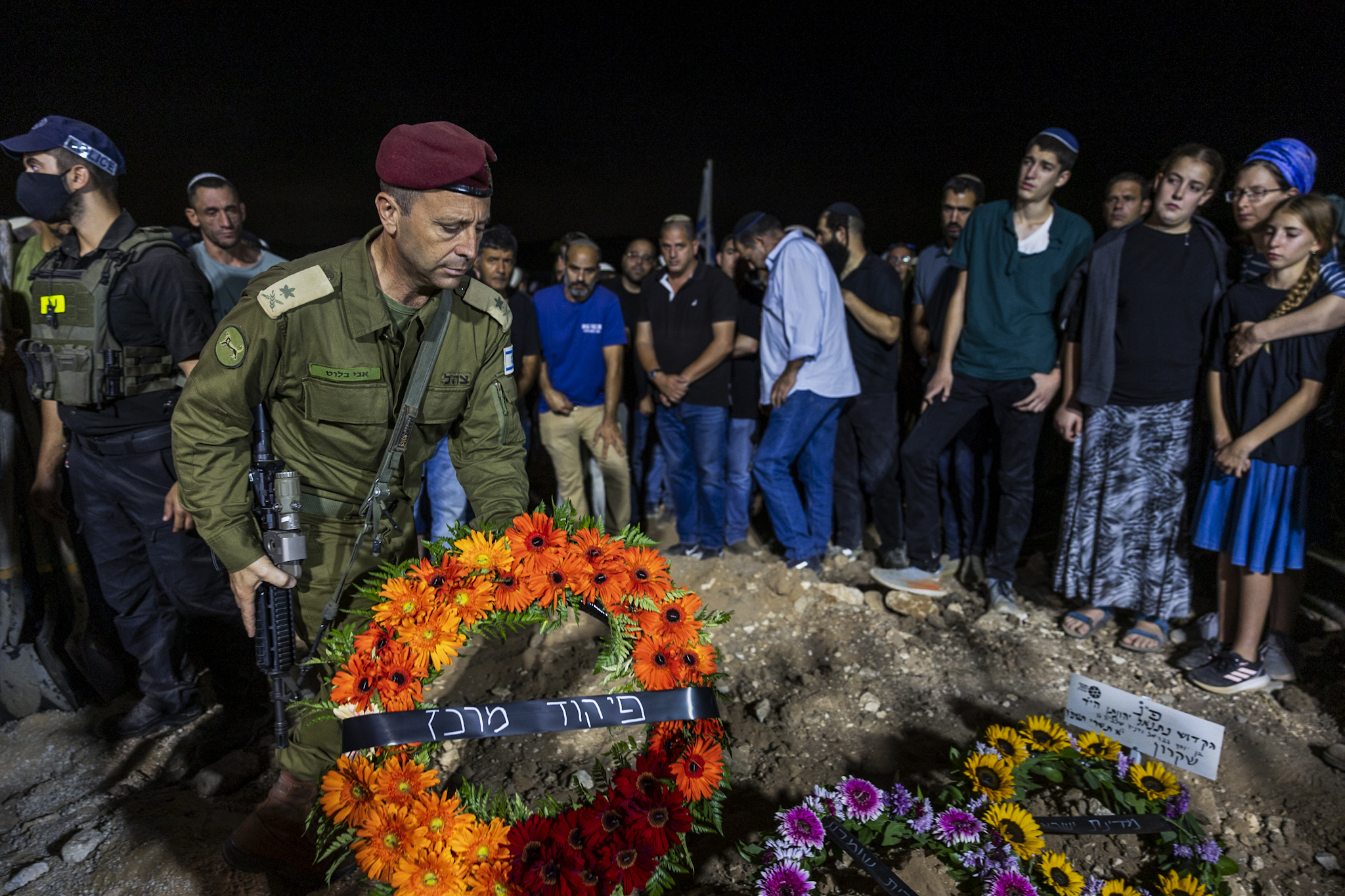
The terrorist attacks in Mumbai in November 2008 were a turning point in the India-Israel relationship. When terrorists stormed the city, one of their targets was the Chabad House, also known as Nariman House, where Rabbi Gavriel Holtzberg and his wife, Rivka, were murdered along with other hostages.
As the siege unfolded, Israel stood with India in real time. Israeli intelligence agencies worked alongside Indian counterparts, providing operational guidance, hostage rescue expertise and real-time analysis. The rescue of Moshe Holtzberg, the Holtzbergs’ surviving 2-year-old son, became a symbol of the shared grief and resolve of both nations.
In the years that followed, Israel continued to support India during major terrorist incidents, including the Pathankot attack in 2016 and the Pulwama attack in 2019. In each case, Israel offered intelligence, technology and political solidarity.
The pattern was unmistakable: whenever India faced terror, Israel stood beside it. This deepening counterterror partnership reflected not only shared threats but shared values, a belief that democracies must defend themselves without surrendering their moral core.
The end of the Cold War opened the door to formal diplomatic relations between India and Israel, and in 1992, they established full ties. What followed was one of the fastest-growing bilateral partnerships in the world. Defense cooperation became the backbone, but the relationship quickly expanded into agriculture, water technology, cybersecurity, artificial intelligence and innovation ecosystems.
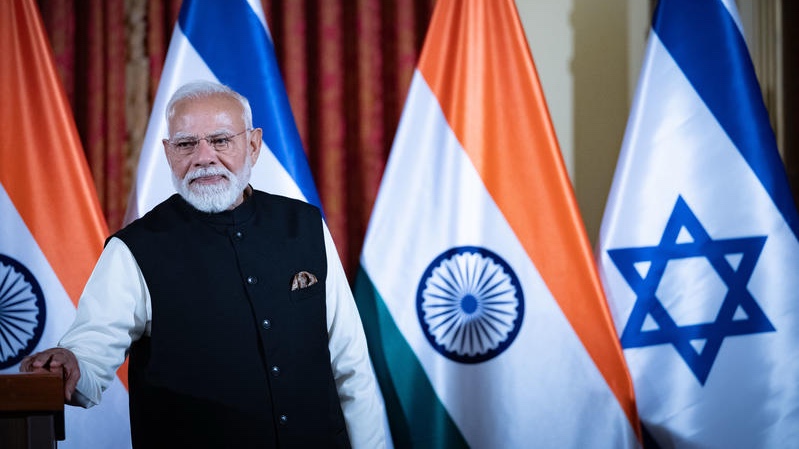
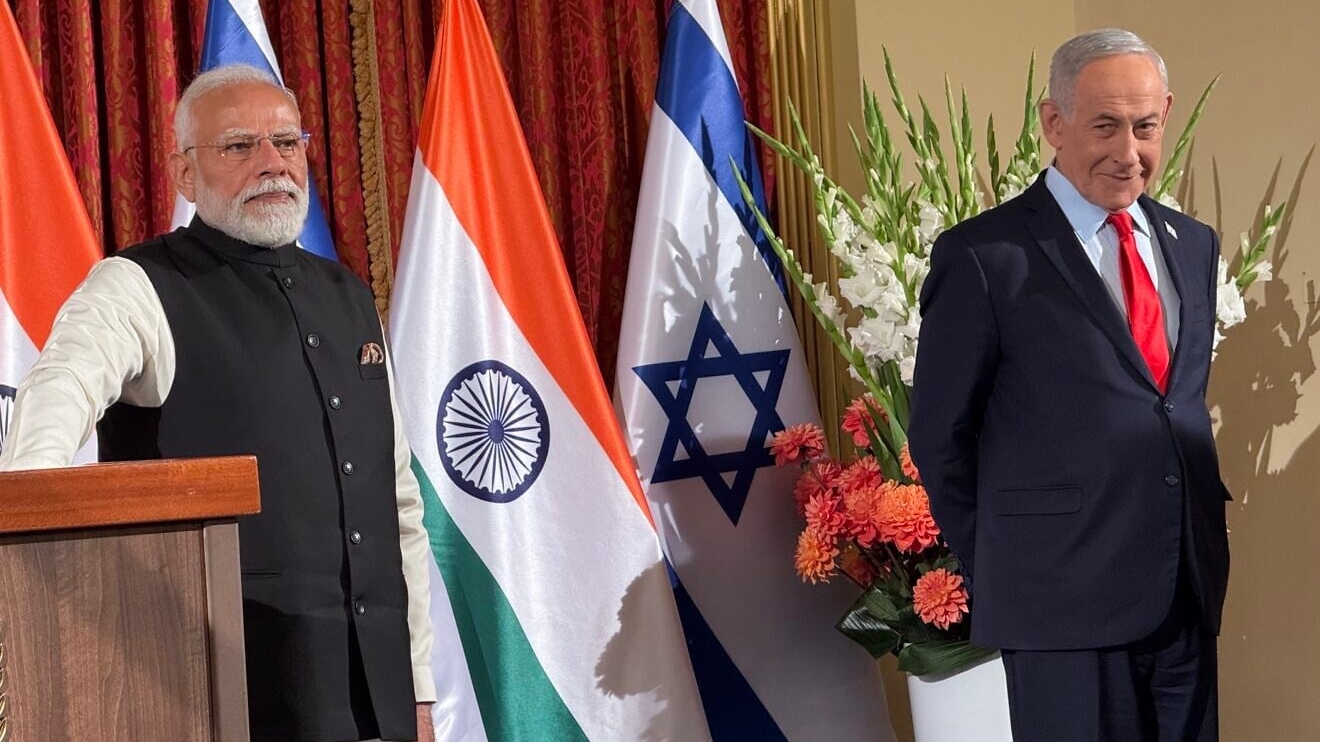
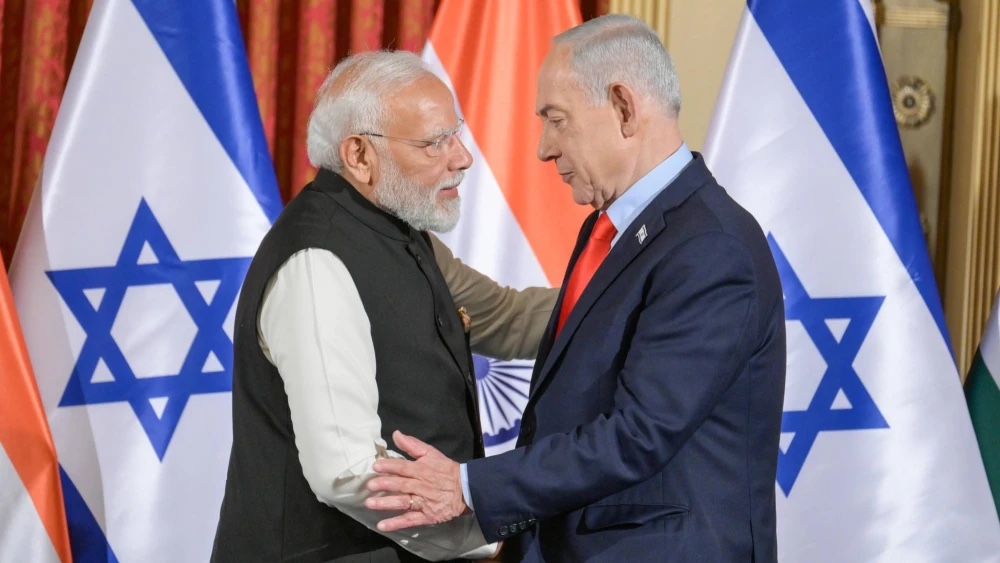
In 2017, Prime Minister Narendra Modi became the first Indian prime minister to visit Israel, marking a new era of openness and strategic clarity. His follow‑up visit earlier this year reaffirmed the partnership’s momentum and underscored the growing strategic trust between the two nations.
In 2022, the two nations signed the India-Israel Vision on Defense Cooperation, laying out a roadmap for joint development of advanced defense systems. Today, India is one of Israel’s largest defense partners. Their cooperation spans missile systems, drones, intelligence-sharing and joint production. But the partnership is no longer only about defense. It is also about the shared belief that democratic civilizations must stand together in an era of rising authoritarianism.
India and Israel are modern democracies rooted in ancient identities. Both see themselves as “idea” states—societies built on moral frameworks, rather than ethnic homogeneity. Both face existential threats from neighbors who reject their legitimacy. And both believe that democratic civilizations must stand together in an era of rising authoritarianism. The triangular relationship between India, Israel and the United States reflects this alignment.
In the 21st century, these three nations increasingly find themselves on the same side of the great strategic questions. The United States provides global reach, India provides demographic and civilizational weight and Israel provides technological and moral clarity. Together they form a democratic triangle whose strength lies not only in shared interests but in shared convictions. This alignment is no longer episodic or tactical. It is structural, civilizational and accelerating, driven by common values, common threats and common opportunities.
India and Israel’s story is not an accident of geopolitics. It is the meeting of two ancient civilizations that survived against all odds. It is a partnership built on shared memory, morality and modern challenges. It is the rediscovery of a friendship that began long before embassies, treaties or trade agreements.
Their modern stories are intertwined. Their destinies are linked. The innovation they can engage in together is far greater than either nation has yet imagined. Some alliances are created. This one was remembered. Now it is accelerating.
Want more news from Israel?
Click Here to sign up for our FREE daily email updates