(JNS) More than 200 Israeli and international guests gathered in Jerusalem on Thursday evening for the second Israel365 Middle East Summit, where lawmakers, diplomats, military leaders and Christian supporters explored what victory for Israel should look like nearly three years after the Oct. 7, 2023, Hamas-led massacre.
Held at the David Castle event venue overlooking Jerusalem’s Old City walls, under the theme “The Path to Victory,” the conference examined military strategy, public diplomacy, Israel’s internal divisions and the country’s relationship with allies abroad.
Opening the summit, Israel365 founder Rabbi Tuly Weisz introduced Rabbi Karmi Gross, head of a yeshivah that prepares Haredi men for service in the Israel Defense Forces.
After offering a blessing in Hebrew, Gross challenged attendees in English to “Dream big. Work hard. Change the world.”
Israel’s internal debate
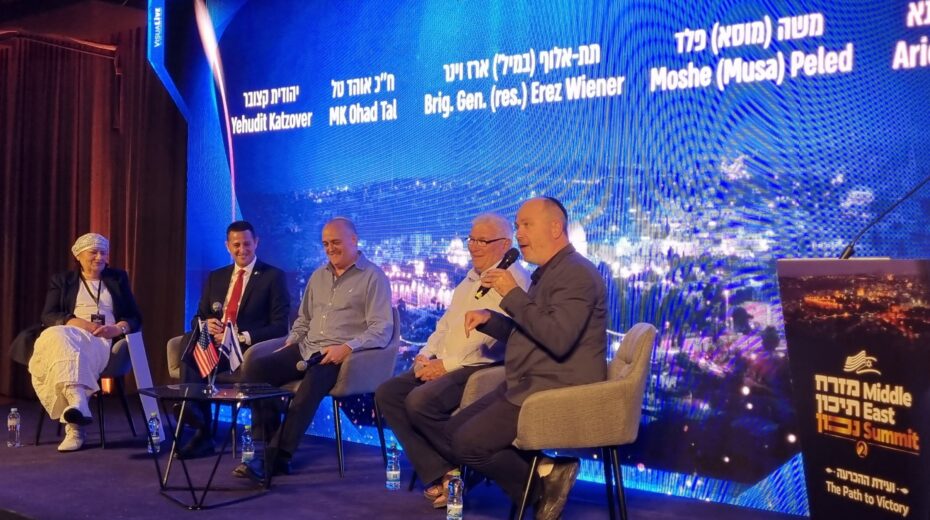
The conference opened with a panel titled “The Battle Within: Israel’s Internal Divides,” focusing on the effects of political polarization and years of war on Israeli society.
Among the international participants was Taiwan’s Ambassador to Israel Abby Lee, who drew parallels between Taiwan and Israel as small democracies surrounded by hostile neighbors.
Both countries, she said, have transformed adversity into innovation and resilience.
Lee noted that Taiwanese companies manufacture about 95% of the world’s advanced semiconductor chips and described Taiwan as “the most free country in Asia.”
She also welcomed the strengthening relationship with Israel, noting that Knesset member Ohad Tal recently led an Israeli delegation to Taiwan.
Speaking with JNS on the sidelines of the conference, Tal said the summit reflected an important national conversation.
“After everything in the past two-and-a-half years, I think it is time for a real discussion about what the future of Israel should look like, reconnect with ourselves, and about how to win the wars on all the fronts,” he said.
Winning the information war
The information war—described in the conference program as the “eighth front”—featured prominently throughout the day.
During a panel on public diplomacy, journalist Yishai Fleisher, Rabbi Pesach Wolicki and technology entrepreneur Hillel Fuld discussed the growing influence of social media on international perceptions of Israel.
Participants cited TikTok as one platform shaping public opinion and eroding support for Israel, particularly among younger audiences.
Wolicki rejected the notion that young evangelical Christians are abandoning Israel, pointing instead to polling conducted at the 2025 Turning Point USA conference that found strong support for Israel among the event’s 40,000 attendees.
Fuld urged Israel’s supporters to abandon defensive messaging.
“There is no genocide,” he said. “Stop saying genocide. Switch the language and go on the offensive. Stop apologizing.”
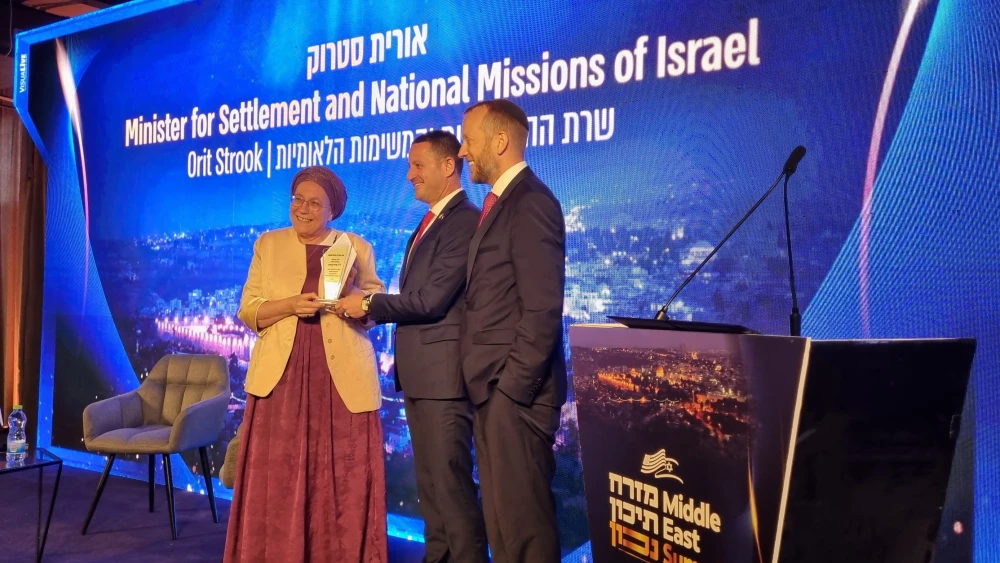
Settlements and National Missions Minister Orit Strook and Yehoshua Sherman of the Returning Home Forum received the summit’s Outstanding Contribution to Zionism Award from Israel365 founder Rabbi Tuly Weisz, July 9, 2026. Photo by Sharon Altshul.
Rethinking Israel’s security doctrine
One of the summit’s highlights was journalist Amit Segal’s onstage interview with Finance Minister Bezalel Smotrich, who argued that Israel must abandon long-held strategic assumptions in the wake of the Oct. 7 Hamas massacre.
Smotrich praised Israeli soldiers fighting “with faith” and said non-Jewish communities, including the Druze, have a place in Israel’s future if they seek peaceful coexistence.
Rejecting the Oslo Accords as a failed model, he said Israel must move forward with confidence while maintaining its hold on the land.
Later, Tal delivered a keynote address emphasizing the Jewish people’s historic connection to the Land of Israel.
“The Land of Israel belongs to the People of Israel,” he declared, calling for courage and confidence in shaping the country’s future.
Brig. Gen. (res.) Moshe “Musa” Peled and Erez Wiener of the Israel Defense and Security Forum likewise argued that Israel’s future depends on military resolve.
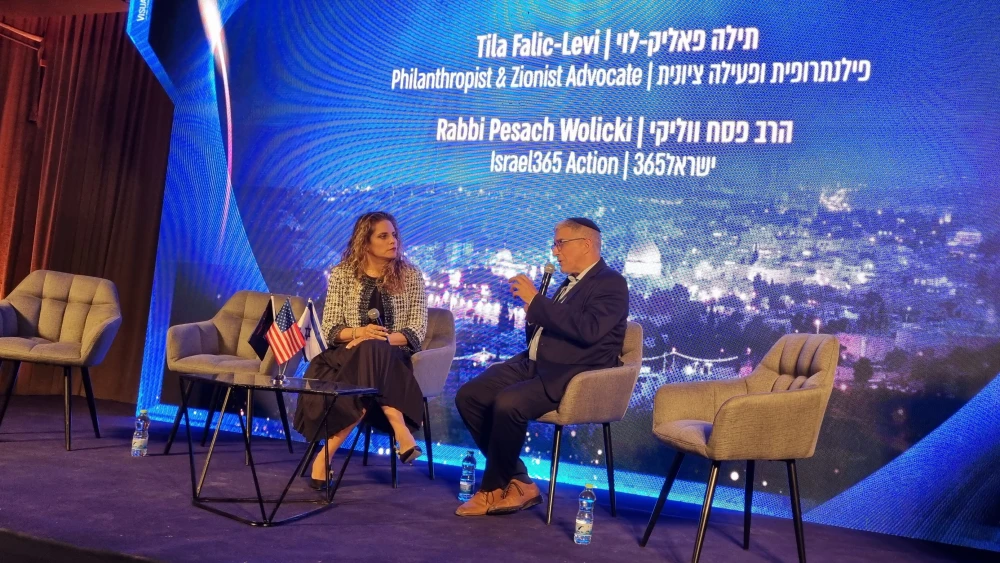
Tila Falic-Levi and Rabbi Pesach Wolicki discuss U.S.-Israel relations during the closing session of the Israel365 Middle East Summit in Jerusalem, July 10, 2026. Photo by Sharon Altshul.
Settlements and National Missions Minister Orit Strook and Yehoshua Sherman of the Returning Home Forum each received the summit’s Outstanding Contribution to Zionism Award.
Identity alongside advocacy
The conference concluded with a discussion on US-Israel relations featuring Tila Falic-Levi and Wolicki.
Falic-Levi said the wave of anti-Israel protests had exposed longstanding hostility toward the Jewish state while underscoring the need to educate the next generation of Jewish and American leaders.
Rather than focusing solely on hasbara, or public diplomacy, she advocated strengthening hashkafa—a deeper grounding in Jewish identity and values.
Weisz said Israel365 was founded on the belief that the return of the Jewish people to their ancestral homeland carries a broader spiritual mission rooted in the Bible.
“When Jews abandon the Torah and behave like all the other nations, the nations persecute us,” he said. “Only when we fulfill our destiny and teach the nations how to live Godly lives based upon Torah values will we transform Israel from the world’s most condemned country into its spiritual superpower.”
Ending on an optimistic note, Falic-Levi said bringing people to Israel remains one of the most effective ways to build lasting support.
“People remember how they feel,” she said.
Want more news from Israel?
Click Here to sign up for our FREE daily email updates