
Hungarian Prime Minister Péter Magyar wanted to appoint Judit Polgár, one of the country’s most prominent figures, to the highest office. However, the former world-class chess player declined, explaining that she did not feel strong enough to assume this historic responsibility.
Polgár was supposed to unite a divided country
Judit Polgár, widely regarded as the strongest female chess player in history, has declined an offer to become interim president of Hungary. Magyar had publicly asked her to take on the largely ceremonial role after President Tamás Sulyok was ousted.
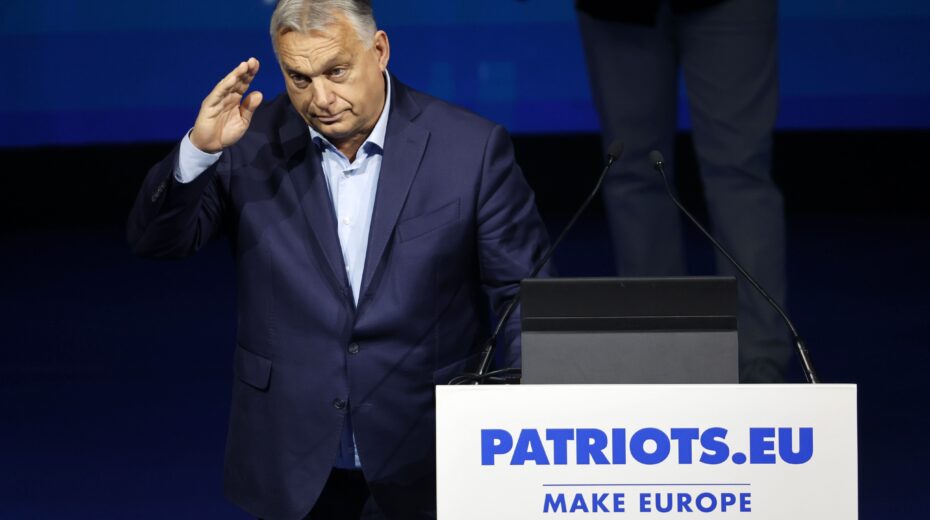
Magyar had portrayed Sulyok as a puppet of former Prime Minister Viktor Orbán. Following his election victory in April, Magyar is attempting to dismantle key power structures from the Orbán era. His Tisza party holds a two-thirds majority in parliament and recently pushed through a constitutional amendment that ended Sulyok’s term in office.
Polgár thanked everyone for their trust on Facebook but clearly declined the offer. She explained, in essence, that she was deeply grateful to have been asked, but did not feel enough inner strength to assume the historical responsibility of uniting a divided nation. Therefore, she could not accept the request.
Magyar had described Polgár as a personality whose name had stood for talent and perseverance for decades. She was apparently meant to be a non-partisan figure: not a classic career politician, but a globally respected Hungarian who represented achievement, discipline, and national dignity.
Polgár was born in Budapest in 1976 into a Hungarian-Jewish family. Both of her grandmothers survived the Holocaust, while her grandfathers were deported to forced labor camps. According to the ANU Museum of the Jewish People in Tel Aviv, the family has remained connected to its Jewish heritage. Polgár also holds Israeli citizenship.
Jewish life in Hungary between history and the present
Polgár’s life story is closely intertwined with the unique history of Hungarian Jews. Before the Holocaust, Hungary had one of the most significant Jewish communities in Europe. At the beginning of the 20th century, Jews constituted approximately five percent of Hungary’s population and about 23 percent of Budapest’s population. The capital was a center of Jewish culture, education, commerce, and religious life.
During the German occupation in 1944, hundreds of thousands of Hungarian Jews were murdered. Many Jews from the provinces were deported to Auschwitz. In Budapest, a significant portion of the community survived, thanks in part to protective passports, foreign diplomats, and Jewish rescue networks. But the wound remained deep. After the war and under communism, many Jews lived their identity only discreetly or in secret.
Today, Hungary’s Jewish community, with an estimated 47,200 members, is considered the largest in Central and Eastern Europe. Its center remains Budapest, home to important Jewish institutions, including the Dohány Synagogue, the largest synagogue in Europe. At the same time, Jewish life in Hungary remains politically sensitive: the Orbán years were characterized on the one hand by close cooperation with Israel, and on the other by debates about historical policy, antisemitism, and how to deal with Hungary’s role during the Holocaust.
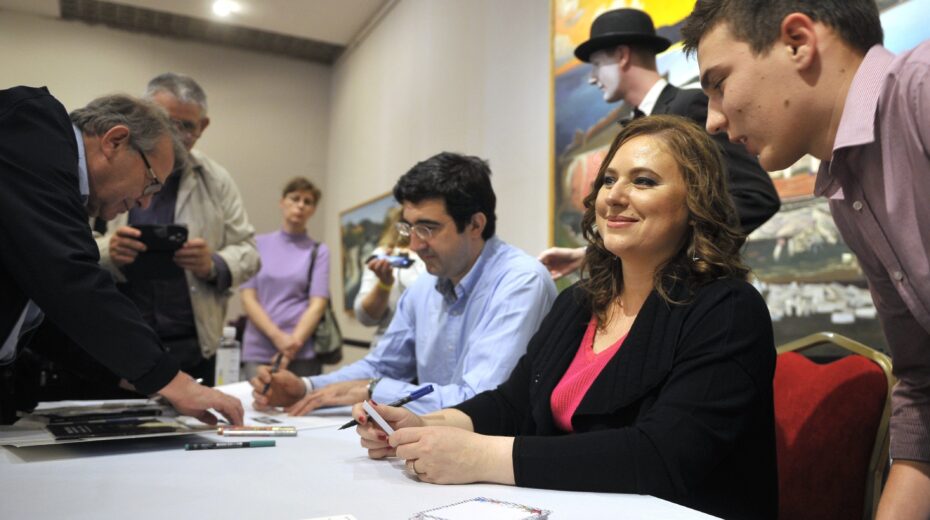
Polgár herself became known not through politics, but through chess. Together with her sisters Zsuzsa and Zsófia, she was supported by her father, László Polgár. In 1991, at the age of 15 years, she became a Grandmaster, breaking Bobby Fischer‘s record at the time . She was the only woman to ever permanently break into the absolute top ranks of the male chess world, the only woman to surpass the 2700 Elo rating mark, and reached number eight in the world rankings in 2004.
She defeated numerous world champions, including Garry Kasparov, Anatoly Karpov, Vladimir Kramnik, and Magnus Carlsen. She ended her chess career in 2014 but remained publicly active as a trainer, education ambassador, and founder of the Judit Polgár Chess Foundation.
The fact that Magyar sought her out for the presidency demonstrates the desire for a symbolic figure beyond party politics. Polgár’s refusal, however, also reveals the difficulty of the task: after years of political polarization, Hungary is deeply divided. A chess legend can inspire a country, but she doesn’t have to be willing to put herself on the political stage.
Want more news from Israel?
Click Here to sign up for our FREE daily email updates