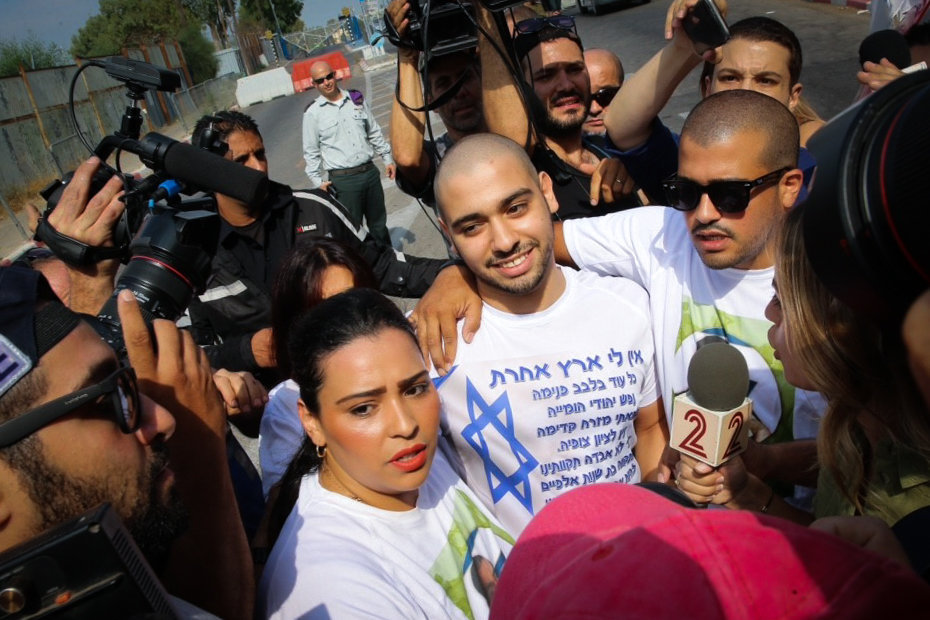

On the eve of Yom Kippur, President Isaac Herzog pardoned former IDF medic Elor Azaria – nearly ten years after he shot a Palestinian attacker lying on the ground in Hebron and was convicted of manslaughter. The pardon completely expunges Azaria’s criminal record – which otherwise could not have been cleared until 2032.
The case that divided Israel for years
On March 24, 2016, Abdel Fattah al-Sharif and another Palestinian stabbed an Israeli soldier in Hebron. Al-Sharif was wounded and lay disarmed on the ground when Azaria, then a 19-year-old medic with the Kfir Brigade, arrived and shot him in the head, killing him. A military court convicted Azaria of manslaughter in 2017 and sentenced him to 18 months in prison – later reduced to 14 months, of which he effectively served nine. In an earlier pardon request to former President Reuven Rivlin, Azaria had described the shooting in retrospect as an “operational mistake” he would not repeat.
The case became a symbol of a deeply divided nation: the right saw Azaria as a soldier who had protected his comrades and been sacrificed by an overzealous justice system. The left insisted on the applicability of the laws of war even in combat. Demonstrations for and against Azaria filled Israeli public squares, and Itamar Ben Gvir – then still far from holding a ministerial position – personally took to the streets in support of Azaria.
Katz, Ben Gvir and the message to soldiers
Herzog acted on the recommendation of Defense Minister Israel Katz, who described the decision as “right, humane and appropriate.” Katz stated that Azaria had served his sentence and “paid a heavy personal and family price” – now it was time to allow him to “leave the past behind, rehabilitate his life and build his future.” He emphasized: “Granting the pardon sends an important message to IDF soldiers and their families: we do not abandon our fighters.”
Ben Gvir, who had demonstrated on Azaria’s behalf ten years earlier, described the decision as “very moving and joyful” and called on the Chief of Staff to allow Azaria to return to military service: “The criminal record should never have existed in the first place. Elor, the people of Israel love you and stand by you.”
Herzog explicitly clarified that the pardon does not reopen the judicial proceedings and does not constitute a court of appeal – the conviction itself remains in place. The timing – the eve of Yom Kippur, the day of atonement and new beginnings – is hardly coincidental.