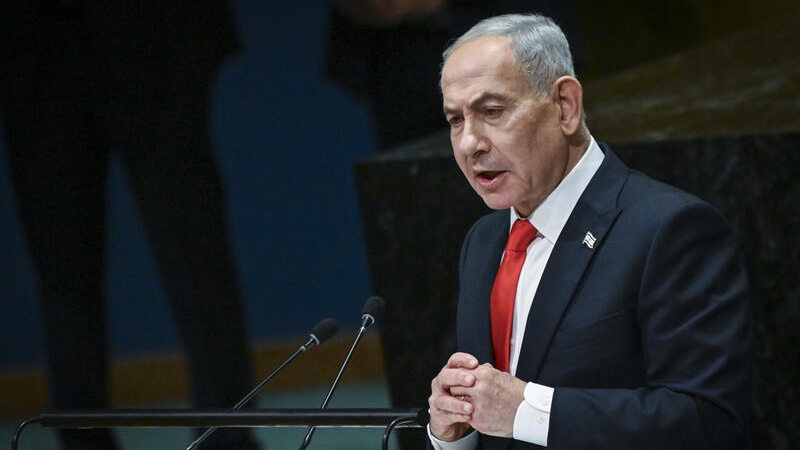
Benjamin Netanyahu argues that his chief election rival Gadi Eisenkot cannot form a government without the Arab parties. But Bibi seems to have the same problem.
As Israel approaches a fateful national election on October 27, the path to a stable coalition government is nowhere to be found.
The latest Zman Yisrael poll gives the Jewish-led opposition 55 seats and Netanyahu’s bloc 51. A Channel 13 poll a day earlier reversed the order, 55 to 50. Ra’am and the Joint List, the two main Arab factions, take about 14 seats, and pollster Shmuel Rosner sees little chance either bloc reaches 61.
So the campaign has become a contest over whose partners are worse.
The opposition’s six seats
Netanyahu’s case deserves a hearing. Eisenkot, Yair Lapid and Avigdor Liberman have all ruled out repeating the 2021 partnership with Ra’am.
But 55 is six short, and the Arab parties are volunteering. Ra’am’s Mansour Abbas says replacing Netanyahu is his top priority. The Joint List’s Youssef Jabareen says he’d back any government that ends Netanyahu’s rule. Political scientist Gayil Talshir has sketched an Eisenkot minority government voted in by Ra’am from outside the coalition.
The pledge was to keep Arab parties out of the coalition, not to refuse their votes.
Netanyahu’s own Bennett
Now the same test for the prime minister.
His 51 includes Ofer Winter’s new People of Israel party, polling at four seats, the bare minimum to enter the Knesset. Winter says he’ll recommend only Netanyahu but won’t join without a universal draft law, which Netanyahu’s ultra-Orthodox partners staunchly oppose.
Netanyahu has called Winter a phony right-winger and compared him to Naftali Bennett, who despite being right-wing, promptly formed a coalition with left-leaning and Arab parties after the 2021 election. This week. Right-wing firebrand Itamar Ben-Gvir refused a surplus-vote deal with Winter, calling him “Bennett 2.”
If Winter’s demand that the ultra-Orthodox do military service is a deal-breaker, the 51 isn’t a bloc at all. Drop Winter and it’s 47. Drop Shas and United Torah Judaism, at eight seats each, and it’s 35.
Rosner adds that no anti-Netanyahu party risks missing the threshold, while at least one in Netanyahu’s camp does. In 2022, Netanyahu pushed current-Finance Minister Bezalel Smotrich and Ben-Gvir onto one list. This time Smotrich’s Religious Zionism, Ben-Gvir’s Otzma Yehudit and Winter’s People of Israel are running separately. Too much seat-counting among too many smaller parties that might not even hit the electoral threshold.
What deadlock rewards
If no one reaches 61, Israel could head back toward the cycle of repeat elections that began in 2019, with Netanyahu staying on as caretaker. President Isaac Herzog says he’ll work for a stable government and that another round must be avoided.
But Herzog’s good intentions alone won’t be enough.
Someone is going to have to work with someone else they’ve already bad-mouthed.
Netanyahu needs a man he calls fake and partners who can’t sit with him. Eisenkot needs six seats he has promised not to take from the only place they’re offered.
Want more news from Israel?
Click Here to sign up for our FREE daily email updates