
(JNS) In a sense, it would be nice if celebrations of the Hanukkah holiday could reflect the mindset of attempts by those who control Western popular culture to water it down in order to blend in with the Christmas cheer of the end-of-year holiday season. But right now, that’s even more tone-deaf to the reality of Jewish life than it is in more peaceful times.
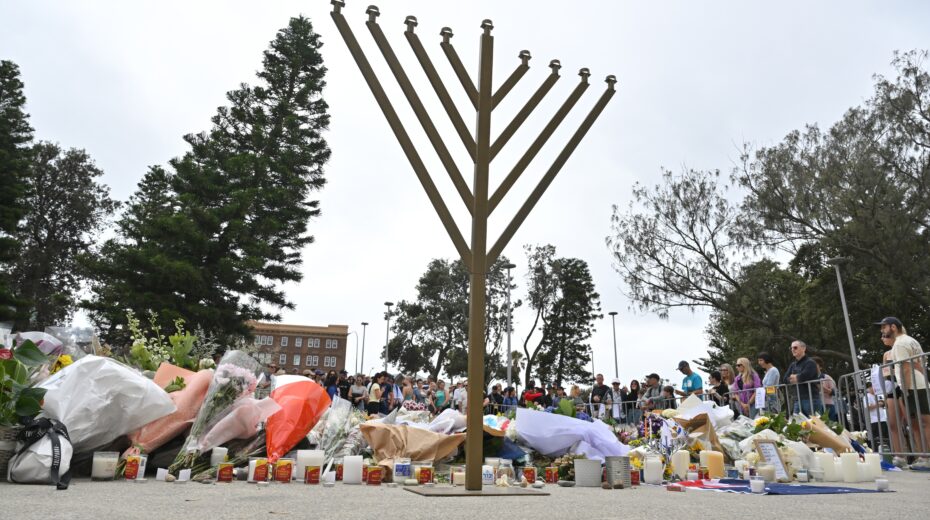
After the Bondi Beach massacre of 15 people at a Hanukkah event, it’s not really possible to pretend that the meaning of the “Festival of Lights” is anything other than what it has always been: a commemoration of one episode in the ongoing struggle to survive the attempts of antisemites to extinguish the existence of the Jewish people.
It’s also disappointing that the leaders of a country that welcomed so many Holocaust survivors after World War II folded to Palestinian peer pressure and dropped their guard, effectively allowing such a horrific incident to happen in the first place.
The cost of antisemitic incitement
The bloodshed in Australia—among whose victims were an 87-year-old Holocaust survivor, a 10-year-old girl and a Chabad rabbi—was much like the terrorist attacks against Jewish targets in Manchester, England, in September; Boulder, Colo., in June; Washington, DC, in May; and Harrisburg, Pa., in April. The same is true of the pogrom last November against Israeli soccer fans in Amsterdam, in addition to many other instances of violence and intimidation aimed at Jews. They are all the tragic result of antisemitic incitement rooted in the demonization of Israel and the Jewish people, which has become routine since the Hamas-led Palestinian Arab attacks on Israel on Oct. 7, 2023.
And that is why the anodyne expressions of sympathy about the slaughter in Bondi Beach from the government of Australia, in addition to politicians, journalists and others around the globe who have participated in the efforts to falsely label Israel’s war of self-defense against these terrorists as “genocide,” ring hollow. Their crocodile tears about the victims are an insincere attempt to distance the tragedy from advocacy that has normalized the sort of discourse about Jews that inevitably leads to violence.
Attempts to separate the mainstreaming of blood libels about Israel committing “genocide” in Gaza or advocacy for the destruction of the one Jewish state on the planet from these attacks on Jews aren’t merely wrongheaded. They are utterly disingenuous and give a pass to the effort to make Jew-hatred acceptable among those who think of themselves as decent people, rather than bigoted haters.
The spreading of these falsehoods about Israel’s war against terrorist groups who seek the genocide of the Jewish people is often couched in the language of human rights, concern for suffering Palestinians or represented as merely “criticism” of Israel’s government. In addition to being a distortion of reality, this has helped to create a belief among a broad audience—principally young people, who get their news from TikTok and other social-media platforms where algorithms prioritize Hamas propaganda—that Israelis and Jews are a class of human beings who are “white” oppressors of helpless victims.
In this way, Jews—the most persecuted minority group in history and a small people clinging to life in an equally small state—are now thought of as villains. To those who swallow this false dialectic, the Jewish people are deserving of neither rights nor sympathy, even when they are subjected to the sort of orgy of mass murder, burning, torture, rape and kidnapping that occurred on Oct. 7.
And it’s how tragedies like Bondi Beach and all the other attacks on Jews, including the ongoing campaign of intimidation on college campuses, become possible, if not normalized.
That a reminder of this brutal reality of Jewish life in the 21st century should come at Hanukkah seems particularly cruel. But as much as we mourn those killed and pray for the swift recovery of the wounded, the holiday is an apt time to remember the cost of hatred and the necessity for Jews to defend themselves and their one state.
Not a blue-tinseled Christmas
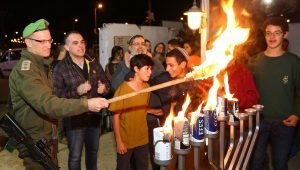
Many secular Jews treat Hanukkah as just a blue-tinsel version of the “goodwill to all” that animates the highly commercialized yet pleasurable December festivities. It allows those living in Western nations to be full participants in the end-of-year holiday spirit that homogenizes all religious observances into fodder for Hallmark movies (of which, there are now some Jewish ones on the TV channel, too). But while incorporating the gift-giving into what was traditionally a low-key festival does no harm, it tends to erase what Jews are actually commemorating when they light the candles.
Hanukkah has nothing to do with that.
It is a remembrance of a bloody war waged 2,190 years ago to resist an attempt by the rulers of the land of Israel at that time to extirpate Judaism and Jewish identity. The rebellion led by Mattathias and his five sons, known to history as the Maccabees, did so to preserve their people and faith against the powerful cultural forces of Hellenism that were dominant in the Mediterranean world. Arrayed against them were, in addition to the Syrian-based Seleucid Greeks, many Jews who preferred to assimilate into that non-Jewish world and trade their peoplehood for the pleasures and advantages of the Hellenist world.
The struggle took many years and involved a bitter conflict that was as much a civil war against the Hellenist Jews as it was a battle against foreign oppressors who had defiled the Jewish temple in Jerusalem. It was eventually won by the Jews with not a little help from the dominant world power of the day—Rome—which would prove in the following centuries to be an equally great danger to Jewish life.
That’s not the stuff of Yuletide cheer, let alone holiday romances.
Jewish religious tradition downgraded the holiday that the Hasmonean dynasty created to remember their victory in large measure because the descendants of the Maccabees eventually became tyrannical rulers of the land of Israel and every bit as assimilated as those they defeated. The story of the miraculous oil that lasted for eight days in the redeemed Temple overwhelmed, if not altogether replaced, the freedom-fighter narrative in an effort to put the emphasis on Divine intervention.
A fight for freedom
Yet the message of Hanukkah remains one that incorporates both faith and the need for the Jews to act rather than to wait passively for rescue and deliverance. It may have been Benjamin Franklin’s 1732 Poor Richard’s Almanac that popularized the aphorism: “The Lord helps those who help themselves.” But nothing better illustrates the truth of that phrase than the Maccabees’ fight for freedom. The same is true of the modern Zionist movement. Building on the essential importance of the land of Israel in Judaism and Jewish identity, Zionism allowed the Jews to once again become actors on the world stage in their own right and no longer dependent on the kindness of strangers for life and liberty.
Jews and non-Jews alike can acknowledge that the Maccabean revolt was an expression of the will to self-determination and political liberty that all peoples share. But it’s a reminder that preserving Jewish life in a world where universalist (and often coercive and destructive) views seek to extinguish and marginalize minority faiths requires the making of hard choices.
The post-Oct. 7 surge of antisemitism across the globe is shocking to those who would prefer to observe a Judaism in which a watered-down faith is emphasized over the particularist aspects of Jewish life. The essence of Jewish identity throughout history, however, has always been a refusal to bow down to the idols of popular culture. In the time of the Maccabean revolt, it was the powerful pull of Hellenism. Today, it is the secular faith of woke progressivism. And as has always been the case for Jew-haters, the determination of Jews to persevere and thrive, despite the challenges arrayed against them, is seen as a provocation that invites demonization and violence.
Hate among the angry mobs may be disguised as concern for Palestinians. Yet once you strip away the myths and lies from a cause inextricably tied to a belief that the Jews, alone of all the peoples in the world, are undeserving of a homeland, sovereignty, security and the right to self-defense, it becomes clear that it is nothing but a new version of the old virus of antisemitism.
The miracle of Jewish resistance and survival
Today, as was true then, Jews must be prepared to defend Jewish life, both in the State of Israel and elsewhere. That Jews must live in a world where holiday celebrations, as well as religious services, must include rigorous security is sad, but the story of Hanukkah teaches us that this is nothing new.
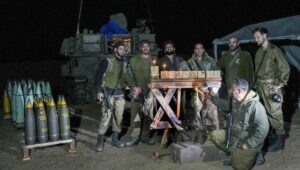
Most importantly, we cannot be daunted by this challenge into succumbing to despair or to surrender to the forces arrayed against us. Rather, we must be inspired by the heroic victories of the past, as well as by the courage of the contemporary Maccabees who serve in the Israel Defense Forces. As difficult as it may be to contemplate the suffering of Jewish victims of this wave of animosity, we must also remember that it is fueled by antisemitic rage at the success of Israel, which, contrary to the narrative on TikTok, is not merely surviving in the face of delegitimization, but becoming stronger and more secure than ever.
The true miracle of Hanukkah is a reminder that it takes extraordinary efforts and the faith of ordinary Jews to keep the flame of Jewish civilization lit in every generation. Doing so today requires Jews, both young and old, to find the courage to embrace a sense of peoplehood that is waning in the face of assimilation and pressure from those who denigrate Jewish identity, as well as to stand up for Israel and Zionism.
We cannot abandon the field to those who have taken up the cause that the Syrian Greeks once championed—whether they are Marxist progressives, Islamists or right-wing Jew-haters. As we light the candles this year, we remember the victims in Australia and the necessity not to let their murderers, as well as the Oct. 7 criminals and those deluded souls who cheer them on, prevail. Anything else is betraying the true meaning of the holiday.
Want more news from Israel?
Click Here to sign up for our FREE daily email updates