(JNS) Less than 50 years ago, Tel Aviv’s Ben-Gurion International Airport served as the departure point for one of the most sought-after, modern, and accessible destinations for Israelis—Iran.
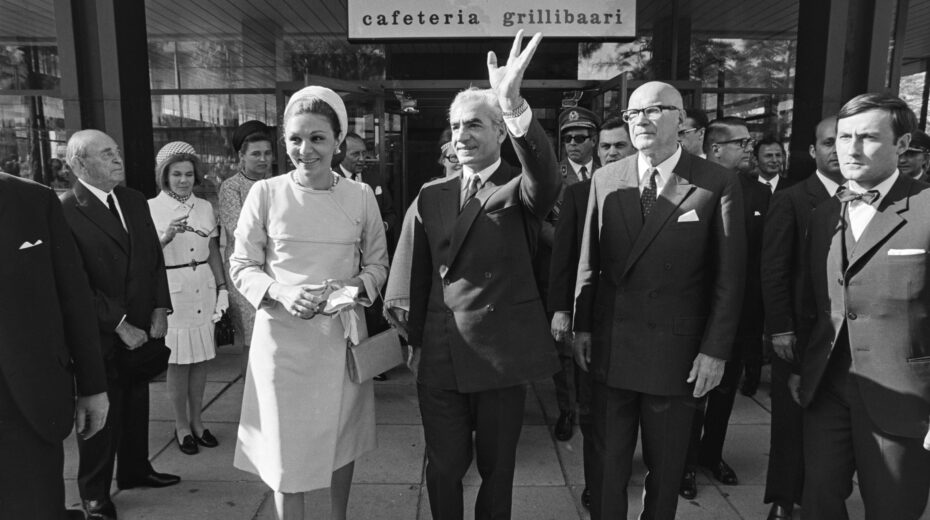
This wasn’t just a neighboring country, but “the big sister” and the advanced one, a place where women in miniskirts strolled wide boulevards, alcohol flowed in glittering nightclubs, and Shah Mohammad Reza Pahlavi worked to transform his kingdom into the Persian version of France.
Why everyone flocked to Tehran
In the 1960s and 1970s, Tehran didn’t look like a city in the heart of a conservative Muslim country. It was a thriving metropolis undergoing accelerated Westernization under the sponsorship of the shah’s White Revolution. This was a series of reforms designed to rapidly modernize the country through land redistribution, expansion of education and women’s rights (which also increased internal opposition and created tensions that laid the groundwork for the Islamic Revolution).
Tourists from Europe and the United States saw Iran as the perfect combination of Eastern exoticism and Western infrastructure.
On Pahlavi Street in Tehran, you could find movie theaters screening the latest Hollywood films simultaneously with their US release. Boutiques displayed collections from Parisian and Milanese haute couture designers, and the local elite was educated and French- and English-speaking.
Tehran’s clubs were famous for live performances by international singers alongside Persian pop stars such as Googoosh. The famous Caspian caviar was served on silver platters alongside premium vodka, and the atmosphere was one of endless celebration.
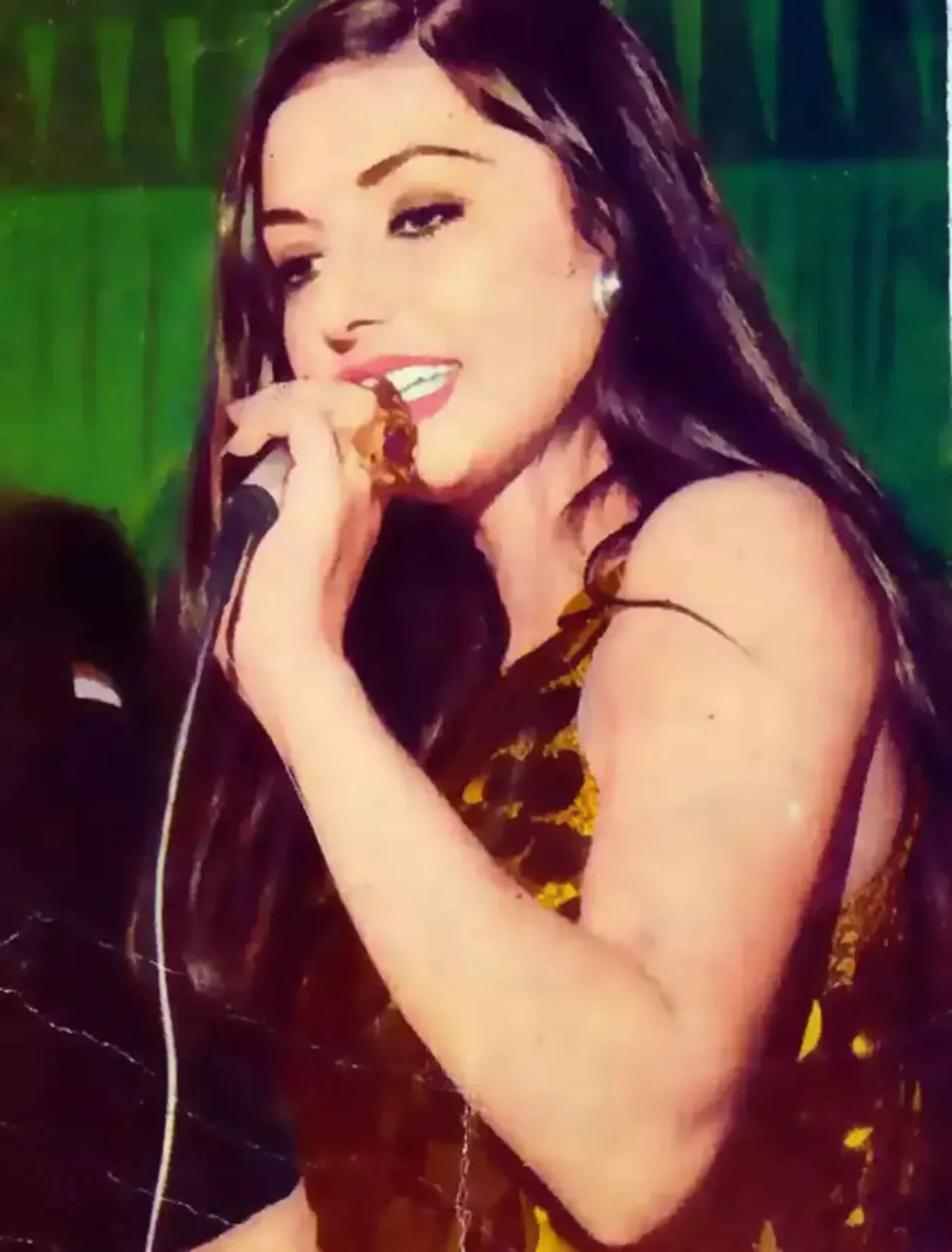
Googoosh singing in Iran before the Islamic Revolution. Source: Unknown author via Wikimedia Commons.
Googoosh wasn’t just another pop singer—she was the greatest cultural icon of modern Iran, the Madonna and Édith Piaf of the Middle East simultaneously. In the period before the 1979 revolution, she represented everything that was glamorous, liberal and cosmopolitan in Iranian society.
The megalomaniacal splendor
You can’t discuss tourism in pre-1979 Iran without mentioning 1971. The shah decided to celebrate 2,500 years of the Persian Empire with an event still defined as “the most expensive party in history.”
At the ancient site of Persepolis, in the heart of the desert, a manic tent city was erected. These weren’t camping tents, but royal suites made of silk.
Heads of state, kings and presidents (including an honored Israeli delegation) were invited for two days of sensory intoxication.
Food was flown in on special flights from Paris, and the entire event was designed to show the world that Iran was a global superpower. For the average Western tourist, this was the signal that Iran was the place to be.
From skiing to tropical islands
Iran offered geographical diversity almost unparalleled in the region:
In the Alborz Mountains, north of Tehran, Dizin, one of the world’s best ski resorts was established. The snow there is considered exceptionally high-quality, and the resort was a pilgrimage site for ski enthusiasts from Europe seeking an alternative to the Alps.
The old cable cars, manufactured in France and Germany before the 1979 revolution, still creak their way up, carrying a new generation of young Iranians. For them, Dizin is a bubble of freedom. Here, far from the watchful eyes of the modesty patrols in the capital, large sunglasses and helmets blur the boundaries.
The shah dreamed of turning Kish Island in the Persian Gulf into a competitor to Monte Carlo. A luxurious casino was established there, along with luxury hotels and even an airport adapted for landing the supersonic Concorde aircraft. This was the playground of the Gulf and Western elites.
Kish Island underwent a fascinating transformation. If before 1979 it was the exclusive playground of the shah and world aristocracy, today it has become the Iranian version of Eilat combined with Dubai—a free trade zone, a mass domestic tourism hub and a bubble of relative liberalism in Iran.
Isfahan and Shiraz provided the cultural-historical aspect. Naqsh-e Jahan Square in Isfahan, with its stunning blue mosques, was mandatory for any architecture enthusiast.
At the heart of Shiraz, the city of poets and wine, lies the crown jewel of Persian gardens—Eram Garden (Bagh-e Eram). A place where royal architecture meets Iran’s wild nature, creating a reflection of paradise as described in the Quran.
The Israeli angle
In those years, Iran was the preferred destination for many Israelis—for business and for pleasure.
El Al operated regular, direct flights between Ben-Gurion Airport and Tehran. Israelis didn’t need complicated entry visas, and the reception was exceptionally warm.
Tehran was home to a large Israeli community of thousands—engineers, military personnel, businesspeople and their families. They established Israeli schools there, social clubs, and even a branch of the Solel Boneh construction company that built grandiose projects throughout the country.
Israelis used to fly to Tehran to buy authentic Persian carpets, gold jewelry and caviar at laughable prices. For the average Israeli of the 1970s, Tehran was abroad in the full sense of the word—bigger, richer and more spectacular than the small Tel Aviv of that era.
The bitter end and lingering nostalgia
The 1979 Islamic Revolution led by Ayatollah Ruhollah Khomeini didn’t just change the face of politics, it erased a thriving tourism industry overnight.
Movie theaters were burned, nightclubs closed and the casino on Kish Island became an abandoned building (later transformed into a “modest” shopping center). The women who were forced to cover themselves with hijabs were the same women who, just months earlier, had modeled the latest fashion on Tehran’s streets.
The revolution erupted as a massive popular eruption already in 1977 and gained tremendous momentum during 1978. It included liberal students, communists, intellectuals and secularists—many of whom didn’t want a theocratic state at all, but simply the end of the shah’s authoritarian rule as his government became more autocratic.
Today, many young Iranians look at photos of their parents from the 1970s—in swimsuits on the Caspian Sea shore or dancing in clubs—with longing for days of freedom and openness.
Tourism to Iran currently exists in a very limited form, mainly for adventurous history enthusiasts, but the glittering golden age remains a distant memory, wrapped in caviar and the scent of French perfume in the heart of the Persian desert.
Originally published by Israel Hayom.