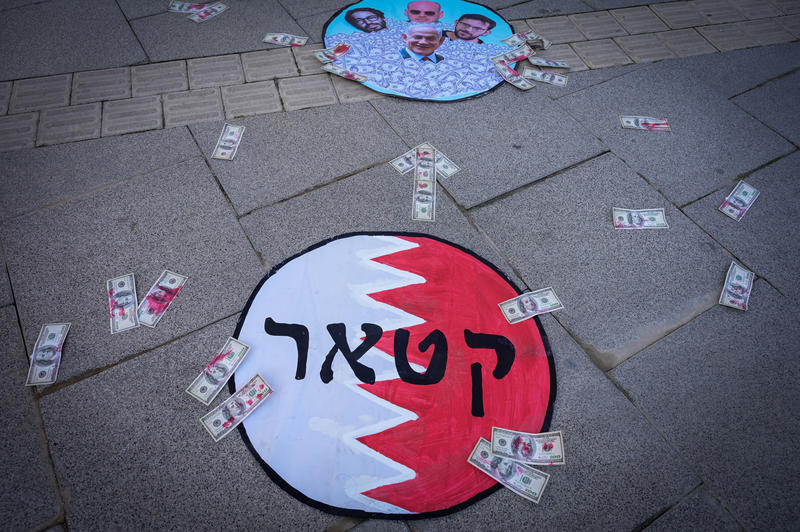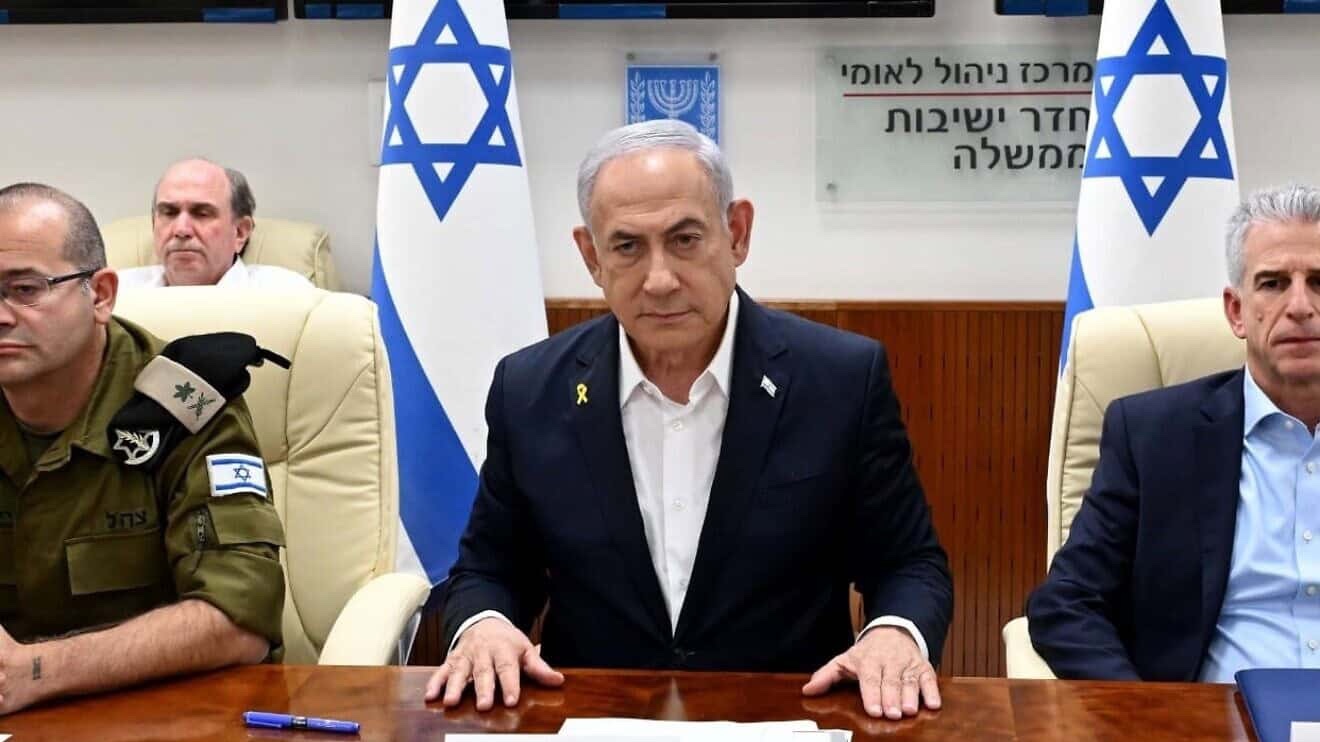

Prime Minister Benjamin Netanyahu was panned abroad and at home for his reportedly apology to Qatar over the recent Israeli strike on Hamas leaders in Doha.
But did Bibi apologize for carrying out the attack? Not really.
A readout of Netanyahu’s call with Qatar’s prime minister, conducted under President Donald Trump’s direct supervision from the Oval Office, reveals that the Israeli leader apologized for the fact that a Qatari citizen was killed in the strike, but not for the strike itself.
“Israel regrets that one of your citizens was killed in our strike,” said Bibi, adding that “Israel was targeting Hamas, not Qataris.”
Netanyahu did affirm his commitment not to strike Hamas leaders again on Qatari soil, but ended by stressing that “Israel has grievances against Qatar, from support for the Muslim Brotherhood to how Israel is portrayed on Al Jazeera to support for anti Israel sentiment on collage campuses.”
Prime Minister Benjamin Netanyahu in a Phone Call with the Qatari Prime Minister:
Mr. Prime Minister, I want you to know that Israel regrets that one of your citizens was killed in our strike.
— Prime Minister of Israel (@IsraeliPM) September 29, 2025
Trump on Wednesday signed an executive order declaring any further armed attack on Qatari soil to be a threat to the peace and security of the United States, and that the US would take all necessary measures to protect Qatar.
Some have argued that Trump seems more upset over Israel targeting Hamas leaders in Doha than he was when Iran directly targeted the US military base in Qatar in a ballistic missile strike earlier in the summer.
Israel’s strike was legal
Trump might be upset over Israel’s bold action against Hamas in Qatar, but that doesn’t mean it was illegal.
In fact, the action complies with international humanitarian law (IHL) and the law of self-defense. Under IHL, members of non-state armed groups actively engaged in hostilities—like Hamas’s Political Bureau—are lawful military targets. Hamas’s Politburo is not a mere political entity; it exercises command and control functions, authorizes attacks, and coordinates hostage-taking operations. These roles meet the legal threshold for continuous combat function or direct participation in hostilities, making them targetable under both status-based and conduct-based frameworks.
Geographically, the legality of striking inside Qatar rests on the “unwilling or unable” doctrine. Qatar’s long-standing harboring and financing of Hamas, combined with its failure to curtail the group’s operational use of its territory, supports Israel’s legal claim to act in self-defense.
Scream and cry all you want. Israel’s Doha strike was an obligation under UN law.
UNSCR 1373 (post-9/11) obligates states to deny safe haven & funding to terrorists. Qatar broke it by hosting Hamas Politburo & bankrolling $2B+.
UNSCR 2249 calls on states to use “all possible… https://t.co/ZH5KE5AUcS
— The Mossad: Satirical and Awesome (@TheMossadIL) September 25, 2025
This mirrors US-led actions against al-Qaeda and ISIS in states that failed to prevent terrorist operations within their borders.
Crucially, the strike was discriminant and proportional, targeting key operatives while minimizing civilian harm.
In sum, Israel acted within the bounds of law by targeting enemy combatants responsible for ongoing armed attacks, from a jurisdiction that has failed its duty to prevent such threats from being organized on its soil.
Want more news from Israel?
Click Here to sign up for our FREE daily email updates