
Yet again in recent years the Lord has drawn me to learn more about my adopted ancestor Andrew Murray (1828-1917) who made such a mark on the Church in South Africa and abroad.
Greatly loved by Christians, past and present, books about him keep coming off the presses while some of the hundreds of publications for which he was responsible are being reprinted.
I’ve learnt many new things from Vance Christie’s biography published just ten years ago by Christian Focus. For one thing, it seems Murray’s theological study in Holland was greatly influenced by a revival movement led in part by Izaak da Costa and Abraham Capadose, both described as Jewish converts to Christianity! The modern Messianic movement was already in full swing.
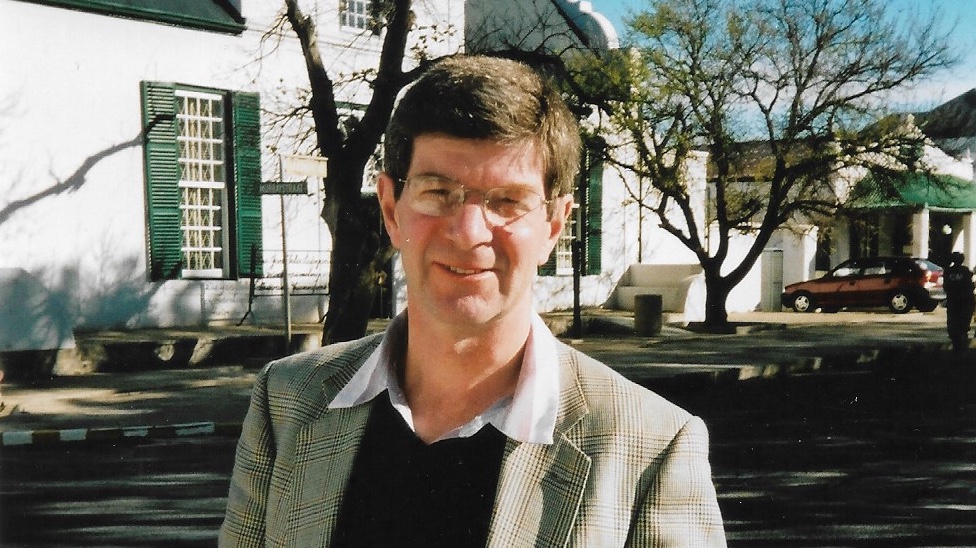
I use the expression ‘adopted ancestor’ because my orphaned great-grandfather, also Charles, was brought up in the Graaff-Reinet parsonage of Andrew’s parents, Rev Andrew Murray Snr and his wife Maria. More of that later.
Andrew Jnr was one of 16 children which evidently didn’t stop the Murrays from extending their love to young Charles (1848-1917).
By the time of the 1922 centenary of the Murrays’ arrival in South Africa from their native Scotland to help pastor the scattered Boer communities who had fled the overbearing British rule in Cape Town, the clan numbered nearly 500 descendants, and what a remarkable impact they made for Christ!
Andrew Jnr was an electrifying preacher of the gospel who helped fan the flames of revival in the Cape and elsewhere (including my hometown of Ladysmith in KwaZulu-Natal) and even undertook regular evangelistic tours over great distances well into his eighties.
In 1913, for instance, he covered 1,900 miles in eleven weeks of preaching throughout the vast country. At least, on this occasion, he had the advantage of travelling by motorcar part of the way. But most of his travels over the years were either on horseback or oxcart.
On his return from studying in Scotland and Holland, aged just 21, his first ‘parish’ covered an extraordinary 50,000 square miles and he made every effort to reach even the most remote farms as he fulfilled his pastoral duties.
Although travel was painfully slow, I had imagined it was better than navigating the stress of modern motorways, but in fact he suffered several serious accidents involving carts turning over, leaving him with broken limbs and an injured back. But he never let it stop him.
He was also a prolific writer, with a veritable library of books flowing from his ever-ready pen with an anointing matching his pulpit deliveries – written both in Dutch and English and translated into many other languages.
Although quite clear about his foursquare stand on the absolute authority of Scripture, he was a man of great love and humility who saw himself as a Christian first, and a Dutch Reformed minister after that. He pulled no punches, when necessary, but always with grace.
When a Transvaal pastor announced that he was forming a breakaway movement, Murray responded by inviting him to preach in his pulpit!
He was also a man of peace, who was even used as an intermediary for an international treaty in 1852 through which the British agreed to let the Boers run their own republics beyond the Orange and Vaal rivers.
So it was not surprising that the outbreak of the Anglo-Boer War nearly 50 years later proved greatly distressing for him. Britain broke their agreement in the wake of the discovery of gold in the Transvaal – and the rest is a very dark history.
Ignoring an impassioned plea for peace from Murray, Britain went ahead with a very unjust war, sending over 400,000 troops to eventually (after three years) overwhelm the valiant Boers, but not before their wives and children were herded into concentration camps where 26,000 perished – representing half the nation’s Boer children – along with 14,000 black people.
But Murray’s battle for faith, and the power of prayer and preaching, was undiminished. His contribution to South Africa, and the world, was of gold tried by fire having a much more lasting effect than the glowing metal being dug up in Johannesburg!
The solid metal of the Christian faith, built on the rock of Christ, is surely the only reliable and trustworthy foundation for a nation’s life and soul. The Apostle Peter says faith is “of greater worth than gold, which perishes even though refined by fire” (1 Peter 1:7).
On a more positive note, many of the Boer prisoners-of-war became believers through the chaplains sent to them.
Murray had much to say about power – the baptism of the Holy Spirit for bold gospel declaration for instance. He also believed in divine healing and successfully acted upon it, both for himself and others. In addition, he was the founder of many educational establishments and led a South African Keswick movement, also speaking in the early days of the UK event in the Lake District. But I did wonder at the wisdom of his battles for temperance when so many of his congregation were wine farmers!
Which only goes to show that even the best of our faith heroes did not get everything right, though he undoubtedly laid his life on the altar of sacrificial service for Christ. And I will continue to honour the blessed memory of the family who rescued my ancestors from possible extinction.
My great-grandfather Charles and his siblings were mere toddlers wandering the veldt in distress (around 1852) following the roadside murder of their twice-widowed father en route to catch the boat home to Scotland when they were rescued by Christian families who took them back to Graaff-Reinet.
Charles eventually married Anna Coetzee, a Dutch-Afrikaans lady, and my grandfather, also Charles, insisted on us calling him ‘Oupa’ (as opposed to grandad), as my own granddaughters call me today – maintaining that special link, and legacy!
Charles Gardner is author of Israel the Chosen, available from Amazon; Peace in Jerusalem, available from olivepresspublisher.com; To the Jew First, A Nation Reborn, and King of the Jews, all available from Christian Publications International.