

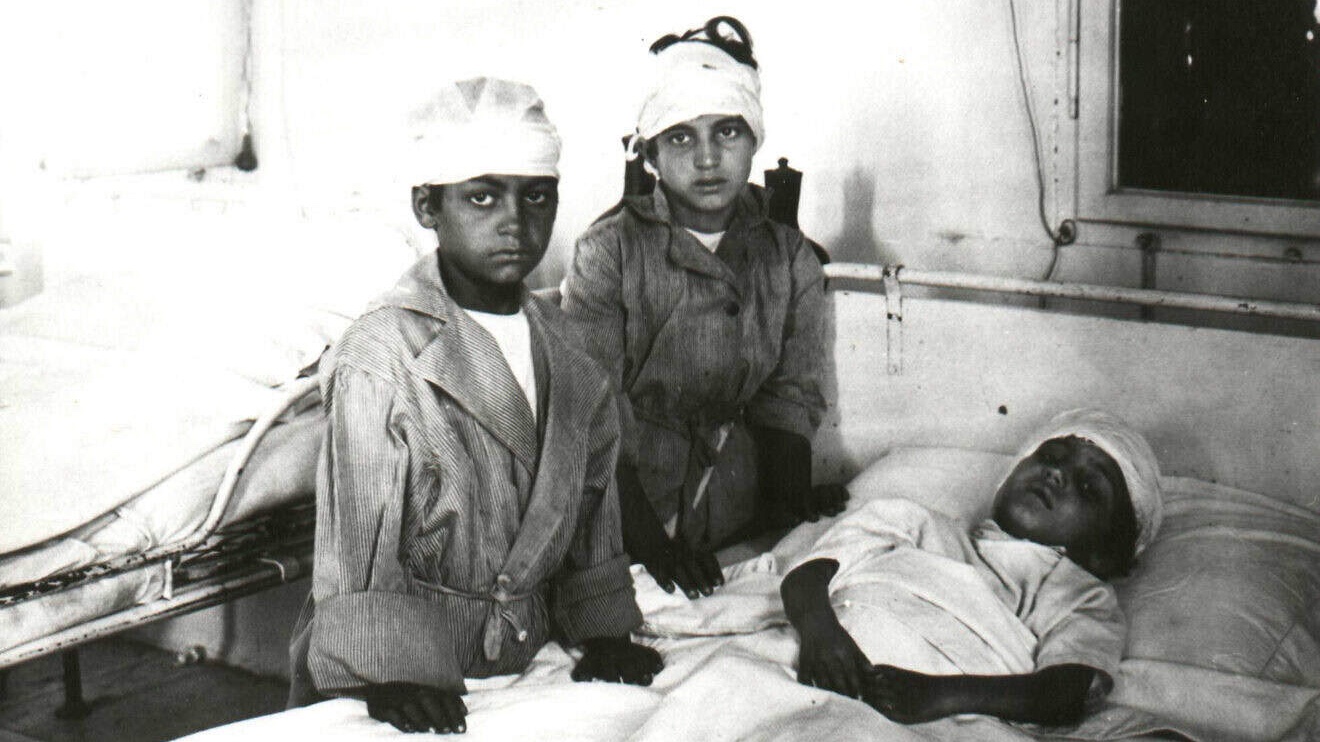
(JNS) When award-winning journalist and author Yardena Schwartz began researching the 1929 massacre of Jews in Hebron, she had no idea she was uncovering what she now calls “ground zero” of the Arab-Israeli conflict. Nor did she imagine that nearly a century later, the patterns she identified would reemerge with devastating clarity on Oct. 7, 2023.
Her book, Ghosts of a Holy War, explores how the murder of 67 Jews in Hebron—once considered one of the safest Jewish communities in Mandatory Palestine—set in motion religious incitement, disinformation campaigns and rejectionist politics that, she argues, continue to shape the conflict today.
“I realized that this long-forgotten massacre in Hebron in 1929 is really the only context you need to understand the driving forces of this conflict,” Schwartz said during a JNS Book Club interview on Jan. 7. “Everything began there.”
Ghosts of a Holy War: The 1929 Massacre in Palestine That Ignited the Arab-Israeli Conflict, which was published on Oct. 1, 2024, and launched in Israel at the Menachem Begin Heritage Center in Jerusalem last May, is not an easy book to read. But Schwartz believes confronting its history is essential.
“If you don’t understand 1929,” she told JNS, “you will never understand Oct. 7—or why this conflict keeps returning to the same deadly place.”
In 1929, the spark was the allegation that Jews intended to seize the Temple Mount and Al-Aqsa Mosque. Hamas would later give the same myth a modern name: “Al-Aqsa Flood.”
The book has received widespread praise, particularly in the Jewish world.
“If you are going to read one book to help you understand the current Middle East tragedy, this is it,” said writer Yossi Klein Halevi, a senior fellow at the Shalom Hartman Institute in Jerusalem.
About the author
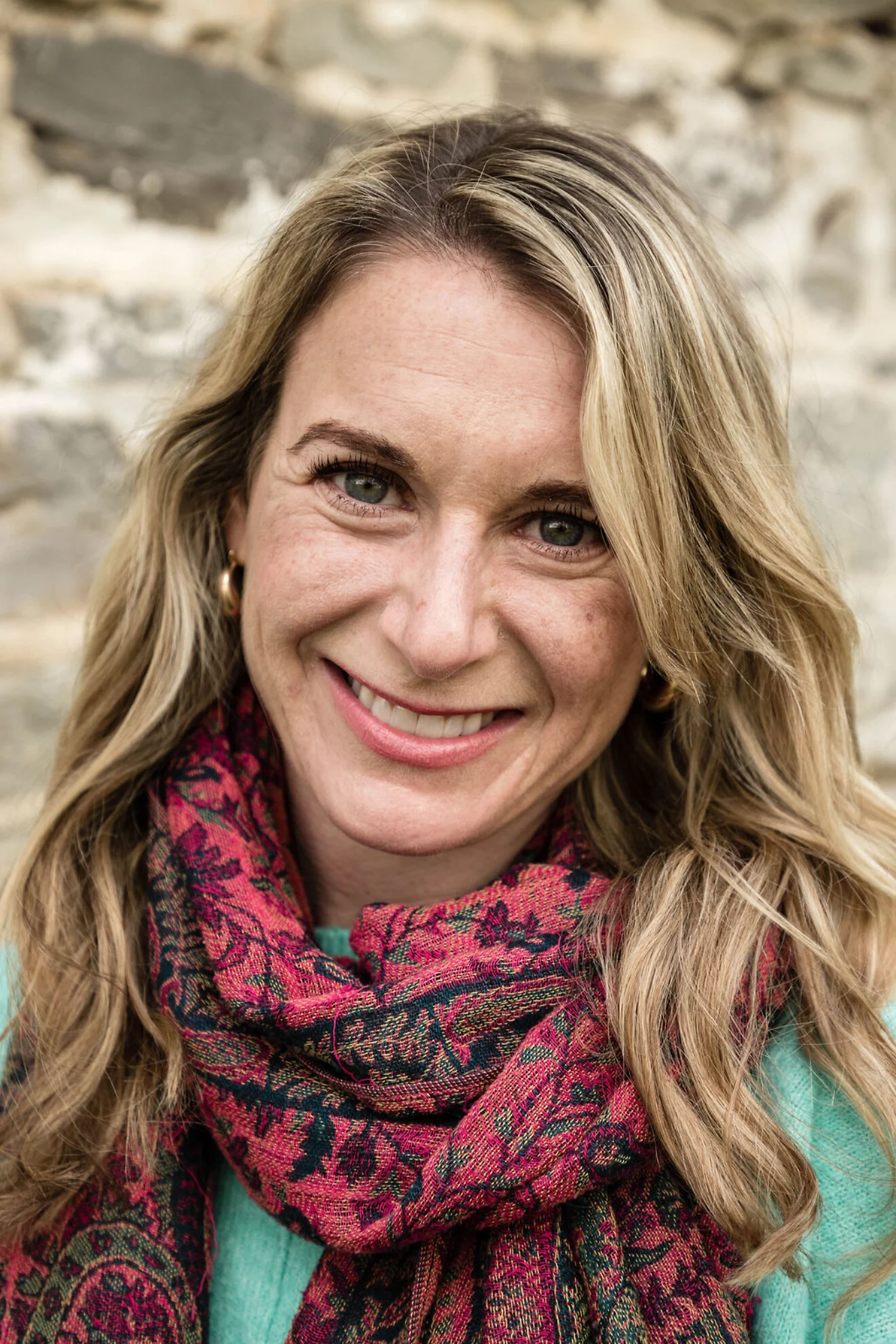
Yardena Schwartz. Photo by Meg Wahnon.
Born and raised in New Jersey, Schwartz is a graduate of Columbia Journalism School, where she earned honors in 2011. She later received an Emmy nomination for her work as a producer at MSNBC and an award for excellence in magazine reporting.
Based in Israel for a decade until 2023, she reported widely on the region for a variety of newspapers and magazines and now lives in New York’s Hudson Valley with her husband and children.
She spent five years researching and writing Ghosts of a Holy War, her first book, which traces the roots of modern violence not to borders or nationalism but to religious disinformation—particularly false claims that Jews sought to take over Islam’s holy sites.
It began with a box of letters
Schwartz did not initially set out to write a definitive history of the Arab-Israeli conflict. The project began in 2019 with a box of letters discovered in an attic in Memphis, Tennessee. The letters belonged to David Shainberg, a 22-year-old American Jew who arrived in Hebron in 1928 to study at the prestigious Hebron yeshiva. He was murdered a year later during the massacre.
“His letters were a revelation,” Schwartz said. “They described a Hebron that was a beacon of coexistence—something that’s almost impossible to imagine today.”
Shainberg’s writings paint a vivid portrait of Jewish life in Mandatory Palestine, from kibbutzim to Rishon LeZion, and the city of Abraham, where Jews and Arabs had lived side by side for centuries. They also reveal a mindset unfamiliar to many readers today: Shainberg was deeply religious and connected to the Land of Israel, yet openly anti-Zionist.
“He described Zionism as a vile, anti-Jewish movement,” Schwartz said. “And what I learned is that this perception was quite common among the old Yishuv—religious, Sephardi and Mizrahi Jews who viewed Zionism as dangerously secular.”
The massacre changed that. In its aftermath, many Jews who had opposed Zionism rallied around it, realizing that neither British authorities nor international goodwill would protect them.
“The British proved not only incapable of protecting the Jews,” Schwartz said, “but unwilling, out of fear of provoking Arab violence.”
The Grand Mufti of Jerusalem
Schwartz’s research uncovered another through-line that remains disturbingly current: the power of disinformation. In 1929, long before social media, lies spread through newspapers, sermons and public speeches. The central figure was Haj Amin al-Husseini, the Grand Mufti of Jerusalem, who claimed Jews were plotting to destroy Al-Aqsa to rebuild the Temple.
“That lie drove the hatred that built over the course of a year,” Schwartz said, “not just in Jerusalem, but in Hebron, where local Muslim leaders claimed Jews were going to seize the Tomb of the Patriarchs.”
For 700 years, Jews had been barred from entering the site, praying only outside its walls, often under harassment. The idea that they planned to take it over was enough to ignite mass violence.
Schwartz said she was shocked by the depth of al-Husseini’s influence—and by how little his legacy is understood today.
“He was the first Arab leader to reject peace with the Jews of Palestine,” she said. “He didn’t just oppose a Jewish state—he opposed the idea of any Jews remaining in Palestine.”
That Arab rejectionism, she argues, runs in a straight line from 1929 through the Arab Revolt, the rejection of partition in 1947, the Khartoum “three no’s,” and repeated refusals of statehood offers in 2000 and 2008.
The Peel Commission
The book includes chilling testimony from the 1936 Peel Commission, in which Zionist leaders Chaim Weizmann and Ze’ev Jabotinsky warned British officials that Europe’s Jews were running out of places to flee. The Grand Mufti’s response was blunt: Jews had no right to Palestine, and those already there could not remain.
Schwartz originally intended the book to end decades earlier. Then came Oct. 7, 2023.
“I never imagined that what happened in 1929 could happen again,” she said. “Not like this.”
“In 1929, it was worse in some ways, because there were no guns,” Schwartz said. “People were butchered alive with swords and axes. Infants were slaughtered in their mothers’ arms. Women were raped. Men were castrated.”
What changed the book, she said, was the realization that history was repeating itself—not only in the violence, but in the aftermath.
“The victim-blaming, the denial, the punishment of the victims—we saw all of that in 1929,” she said.
There were crucial differences. In 1929, there was no State of Israel and two decades before the Holocaust, the international press reported on the massacre clearly and sympathetically. A century later, denial and justification spread globally within hours, fueled by social media.
Schwartz said she cut entire chapters after Oct. 7, including one about the contemporary Jewish community in Memphis and another about a young Palestinian man from Hebron whom she believed could represent a future moderate leadership.
“It no longer fit,” she reflected.
Reshaping Zionism and Jewish identity
The massacre of 1929, Schwartz believes, reshaped Zionism itself. It strengthened the Haganah, accelerated the formation of the Irgun and reinforced the belief that Jewish survival required sovereignty and self-defense.
“The Grand Mufti used religion as a weapon to destroy Zionism,” she said. “And it backfired.”
She sees a similar dynamic today.
“After Oct. 7, Jews around the world who were disconnected from their identity suddenly realized how much it mattered,” she said. “Inside Israel, there’s a renewed understanding that we will protect ourselves, regardless of international pressure.”
Asked why ordinary people can turn with such cruelty on their neighbors, Schwartz pointed again to religious incitement. In Hebron in 1929, she found that Muslims who saved Jews had deep personal bonds with them, while attackers often had only transactional relationships.
“One man stood down a mob and said, ‘This family is my family,’” she recalled. “That difference mattered.”
Ultimately, she rejects the framing of the conflict as merely territorial or nationalist.
“No Arab in Palestine then, and no Arab in Gaza or the West Bank today, calls this a liberation war,” she said. “They call it jihad. The West doesn’t want to hear that, because it makes the conflict much harder to solve.”
Schwartz said that beyond the historical lessons, the aftermath of Oct. 7 has also reshaped Jewish identity for many around the world. “Many Jews who were disconnected from Israel and their Jewish roots realized after Oct. 7 how much that connection really matters.”
Want more news from Israel?
Click Here to sign up for our FREE daily email updates





I am amazed how Hashem uses awful tragedies like these, to bring about essential changes to Israel. Including changes to both the Temple Mount and the Tomb of the Patriarchs.