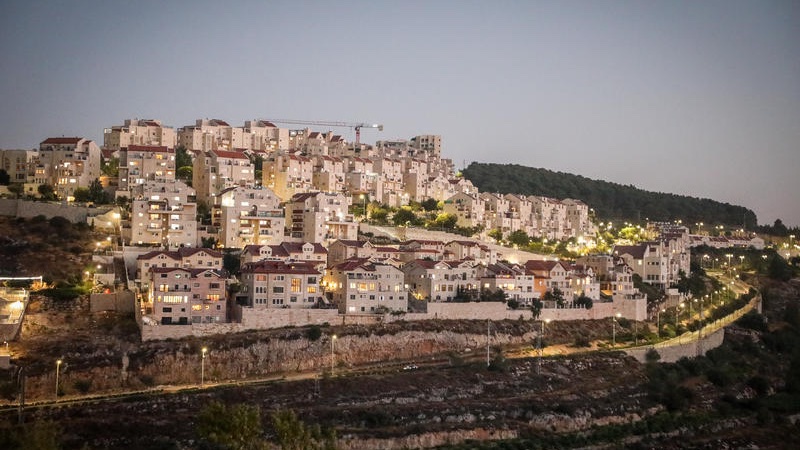

For the first time since the 1967 Six-Day War, Israel has formally resumed land registration across Judea and Samaria.
The Cabinet’s decision — led by Defense Minister Israel Katz, Justice Minister Yariv Levin and Finance Minister Bezalel Smotrich — authorizes the registration of state lands in the biblical heartland under Israeli authority.
In plain terms: ambiguity over who rules this ancient land is coming to an end.
For nearly six decades, a legal vacuum has defined large swaths of what is known as Area C, those parts of the so-called “West Bank” under Israeli security and civil control. Competing claims, outdated records, document disputes and political hesitation created a fog — one that invited manipulation and, in some cases, coordinated land seizures.
That fog is now being lifted.
From vacuum to verification
Land registration puts everything into legal “black and white” — maps, deeds, surveys, documentation.
This is necessary for Israel to move toward true sovereignty in the area.
According to the ministers’ joint statement, the move will:
-
Register state lands formally in the name of the state
-
Create transparency regarding ownership claims
-
Reduce protracted legal disputes
-
Enable infrastructure and long-term development
It also responds to years of parallel land registration efforts advanced by the Palestinian Authority in Area C — despite the fact that under existing agreements these areas are under Israeli control.
In effect, Israel is doing what sovereign governments do: clarifying title, enforcing legal standards and establishing administrative continuity.

A Jewish woman seen at her home in a small settlement outpost in the Binyamin region north of Jerusalem, on December 7, 2025. Photo by Chaim Goldberg/Flash90
Prophecy in motion
Judea and Samaria are for Israelis not abstract disputes. They are Hebron, Shiloh, Bet El — the landscapes of biblical covenant.
For decades, Israel hesitated to codify what history and Scripture already established.
Now, quietly but decisively, the current government is solidifying its presence not merely through construction approvals — though tens of thousands of housing units have been advanced in recent years — but through legal normalization.
This is a historic act of consolidation that many feel is long overdue.
Isaiah spoke of ruins rebuilt and ancient places restored. That restoration, in modern form, looks less like poetry and more like cadastral mapping.
Why this benefits everyone
Predictably, the Palestinian Authority denounced the move and appealed to international bodies.
But clear land registration benefits Palestinians as well.
Legal clarity reduces:
-
Fraudulent sales
-
Endless boundary disputes
-
Conflicting documentation
-
Arbitrary demolitions triggered by unclear status
Investment follows certainty. Infrastructure follows registration. Roads, utilities, and economic growth require defined ownership.
A vacuum benefits only those who exploit it. Order benefits everyone.
The strategic shift
In recent years, Prime Minister Benjamin Netanyahu’s government has advanced unprecedented normalization measures in Judea and Samaria — from lifting restrictions on land records to streamlining property transactions.
This latest step signals something deeper: Israel is transitioning from reactive management of the territory to structured permanence.
The question is no longer whether Israel will remain in its heartland. It is how clearly that permanence will be defined.
Want more news from Israel?
Click Here to sign up for our FREE daily email updates