
There remains a strong desire to accommodate Israel’s number one ally, the United States. But after Oct. 7, there’s also a fresh realization that no one, not even America, is going to put Israeli lives first but Israel.
So it was no surprise when a new national survey found that Israelis had drawn the hard post-Oct. 7 conclusion that security arrangements cannot be outsourced, and borders cannot be defended by diplomatic optimism, even to please Donald Trump.
The poll, commissioned by the Jerusalem Center for Security and Foreign Affairs, found strong public backing for Israeli-controlled buffer zones and continued military presence in several strategic areas, including Gaza, Southern Lebanon, Syria, and the Jordan Valley.
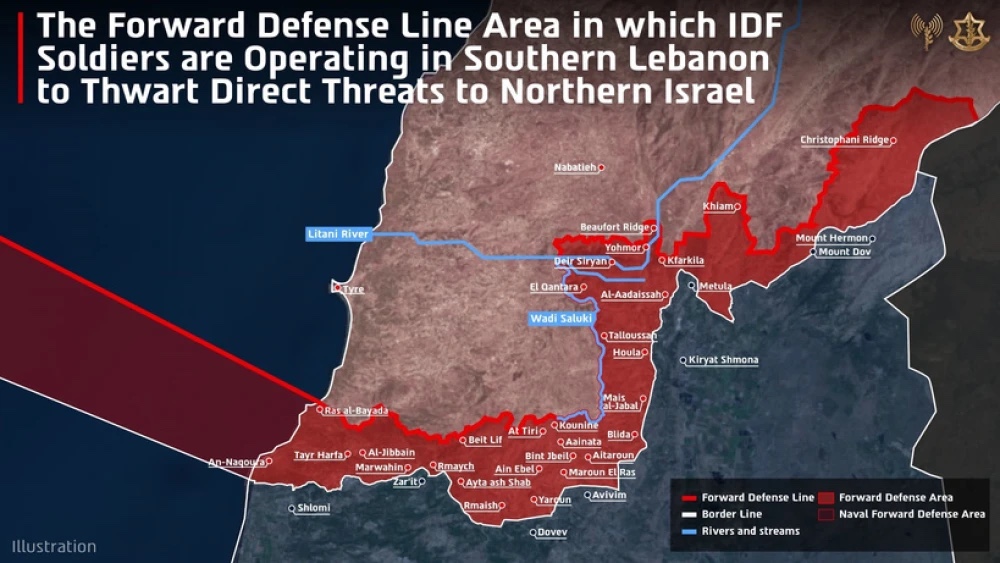
According to the survey, 64% of Israelis support a permanent military buffer zone inside the Gaza Strip, with another 11% favoring a temporary version. Support is even higher regarding Lebanon: 73% said Israel should maintain a security zone in Southern Lebanon up to the Litani River, while only 14% opposed the idea.
See: IDF captures Crusader castle in Lebanon – and why that matters
The findings come as international pressure grows for Israel to limit military operations and accommodate diplomatic frameworks, including renewed efforts by Trump to stabilize the region through an Iran-focused deal. But the Israeli public appears to be signaling a different priority: no agreement is worth much if Hezbollah, Hamas, or Iranian-backed forces can again position themselves on Israel’s borders.
Dan Diker, president of the JCFA, said the results show that most Israelis now see “defensible borders, strategic depth, buffer zones and an Israeli security presence in vital areas” as essential to national defense.
The skepticism extends beyond Gaza and Lebanon. Sixty percent of respondents support Israel maintaining its security presence in areas of southern Syria secured after the fall of Bashar Assad’s regime in December 2024.
In Judea and Samaria, 57% said Israel must retain a permanent military presence in the Jordan Valley, regardless of any future political agreement. Only 11% supported relinquishing that presence.
International forces also received little confidence. Sixty-five percent of Israelis said they do not trust foreign troops or guarantees to replace the IDF along Israel’s borders.
The poll also reflects a reassessment of past withdrawals. Forty-eight percent now view the Oslo Accords as a strategic mistake, while 56% say the 2005 Gaza disengagement was a strategic error.
The message is blunt: Israelis are not rejecting diplomacy. They are rejecting the idea that diplomacy can substitute for control of the ground.
Want more news from Israel?
Click Here to sign up for our FREE daily email updates