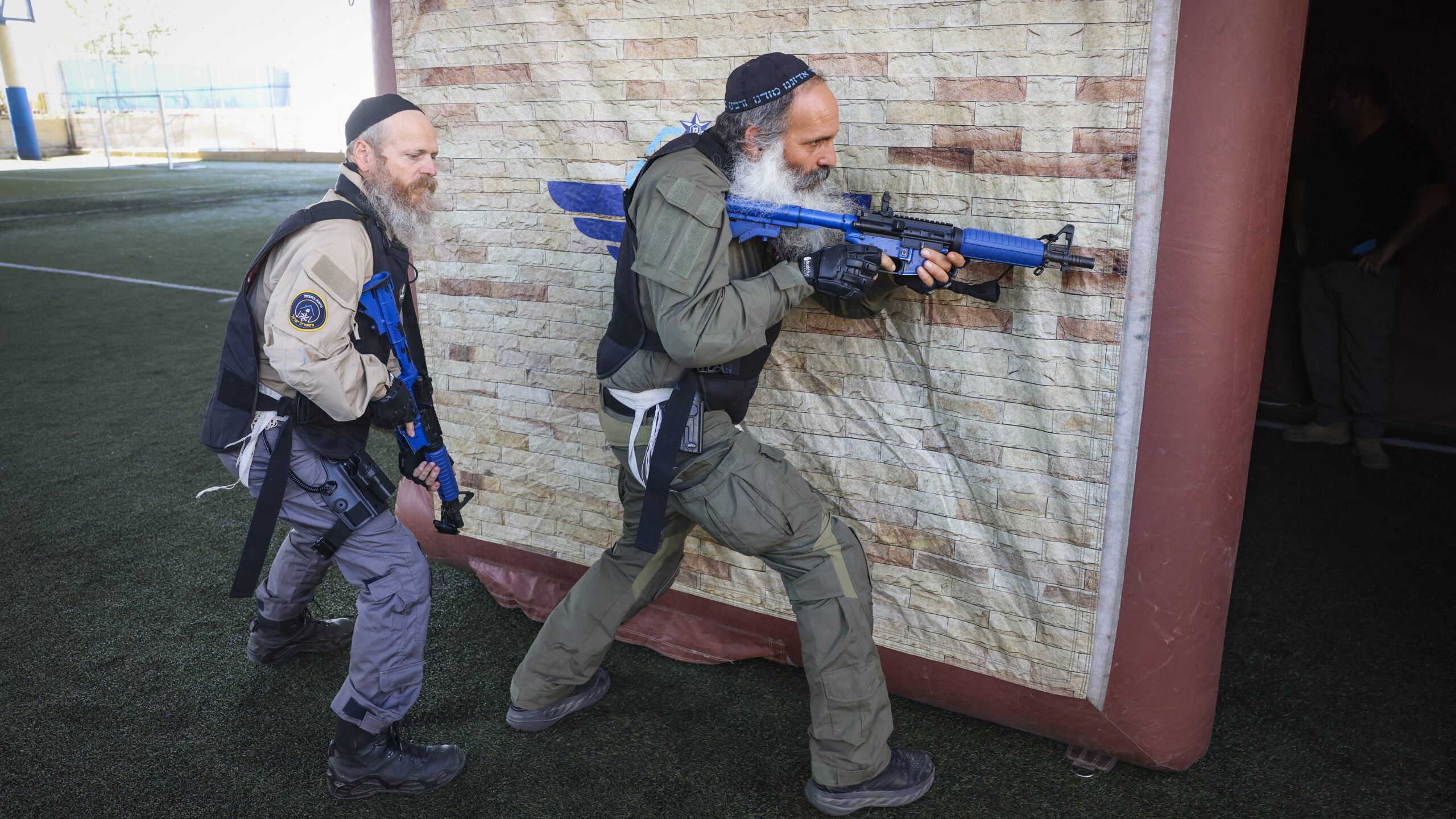

The Israeli army is drawing further conclusions from the Hamas massacre of October 7, 2023. A new homeland security unit is currently being trained in the Jordan Valley, whose task is to better prepare Israeli communities in the region for security emergencies. The focus is on cooperation between local security forces, so that neighboring communities can support each other in an emergency.
The so-called Home Battalion is intended to more closely connect the previously largely locally organized security forces. Rather than making each community solely responsible for itself, the new structure is designed to enable a collective defense.
The idea stems from one of the most important lessons of October 7: when thousands of Hamas terrorists stormed Israeli communities around the Gaza Strip, many communities were initially largely left to fend for themselves. Local security teams fought against the attackers, while regular army units in some cases did not arrive until hours later.
Communities to help each other
The new concept envisions local security forces not only protecting their own community, but also being able to support neighboring communities in an emergency. Joint exercises are intended to ensure that the various groups work together more effectively.
This is particularly significant in the Jordan Valley. The Israeli communities are in some cases located far apart from one another and are surrounded by large agricultural areas. In the event of a major security incident, several communities could be affected simultaneously.
The new unit is part of comprehensive changes to Israel’s defense strategy. The army no longer wants to rely solely on border fences, surveillance systems, and early intelligence warnings. Instead, military forces and local security groups are also to be prepared for surprise attacks.
New military division protects Israel’s eastern border
The homeland security unit complements the expansion of Israel’s military presence along the border with Jordan. An important role is played by the 96th Division, founded in 2025, which was also established as a consequence of October 7.
According to the army, the division comprises five brigades and 25 battalions, predominantly made up of reservists. Its task is to protect Israel’s eastern border and prevent terrorist attacks in the Jordan Valley as well as in Judea and Samaria.
The Israeli army has also restored older military positions along the Jordanian border and reinforced its presence in the region. This is due in part to concerns about arms smuggling and possible attacks from the eastern direction.
Chief of Staff: Be prepared for surprises
During a visit to the Jordanian border, Chief of Staff Eyal Zamir emphasized the strategic importance of the Jordan Valley for Israel’s security.
“The Jordan Valley is the eastern defense shield of the State of Israel,” Zamir stated. Control over the area is an essential component of Israel’s national security and strategic depth.
Zamir explicitly referenced the experiences of October 7. The Israeli armed forces must at all times be prepared for unexpected developments, even without prior intelligence warnings.
He also emphasized the importance of cooperation between the army, local authorities, and the population. Security depends not solely on military installations, but also on strong communities and a close connection between the civilian population and the armed forces.
The new homeland security unit in the Jordan Valley is a further component of this strategy. In the event of an attack, communities should not be exclusively dependent on the arrival of regular army units, but should be able to support one another. The joint training is now intended to lay the foundation for this.
Want more news from Israel?
Click Here to sign up for our FREE daily email updates