


The terrorist squad that penetrated farthest reached the city of Ofakim, 22 kilometers (13.67 miles) from Gaza.
In breach of the Oslo Accords, Judea and Samaria is now host to an armed force 10 times larger than the total number of terrorists who invaded from Gaza. This force is simply awaiting orders to attack.
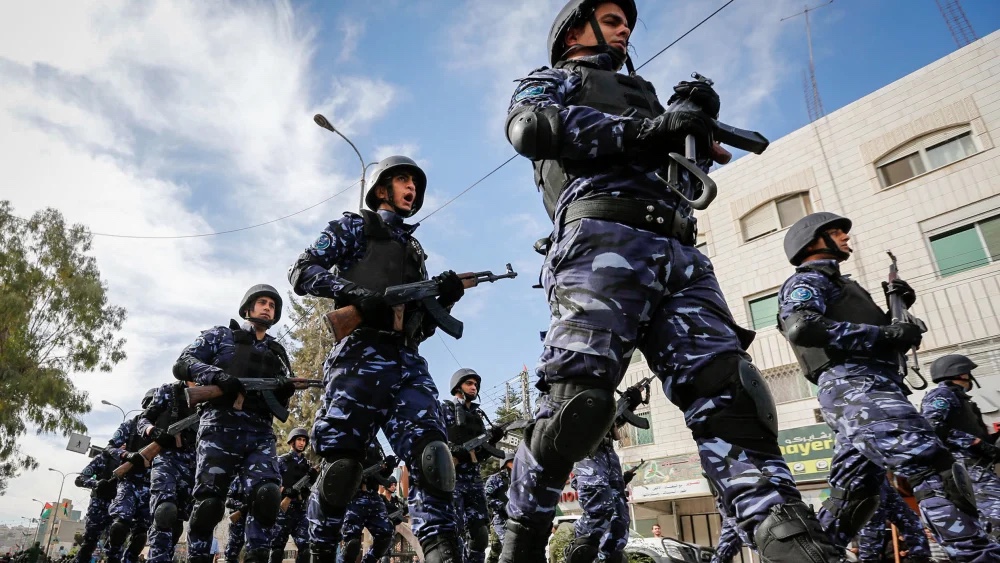
It is a trained and prepared military body that holds tens of thousands of weapons. Many of its members have already participated in terrorism against Israel and its citizens, and it trains exclusively for one scenario—war against the State of Israel. This force consists of the Palestinian Authority’s security apparatuses.
Unlike the area opposite the Gaza Strip, where the population was limited, the regions adjacent to Judea and Samaria contain the country’s largest population centers.
In the narrow waist of the country, the distance from Qalqilya in Samaria to the Mediterranean Sea is only 14 kilometers (9 miles). This area, which includes Kfar Saba, Ra’anana, Hod Hasharon, Herzliya and many other population and industrial centers, lies just 14 kilometers from the 1949 Green Line to the sea. Within a 22-kilometer (13.67-mile) radius, similar to the distance reached by Hamas terrorists on Oct. 7, millions of Israeli citizens live under direct threat.
During the terror war (the Second Intifada) initiated by PA chief Yasser Arafat from September 2000 to 2005, hundreds of PA security personnel participated. Since then, as this study shows, the PA security forces in Judea and Samaria have grown by 400%. They have transformed from a small policing force with limited weapons into a trained army equipped with tens of thousands of firearms, assault weapons and numerous additional combat means.
According to the agreements between the government of Israel and the PLO in the Oslo Accords, the PA Police Force was supposed to be a small body responsible for maintaining local public order. It was to consist of police and intelligence components tasked with combating ordinary Palestinian crime on one hand and terrorist organizations on the other. For this purpose, the parties even agreed to arm them with a limited quantity of weapons.
According to data from the Palestinian Central Bureau of Statistics (PCBS), the reported crime rate in the PA (excluding Gaza and eastern Jerusalem under Israeli control) stood at 1,335.6 criminal offenses per 100,000 residents in 2024. This rate is relatively low by international standards and indicates that Palestinian society does not suffer from unusually high crime levels that would justify establishing a large armed force for policing purposes.
Furthermore, a civilian police force does not require comprehensive military training that includes armored warfare, artillery, sniping, heavy machine guns and parachuting. The PA security apparatuses do not, in practice, act against active terrorist organizations in their territory.
All these facts and data lead to an inescapable conclusion: The entity that was established is not a police force but rather a full-fledged military array, the army of the PA, which in practice serves the goals of terrorism.
The deviation in the size of the Palestinian police began immediately with the implementation of the Gaza-Jericho Agreement in 1994. According to a US State Department report from November 1995, even before the full establishment of the PA, the force already numbered 18,000 personnel, despite being limited at that stage to 9,000.
In 2007, a reorganization took place. The collection of forces received the official name “PA Security Apparatuses.” These included the Civil Police, National Security Forces, Preventive Security, General Intelligence, Military Intelligence, Civil Defense and Customs Police.
By 2018, the number reached approximately 65,829, according to a 2021 report by the Palestinian Academic Society for the Study of International Affairs.
All these figures refer solely to PA security forces in Judea and Samaria. Tens of thousands of additional Palestinian security personnel affiliated with and working under the guidance and control of Hamas operated in Gaza.
In other words, by 2018, the size of the security apparatuses was already five-and-a-half times (550%) larger than the agreed-upon limit.
Branded as a moderate
Arafat’s death in November 2004 and Mahmoud Abbas’s rise did not improve the situation. On the contrary, Abbas significantly expanded the security apparatuses and their training. He continued and deepened the policy of integrating terrorists into these forces.
Abbas presented and branded himself as a moderate whose path differed from Arafat’s. He had the fortune of being in the right place at the right time, as Arafat’s terror war had exhausted itself.
After Abbas’s election as PA chairman in January 2005, he complained to Israel and the US that the security apparatuses he inherited from Arafat were not sufficiently skilled or equipped to fight the various terrorist organizations. At the time, Abbas still managed to brand himself as a leader different from Arafat who did not support terrorism.
Following Hamas’s electoral victory in the PA in 2006 and the resulting crisis, the US began funding and training PA security forces in Judea and Samaria. The claim was that Hamas, Israel’s enemy, had also become the enemy of the Fatah-controlled PA This created the false impression that building a stronger PA force would enable it to fight the common enemy.
Although the PA is obligated to fight Palestinian terrorist elements and has received all necessary means to do so, except for isolated cases, it has never done so.
The data presented in this study paint a clear picture of the total collapse of Israeli security oversight over the PA What was defined in the Oslo Accords as a limited “police force” (30,000 personnel at most) has become a military monster currently numbering approximately 70,000 armed personnel, an excess of 133% over the overall original force structure and more than 50,000 armed personnel in Judea and Samaria alone (over 400% larger than the 12,000 policemen agreed upon for Judea and Samaria).
In the field of armament as well, reality is far removed from the agreements—instead of 4,000 rifles in Judea and Samaria, the apparatuses now possess tens of thousands of weapons, armored vehicles, and heavy military means (including RPGs and shoulder-fired missiles) intended for urban warfare and combat against a regular army, not civilian policing missions.
As in the past, the terror army built by the PA is destined to turn its weapons against Israeli citizens. Due to the nature, size and capabilities of this force, a northward, westward and southward invasion by this terror army will endanger millions of citizens. The scale of destruction and killing within communities inside the Green Line could be significantly greater than the horrors of the Oct. 7 massacre.
As we learned painfully from the events of Oct. 7, reassuring statements by security officials and optimistic intelligence assessments guarantee nothing. A basic rule in counter-terrorism and warfare is that the enemy places special emphasis on the element of surprise, and no attack can be entirely prevented.
Operational conclusions
• Failure of Israeli oversight: The fact that Israeli security agencies are unable (or unwilling) to provide data on the quantity of weapons approved for transfer to the PA indicates a loss of control and a policy of deliberate “eyes wide shut.”
• The security coordination conception: Israel is captive to the conception that strengthening the PA security apparatuses serves Israeli interests in fighting Hamas. In practice, the apparatuses serve as a hothouse for terrorists (as evidenced by 12% of security prisoners originating from their ranks) and train for a combined attack on central Israel and the communities in Judea and Samaria.
• The 22-kilometer (13.67 miles) threat: The tiny distance between Israel’s population centers and the bases of the PA terror army (14-22 kilometers/9-13 miles) turns any potential flare-up into an immediate existential threat to millions of citizens, on a scale and lethality exceeding that of the Oct. 7 massacre.
Given the severity of the threat, the Israeli government must adopt a strategy of “dismantling and demilitarization” instead of “containment and arming”:
• Immediate neutralization of offensive armament: Halt all approvals for the transfer of weapons, ammunition or armored vehicles to the PA. Demand the immediate return of any armament exceeding Oslo limits (such as heavy machine guns, RPGs and explosive devices).
• Reduction of personnel: Condition all economic or civilian aid to the PA on reducing the size of the security apparatuses to the original agreed level (12,000 in Judea and Samaria).
• Oversight and transparency: Establish an independent Israeli oversight mechanism (not through the PA) for surprise inspections of weapons depots and training bases. Publicly disclose to the Israeli public and the Knesset all historical data regarding approvals for weapons transfers to the PA.
• Closure of terror army training bases: Demand that the PA immediately close all facilities, training bases and institutions whose purpose is to provide “military training.”
• Change in defense concept in Judea and Samaria and seam line: Prepare the IDF operationally for a mass terror attack, not as a theoretical concern but as the central threat. Construct physical barriers and add significant forces along the seam line, under the assumption that on the day of reckoning, the PA apparatuses will be the first enemy to open fire.
• Cessation of foreign training: On one hand, issue a firm diplomatic demand to the US and the EU to condition the training they fund and conduct for PA security forces on the PA reducing the size of these forces to the levels agreed in the Oslo Accords. On the other hand, pursue legal action and full severity of punishment against any PA security personnel undergoing military training abroad, including in Pakistan.
In conclusion, continuing to ignore the growth of the “P..Terror Army” is a dangerous gamble with the lives of millions of Israelis. The writing is on the wall, at a distance of less than 22 kilometers (13.67 miles) from the heart of the country.
The danger is real and highly probable. To prevent a disaster far greater than the Oct. 7 massacre, Israel must take initiative and apply the remedy before the next count of victims.
Originally published by the Jerusalem Center for Security and Foreign Affairs.






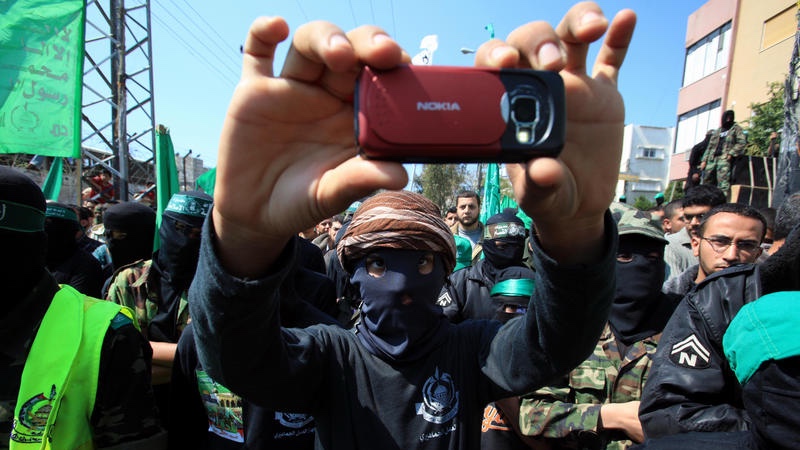
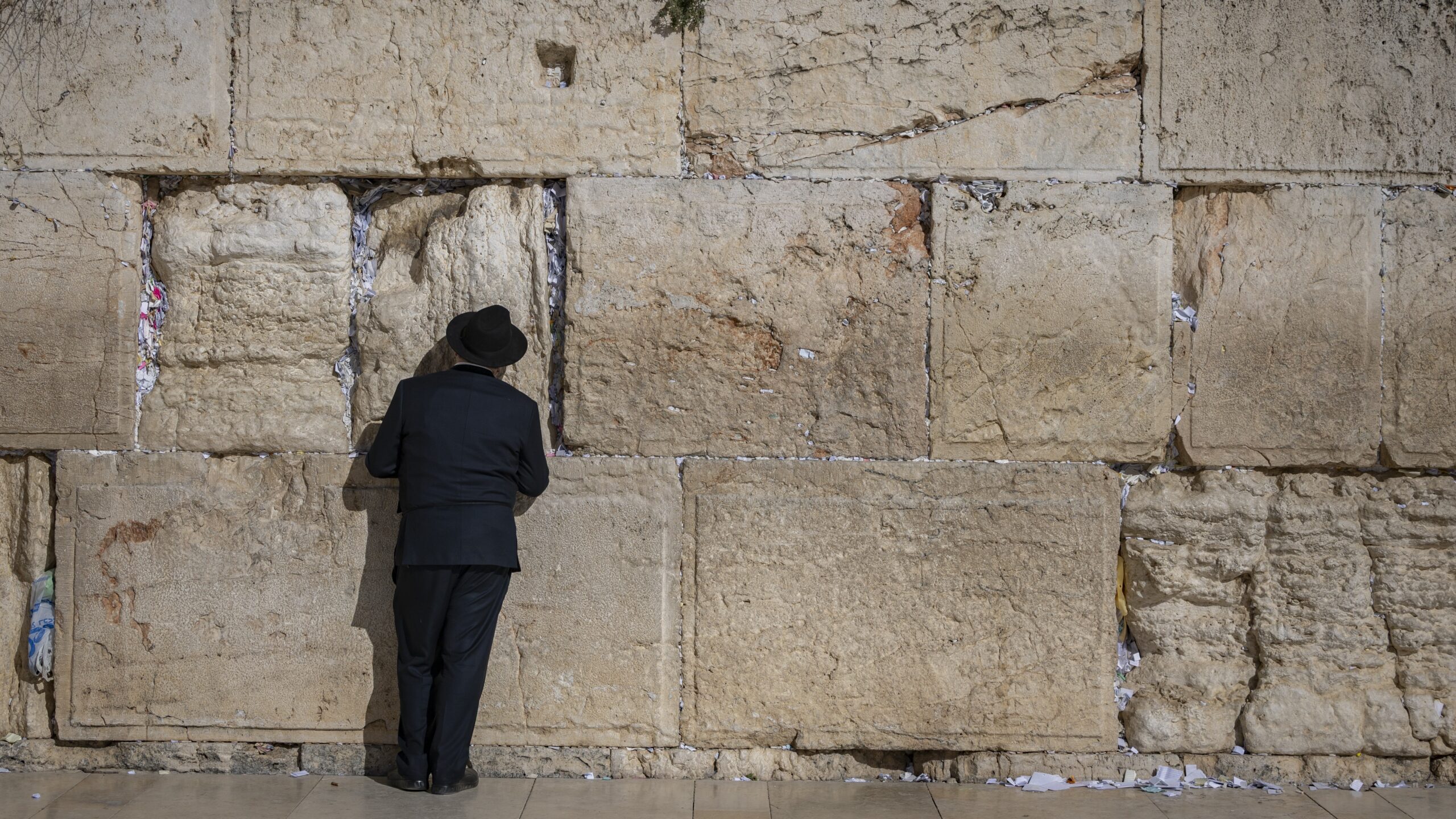

So, the Ezekiel 38-39 battle will start on the interior of Israel, the rest of the participants will attack from the outside. Now it all falls into place, when it is over, Israel will be cleansed of, all, her enemies. Perhaps the Gaza war was the Psalm 83 war and now the Ezekiel 38-39 war makes more sense in its timing.
Israel is getting down to the only one who can truly save her from not only herself, but all her enemies.