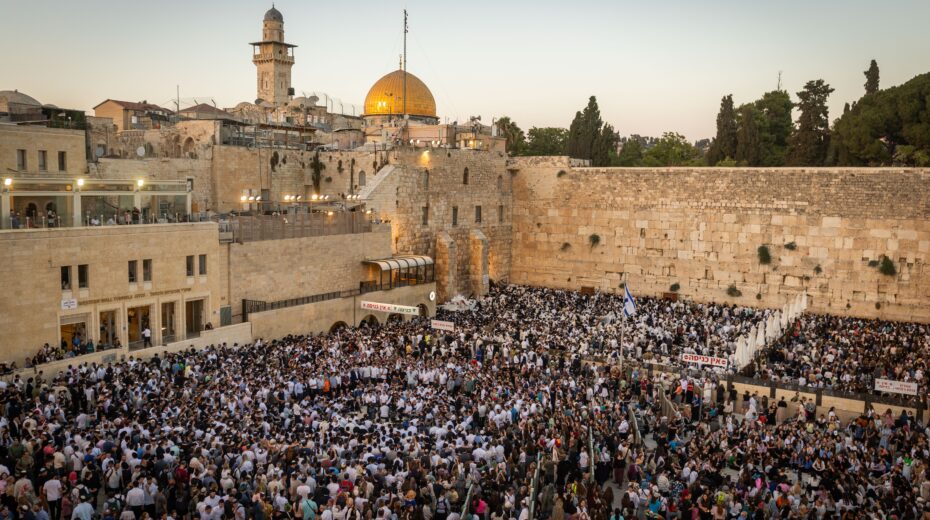
(JNS) Two weeks after the 1967 victory in the Six-Day War, Israeli Minister of Defense Moshe Dayan changed the status quo that had officially been in place at the Western Wall courtyard in Jerusalem. It had been set by British Mandatory authorities as part of the November 1928 White Paper, authored by Leopold Amery, Secretary of State for the Colonies.
Interestingly, Amery was the son of Charles Frederick Amery of England and Elisabeth Johanna Saphir, who was born to the Leitner family of Hungarian Jewish descent. She had left England for British-controlled India, where her parents had settled and converted to Protestantism, and where Leopold was born. (Elisabeth later left India and returned to England, divorcing her husband.)
That status quo established a Jewish “right of access to the pavement in front of the wall for the purposes of their devotion.” However, no further advantages would be afforded them.
The government apparently could not “compel the Muslim owners of the pavement to accord any...
Become a Member
-
Read all member content
Get exclusive in-depth reports from Israel.
-
Get exclusive in-depth reports from Israel
Connect with Israel, right from your home.
-
Lift up the voice of truth and hope
Support Jerusalem-based Zionist journalism.

Already a member? Login here.