
“I will do everything in my power to rebuild Nir Oz,” said Gadi Mozes, now 80 years old, exactly one year ago upon his return to Israel after 482 days as a Hamas hostage. Since then, he has worked relentlessly to restore life in the destroyed kibbutz.
This week, Israeli President Isaac Herzog and his wife Michal came to Nir Oz for a visit to celebrate Tu BiShvat together with Mozes—as a symbol of Zionist pioneering spirit, growth, connection to the land, and the conscious choice of life. The decision to mark the holiday precisely here was no coincidence. Among dozens of possible planting sites, the President asked to come to a place where the very soil stands for holding fast to deep roots and for the origin of life.
The visit began with a meeting at Mozes’ home—the very house from which he was abducted. There they spoke about the burning questions between the desire to rebuild the kibbutz and bring the community members back to their homes, to reconstruct the destroyed buildings, and the deep trauma, the loss of trust, the wish to preserve the burned houses as testimony to the terrible massacre, as well as the difficulty of returning to a place where the worst had happened. Mozes spoke of his difficult moments in captivity and his ongoing commitment to the kibbutz’s future.
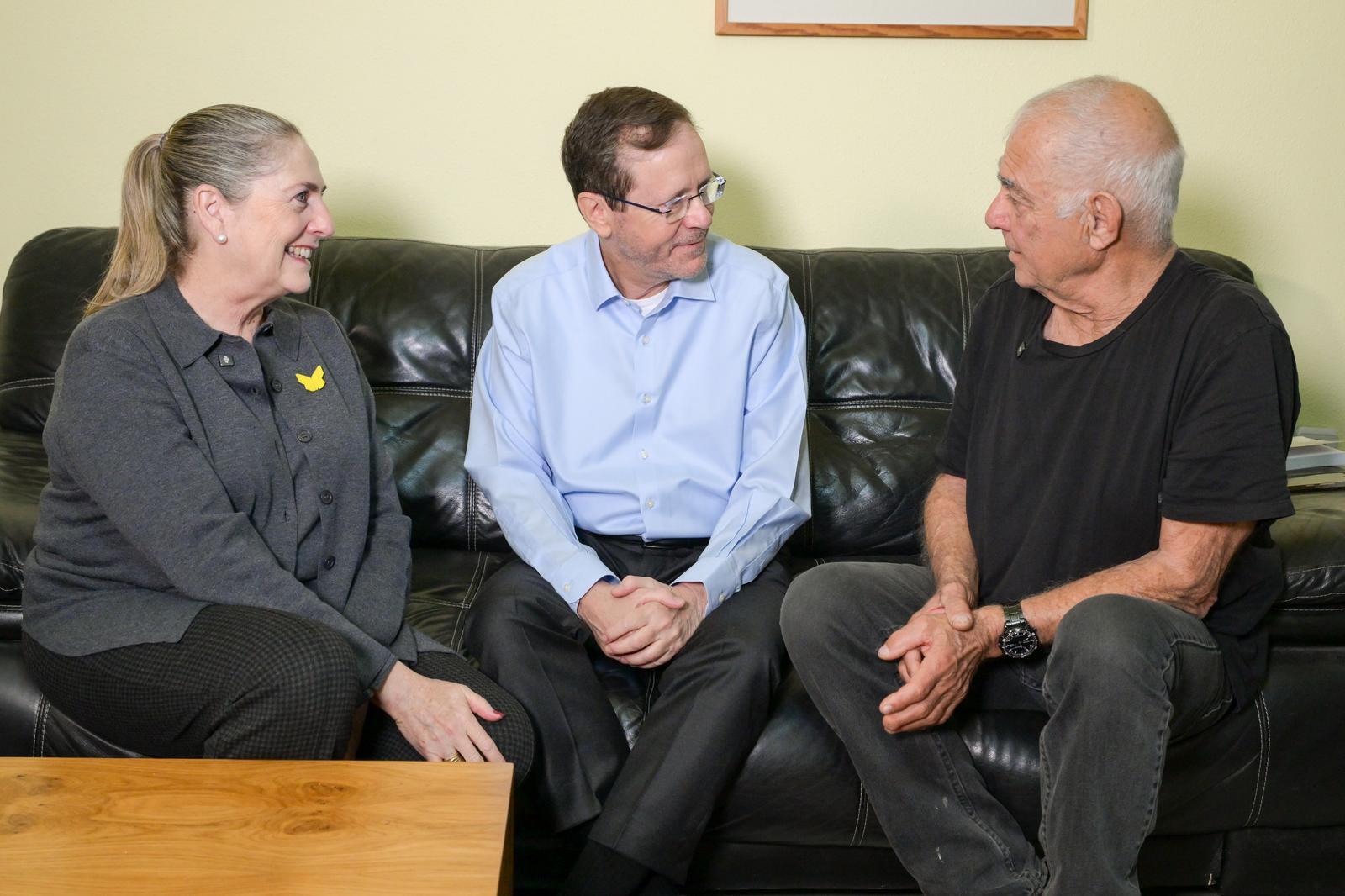
President Isaac Herzog and his wife Michal at the home of Gadi Mozes. Photo: Maayan Toaf/GPO.
Mozes recounted one particularly harrowing experience from the last day of his captivity:
“On the last day, they changed all my clothes. They said our army could identify where I had been from the smells on the clothing. They stripped me down to my underwear and told me to throw that away too. In the afternoon they took me on a path of suffering—the final stop was a cemetery. They stood me in front of a freshly dug pit, with two armed men on either side holding Kalashnikovs, and you wait for the volley.”
When the President asked “what gives him strength and hope,” he replied:
“I am a person of hope, a person of faith in the future. And we have no choice but to rebuild the kibbutz and bring life back to it. First and foremost, I lost my partner here. Second, I lost 65 people here in Nir Oz with whom we walked the entire path together. We were proud of what we accomplished here—right up to the Green Line, right up to the border. And I am full of hope; I never let my hands drop for a moment, and I hope that people for whom these values truly matter will come together, lift the spirit of the people, and ensure that something like this never happens again.”
President Isaac Herzog said:
“We are celebrating Tu BiShvat here, a festival of love for the land, of roots, and of growth. The pioneers who built Israel—including Mozes—saw this day as a symbol of settlement and rebirth. And today we are here in Nir Oz, alongside Gadi—a man of vision, courage, and pioneering spirit. Mozes reminds us, just as the holiday itself does, that we must choose to hold fast to the deep roots of the State of Israel and let a shared, strong future grow—from faith and hope, and through daily acts of rebuilding and healing.”
From the house, the President and his wife went on a tour of the kibbutz’s destroyed and devastated homes. In these days, some of the burned houses are being demolished in order to rebuild them—a process at the center of a profound conflict: between the desire to build anew and return to life, and the voice that demands the houses be preserved as testimony to the massacre and atrocities. This painful and complex question accompanies the community and Israeli society as a whole.
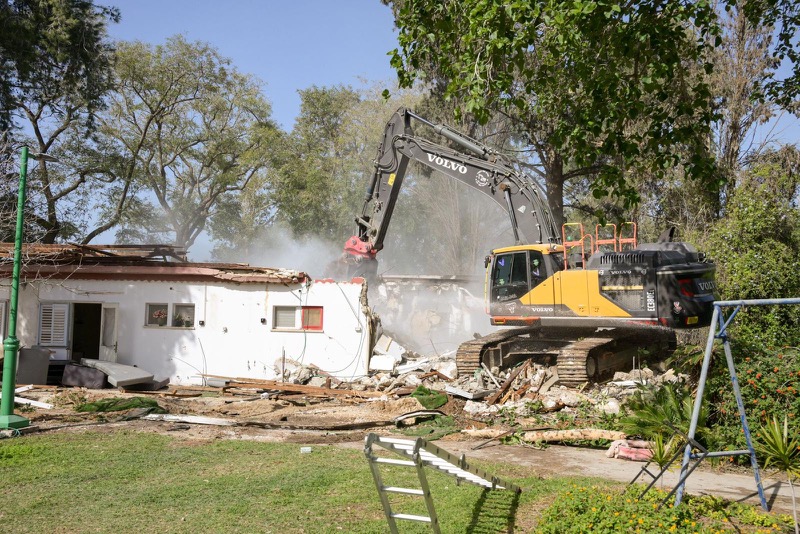
Photo: Maayan Toaf/GPO.
During the tour, Herzog noticed a young couple leaning on each other in an embrace as they watched the demolition of a house—the house of Eran Smilansky. Eran, a farmer and potato grower, a member of Nir Oz’s armed response unit, fought with great bravery on October 7. He married Reut about a month ago, and now the two have decided—parallel to the beginning of their shared life—to rebuild his destroyed home.
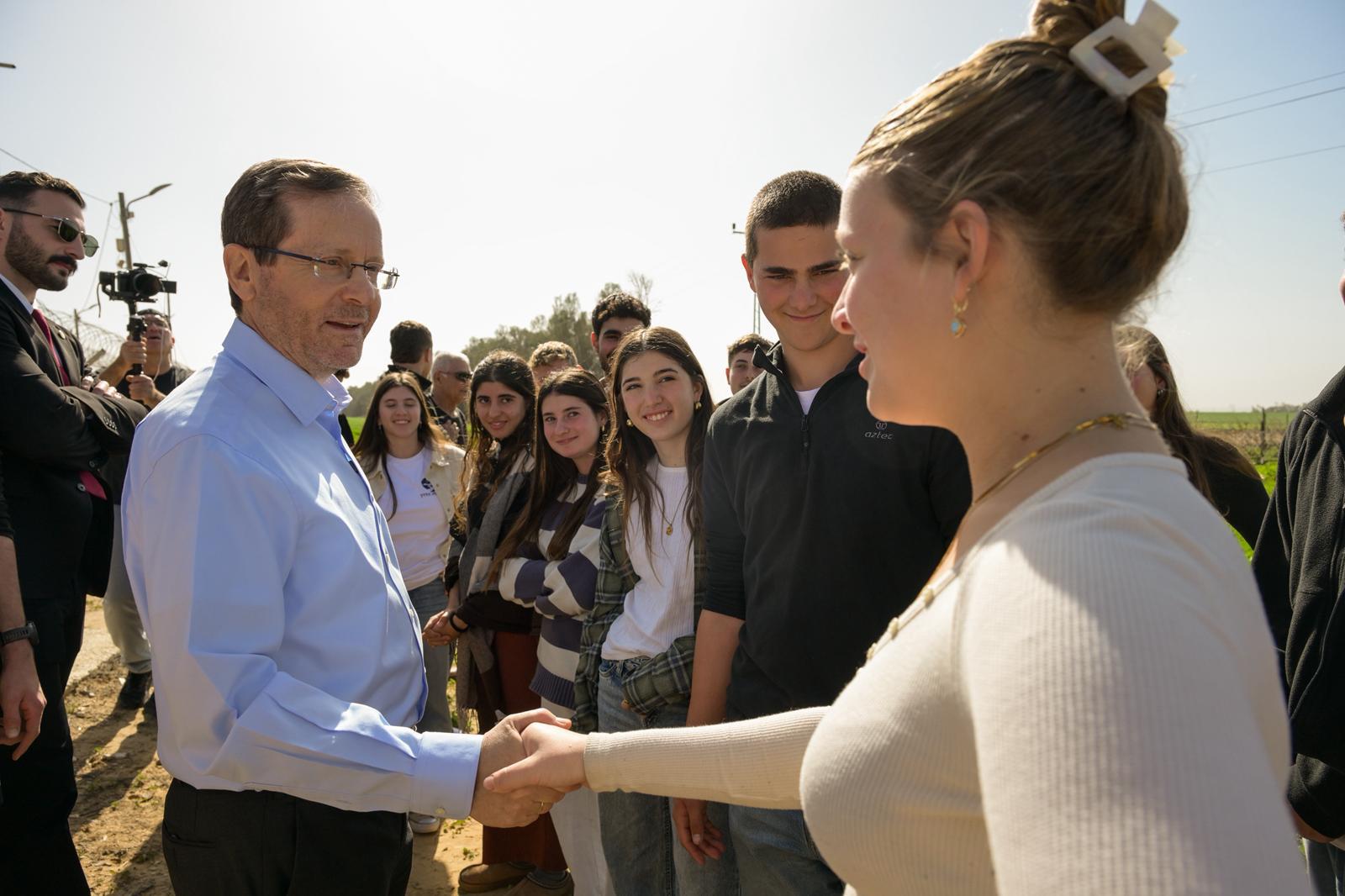
Photo: Maayan Toaf/GPO.
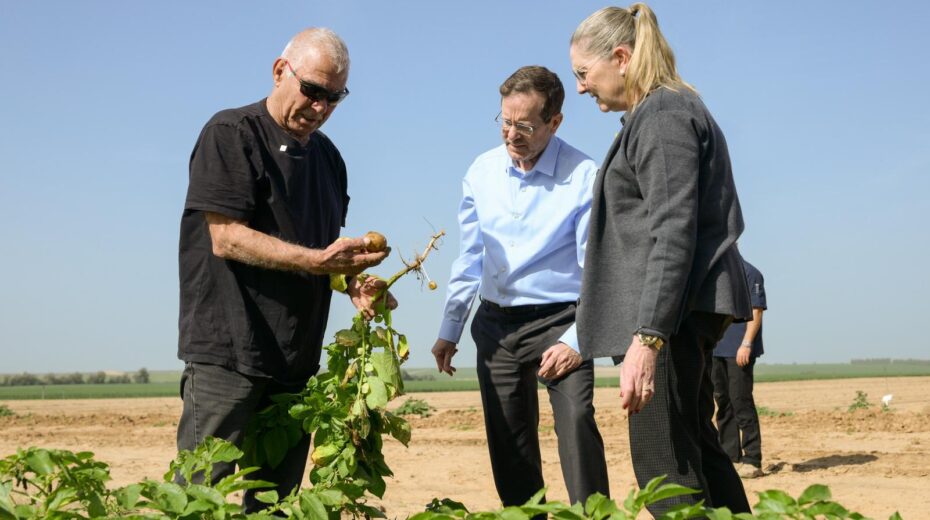
From there the tour continued to the center of Gadi Mozes’ work—the potato fields. On the fields from which the kibbutz farmers make their living and which have shaped its character for decades, the President and his wife paused together with Mozes and listened to explanations about the return to agricultural work. A daily struggle to sow and harvest again—even though the soil still bears the marks of battle. The field for whose renewed cultivation Mozes fought after his return from captivity has become a symbol.
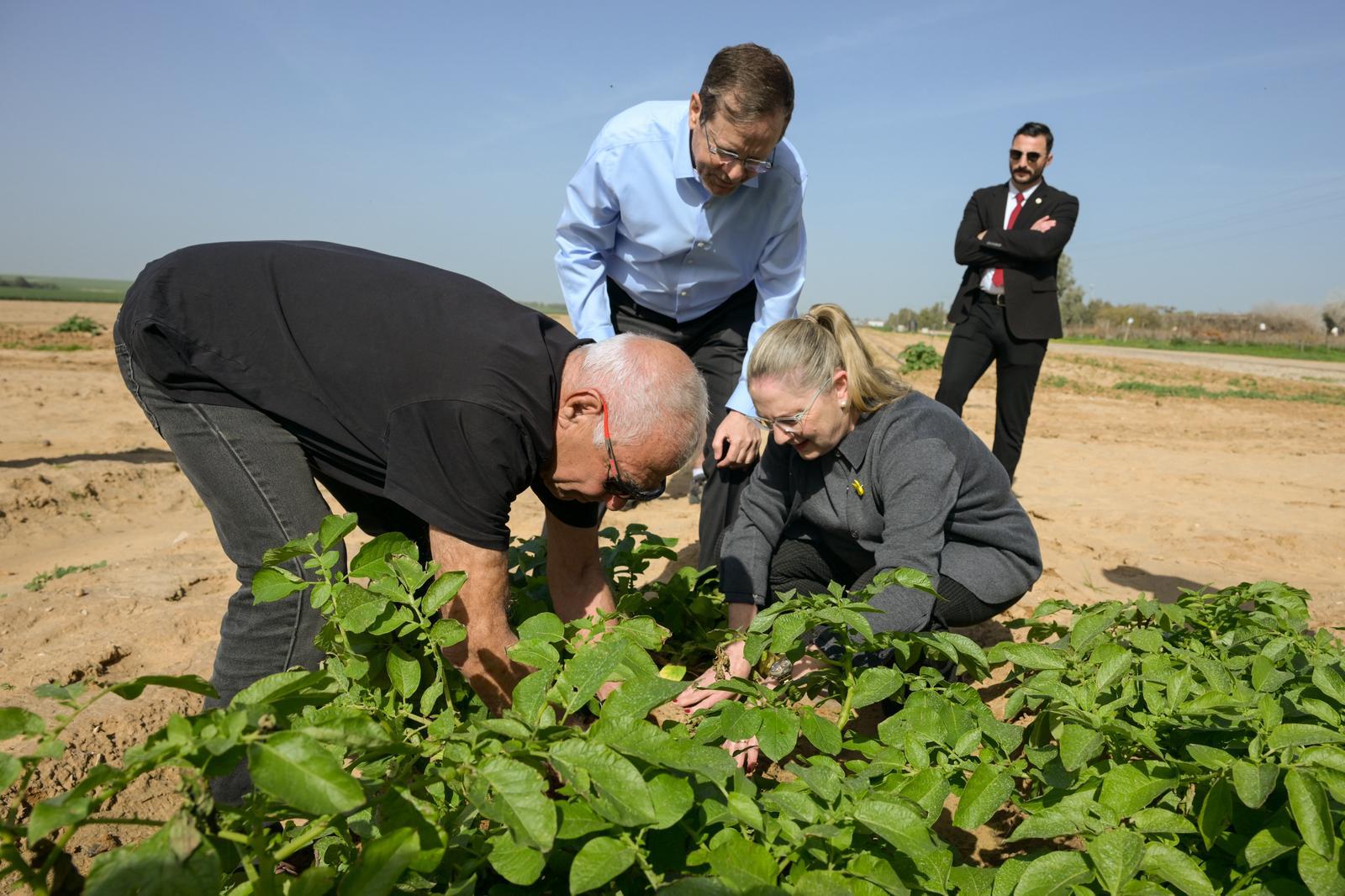
Photo: Maayan Toaf/GPO.
The presidential couple then continued the visit at the Pauker Winery—a family-run boutique winery that was rebuilt after the murder of its founder Gideon Pauker on October 7, as well as the abduction and murder of his friends Chaim Peri and Yoram Metzger. Despite the heavy loss, the family decided to return to the vineyard and to wine—and to continue what was violently interrupted.
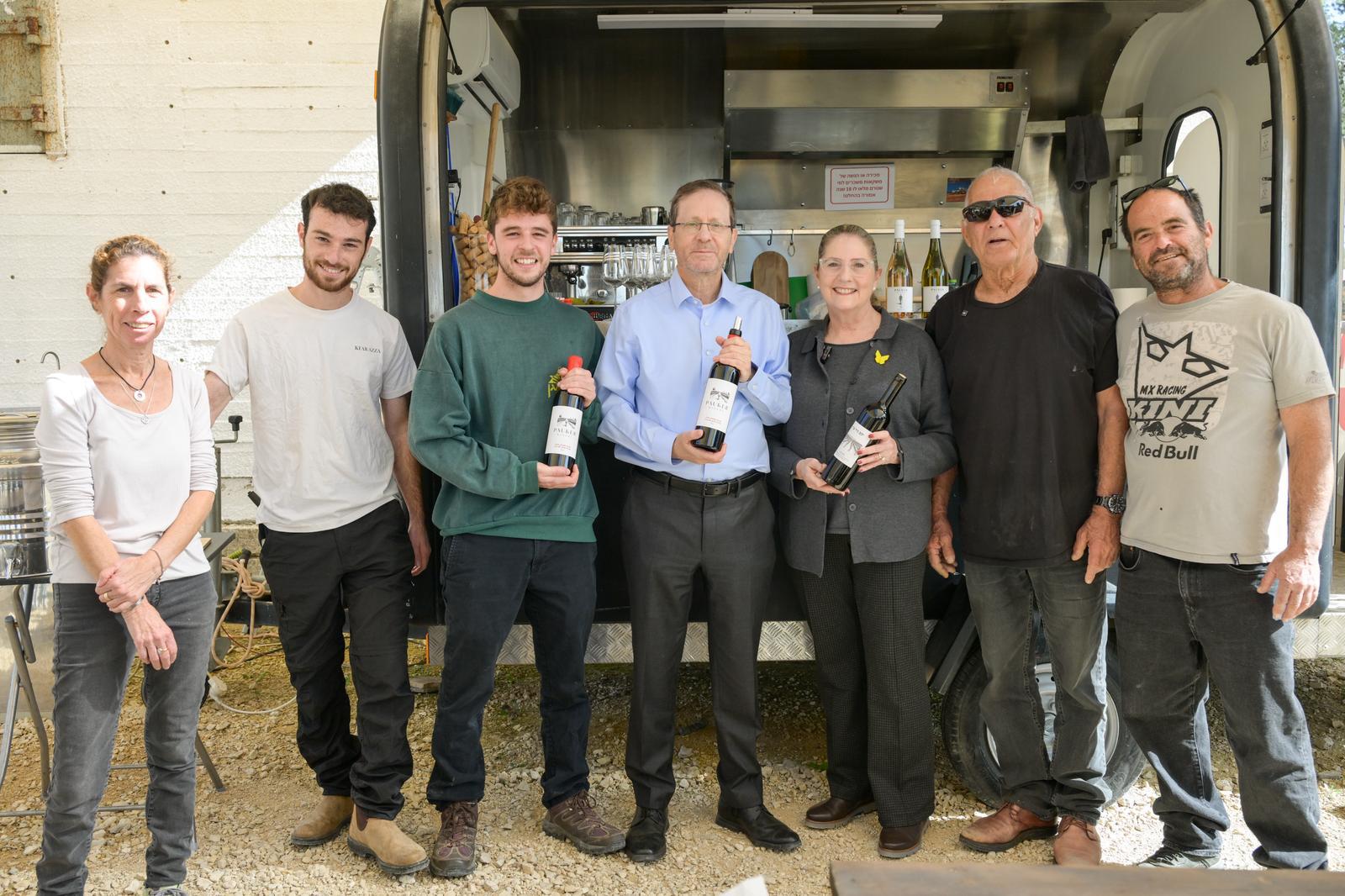
Photo: Maayan Toaf/GPO.
Herzog concluded his visit with a meeting with the youth of the “Nir Oz” pre-military academy—the first cohort of a young generation that has come from all over the country out of a sense of mission to rebuild. For them, Nir Oz is not only a story of the past, but a responsibility for the future.
In conclusion, the President said:
“I was deeply moved to meet people here whose personal stories together make up the story of an entire state—from the founding generation that chose to rebuild and hold on to life, through those who fought for their home on October 7 and in the war, people of the land and of action who continue despite the loss, all the way to visionary young people—the beautiful future generation of Israel. It is a story of immeasurable pain, but also of hope and the conscious choice of life, for the sake of the future of the State of Israel.”
Want more news from Israel?
Click Here to sign up for our FREE daily email updates