
The United States again attacked dozens of military targets at several locations in Iran overnight into Monday. According to US Central Command (CENTCOM), this was the fourth wave of American attacks against the Islamic Republic within a week.
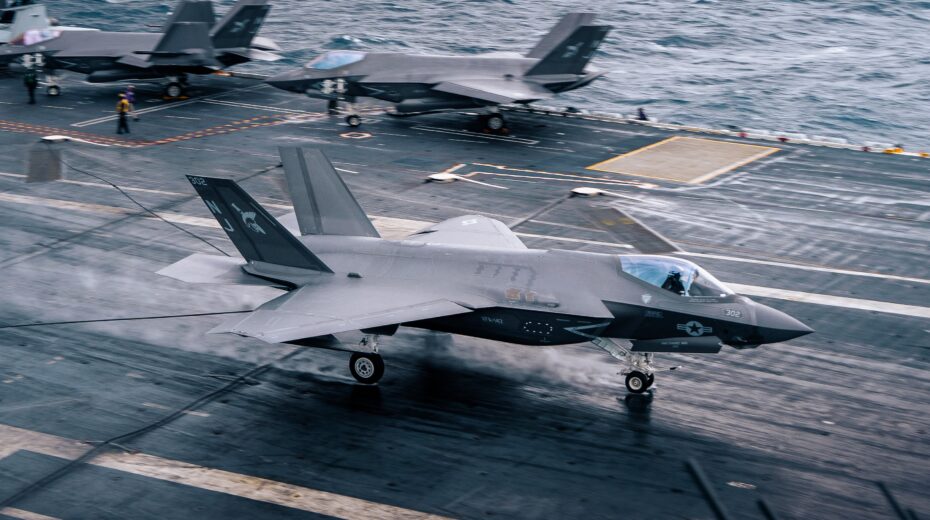
Precision weapons were used against Iranian air defense systems, coastal radar installations, missile and drone facilities, and small military vessels. The operation involved fighter jets, warships, and expendable attack drones. This marked the first time the US armed forces deployed expendable underwater drones.
At 5 p.m. ET today, U.S. Central Command forces began launching more strikes against Iran to continue degrading their ability to attack civilian mariners and commercial ships freely transiting the Strait of Hormuz. The Commander in Chief has directed the strikes to hold Iranian…
— U.S. Central Command (@CENTCOM) July 12, 2026
CENTCOM stated that the attacks were intended to weaken Iran’s ability to disrupt international shipping in the Strait of Hormuz. The strait is a vital maritime link for global trade and, contrary to Tehran’s claims, is not controlled by Iran. US forces are prepared to maintain freedom of navigation for merchant vessels.
The renewed escalation followed an Iranian attack on a container ship passing through the Strait of Hormuz off the coast of Oman on Sunday. According to the Associated Press, the incident triggered the latest wave of American attacks. Iran has repeatedly stated that the strait is closed, while Washington insists it remains open to international shipping.
Over the weekend, the US conducted a significantly larger wave of attacks against approximately 140 targets in Iran. According to CENTCOM, these included missile and drone launch sites, ammunition depots, and communications facilities. Previously, on July 7, US forces had attacked around 80 Iranian military targets, including more than 60 Revolutionary Guard patrol boats.
A U.S. Air Force F-35A stealth fighter jet is refueled over the Middle East. U.S. forces are constantly present and ready when called upon. pic.twitter.com/HI4iyrbQAa
— U.S. Central Command (@CENTCOM) July 12, 2026
Iran responded again with missile and drone attacks on countries in the region where American forces are stationed. On Monday, multiple missile warnings were issued in Bahrain, the headquarters of the US Fifth Fleet. Kuwait reported intercepting enemy missiles. The Jordanian army stated that it had shot down four Iranian missiles; no injuries or damage were reported.
According to Iranian sources, the American attacks hit targets in the provinces of Hormozgan, Khuzestan, and Markazi. The state news agency IRNA reported at least two deaths. These reports could not be independently verified.
The fighting is increasingly focused on who controls shipping through the Strait of Hormuz. Iran claims the right to determine the passage of ships, while the US supports merchant vessels on a southern route along the coast of Oman. Tehran has repeatedly attacked ships using this route.
The renewed attacks are also jeopardizing diplomatic efforts to achieve a lasting end to the war. The US and Iran are roughly halfway through a 60-day interim agreement designed to pave the way for negotiations on a permanent settlement. According to regional sources, mediators from Pakistan, Qatar, and Egypt are continuing their efforts to de-escalate the situation.
Energy markets also reacted to the developments. Oil prices rose by more than four percent on Monday. According to data from the analysis firm Kpler, only six ships passed through the Strait of Hormuz on Sunday – the fewest in five weeks.
Want more news from Israel?
Click Here to sign up for our FREE daily email updates