On the road to Emmaus, Yeshua met with two of His disciples and, beginning at Moses and all the Prophets, He expounded to them in all the Scriptures the things concerning Himself. (Luke 24:27). For our Torah studies this year, therefore, week by week we will seek to discover how all of Torah prepared the way for the coming Messiah.
5th September 2026 (23 Elul)
Nitzavim (you are standing): Deuteronomy 29:10-30:20, Vayelech (and he went): (Deuteronomy 31:1-30)
Two short portions are combined for this study. Moses was coming to the end of his earthly ministry and brought uncompromising prophetic words to his people. They continue from the pronouncement of blessing and curse in the previous chapters, which have defined Israel’s walk even to today. Surely all of history has confirmed what God said to His people through the Books of Torah.
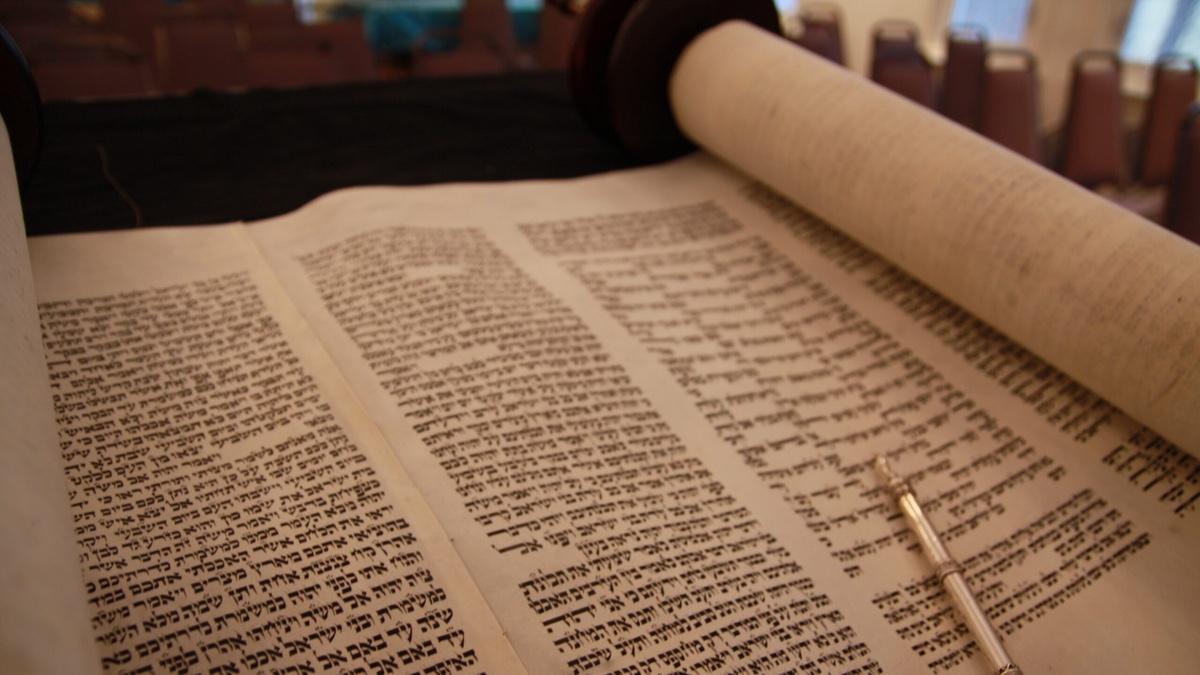
So important is the teaching of Moses that he made a written record of all that Israel was to remember, so that it would be available to future generations without modification:
So Moses wrote this law and delivered it to the priests, the sons of Levi, who bore the ark of the covenant of the Lord, and to all the elders of Israel. And Moses commanded them, saying: “At the end of every seven years, at the appointed time in the year of release, at the Feast of Tabernacles, when all Israel comes to appear before the Lord your God in the place which He chooses, you shall read this law before all Israel in their hearing. (Deuteronomy 31:9-11)
Such measures were essential. Human beings, generation by generation, tend to forget what was taught and experienced by those who went before, devising new ideas for themselves, often copying the practices of other nations. There were times in Israel’s history when Moses’ teaching was remembered, but other times when the Book of the Law was neglected and even lost. Much depended on the leaders – the shepherds of Israel – to bring teaching to the nation and hence retain the path of blessing.
One such time was when Shalmaneser conquered the northern kingdom of Israel when evil had overcome the people of the land under King Hoshea and others before him (2 Kings 17). The northern kingdom was taken captive to Assyria. By contrast, at that time, Judah was ruled by King Hezekiah:
He was twenty-five years old when he became king, and he reigned twenty-nine years in Jerusalem. His mother’s name was Abi the daughter of Zechariah. And he did what was right in the sight of the Lord, according to all that his father David had done. He removed the high places and broke the sacred pillars, cut down the wooden image and broke in pieces the bronze serpent that Moses had made; for until those days the children of Israel burned incense to it, and called it Nehushtan. He trusted in the Lord God of Israel, so that after him was none like him among all the kings of Judah, nor who were before him. For he held fast to the Lord; he did not depart from following Him, but kept His commandments, which the Lord had commanded Moses. The Lord was with him; he prospered wherever he went. And he rebelled against the king of Assyria and did not serve him. (2 Kings 18:2-7)
After the reign of Hezekiah, whom God saved from the Assyrians under Sennacherib, Manasseh reigned in Judah. Judah turned away from God through the reign of Manasseh and also his son:
…. he reigned fifty-five years in Jerusalem. His mother’s name was Hephzibah. And he did evil in the sight of the Lord, according to the abominations of the nations whom the Lord had cast out before the children of Israel. (2 Kings 21:1-2)
Then Amon became King:
…. and he did evil in the sight of the Lord, as his father Manasseh had done. (2 Kings 21:20)
Following Amon’s death, Josiah was proclaimed King when he was only eight years old (2 Kings 21:24, 22:1). A new and better era began for Judah because Josiah:
….. did what was right in the sight of the Lord, and walked in all the ways of his father David; he did not turn aside to the right hand or to the left. (2 Kings 22:2)
By this time, however, the Temple was in great need of repair and the Book of the Law had been both neglected and lost. When the Book was found during the refurbishing of the Temple, it was taken to Josiah and read to him. When the King heard the words written by Moses all those years before, he tore his clothes, full of emotion (2 Kings 22:11) and commanded that the Lord be sought on this matter. The Book of the Law was to be prominent again, just as Moses had commanded:
Go, inquire of the Lord for me, for the people and for all Judah, concerning the words of this book that has been found; for great is the wrath of the Lord that is aroused against us, because our fathers have not obeyed the words of this book, to do according to all that is written concerning us. (2 Kings 22:13)
They discovered what Moses had prophesied, as recorded in Deuteronomy 29:25-27, and reported this to King Josiah, saying:
Thus says the Lord: ‘Behold, I will bring calamity on this place and on its inhabitants – all the words of the book which the king of Judah has read – because they have forsaken Me and burned incense to other gods, that they might provoke Me to anger with all the works of their hands. Therefore My wrath shall be aroused against this place and shall not be quenched. (2 Kings 22:16-17)
Josiah led Judah to repentance and brought back true worship to the God of Israel. When Moses’ Book of the Law was central to the life of Judah, and the shepherds of Judah followed Moses’ instructions, God’s blessing was restored to Judah through Josiah:
….. before him there was no king like him, who turned to the Lord with all his heart, with all his soul, and with all his might, according to all the Law of Moses; nor after him did any arise like him. (2 Kings 23:25)
Yet the sins of Judah continued after his death, and eventually led to the Babylonian Captivity, which Jeremiah prophesied would last 70 years (Jeremiah 25:3,11).
The words of Moses, written in the Book of the Law, were to be taken seriously. The God of Israel certainly took them seriously.
Yet the promise of hope was always a full part of God’s purposes too.
It is recorded in Deuteronomy 30:
Now it shall come to pass, when all these things come upon you, the blessing and the curse which I have set before you, and you call them to mind among all the nations where the Lord your God drives you, and you return to the Lord your God and obey His voice, according to all that I command you today, you and your children, with all your heart and with all your soul, that the Lord your God will bring you back from captivity, and have compassion on you, and gather you again from all the nations where the Lord your God has scattered you. Deuteronomy 30:1-3)
Listen to the sadness in the heart of those who sat by the rivers of Babylon, during the captivity:
By the rivers of Babylon,
There we sat down, yea, we wept
When we remembered Zion.
We hung our harps
Upon the willows in the midst of it.
For there those who carried us away captive asked of us a song,
And those who plundered us requested mirth,
Saying, “Sing us one of the songs of Zion!”
How shall we sing the Lord’s song
In a foreign land?
If I forget you, O Jerusalem,
Let my right hand forget its skill!
If I do not remember you,
Let my tongue cling to the roof of my mouth. (Psalm 137:1-6)
Likewise, hear the prayer of Daniel while in Babylon, confessing his sins and the sins of his people:
O Lord, great and awesome God, who keeps His covenant and mercy with those who love Him, and with those who keep His commandments, we have sinned and committed iniquity, we have done wickedly and rebelled, even by departing from Your precepts and Your judgments.
……. as it is written in the Law of Moses, all this disaster has come upon us; yet we have not made our prayer before the Lord our God, that we might turn from our iniquities and understand Your truth. Therefore the Lord has kept the disaster in mind, and brought it upon us; for the Lord our God is righteous in all the works which He does, though we have not obeyed His voice. And now, O Lord our God, who brought Your people out of the land of Egypt with a mighty hand, and made Yourself a name, as it is this day – we have sinned, we have done wickedly!
……. O Lord, according to all Your righteousness, I pray, let Your anger and Your fury be turned away from Your city Jerusalem, Your holy mountain; because for our sins, and for the iniquities of our fathers, Jerusalem and Your people are a reproach to all those around us. O my God, incline Your ear and hear; open Your eyes and see our desolations, and the city which is called by Your name; for we do not present our supplications before You because of our righteous deeds, but because of Your great mercies. O Lord, hear! O Lord, forgive! O Lord, listen and act! Do not delay for Your own sake, my God, for Your city and Your people are called by Your name. (Daniel 9:4,5,13-16,18,19)
According to God’s faithfulness, Judah returned from captivity after 70 years, under Zerubbabel. The wall of Jerusalem was repaired under Nehemiah, and Ezra restored true worship in the Temple. Most importantly, at the climax, when the Feast of Tabernacles was celebrated again, at last, it was recorded of Ezra:
…… day by day, from the first day until the last day, he read from the Book of the Law of God. (Nehemiah 8:18)
This is the importance of the Book of the Law which Moses presented to the priests on the verge of Jordan. The written Word of God was proved to be central to Israel’s life, with every part of it valid for all time. Within this, the hope of Israel for restoration has been ever-present. God’s faithfulness for Israel’s return was displayed in the return from Babylonian captivity, as it has been since the Diaspora beginning in 70 AD under the Roman occupation of Israel. Israel’s hope is as strong as the power of the blessing and cursing of the Law of Moses, but we must study this carefully, especially in the modern-day.
In the context of our Bible study was the inauguration of a new leader for Israel to take them forward to the next era of God’s redemptive covenant plan, following the death of Moses. His name was Joshua and it is no coincidence that this name, associated with the Hebrew word for salvation, sends echoes into the distant future, when God’s covenant plan would be completed through His Son Yeshua, Saviour.
The teaching of Moses defined Israel’s future and revealed the need for a saviour to bring a permanent remedy to the tendency of fallen mankind to stray from God’s ways. The hope that God gave through the teaching of Moses was ultimately not to be realised in the cycles of falling away and return as learned through the Babylonian captivity and later history. The Temple that Ezra renewed for worship is gone, just as is the Temple built by Solomon before him and Herod after him.
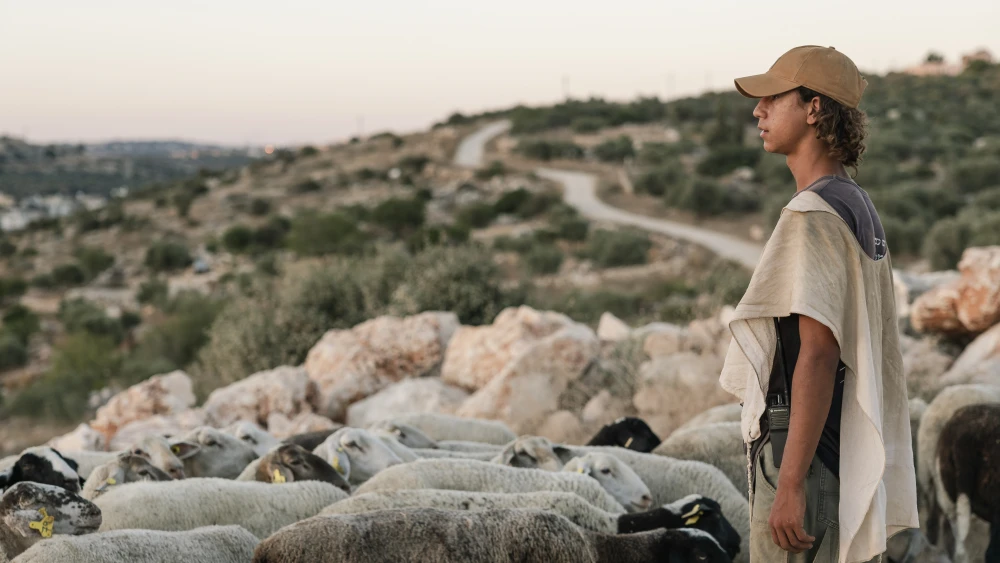
The shepherds of Israel did not keep the flock of God from harm within the Laws given through Moses, just as the Prophet Ezekiel said:
Woe to the shepherds of Israel who feed themselves! Should not the shepherds feed the flocks? You eat the fat and clothe yourselves with the wool; you slaughter the fatlings, but you do not feed the flock. The weak you have not strengthened, nor have you healed those who were sick, nor bound up the broken, nor brought back what was driven away, nor sought what was lost; but with force and cruelty you have ruled them. So they were scattered because there was no shepherd; and they became food for all the beasts of the field when they were scattered. My sheep wandered through all the mountains, and on every high hill; yes, My flock was scattered over the whole face of the earth, and no one was seeking or searching for them. (Ezekiel 34:2-6)
Ezekiel, the appointed watchman of Israel, went on to say:
For thus says the Lord God: “Indeed I Myself will search for My sheep and seek them out. As a shepherd seeks out his flock on the day he is among his scattered sheep, so will I seek out My sheep and deliver them from all the places where they were scattered on a cloudy and dark day. And I will bring them out from the peoples and gather them from the countries, and will bring them to their own land; I will feed them on the mountains of Israel, in the valleys and in all the inhabited places of the country. (Ezekiel 34:11-13)
Ezekiel was looking beyond the Babylonian captivity, just as is recorded in Chapters 37-39 of the Book of Ezekiel, where he foresaw the newly revived life that eventually would come to Israel in the end times. During times of strife and warfare in the world, like dry bones being brought back to life, Israel would be brought back to God. He foresaw a time of regathering with a true and faithful shepherd.
That Shepherd is Yeshua. His words, like the words of Moses, are true and relevant:
I am the good shepherd. The good shepherd gives His life for the sheep. But a hireling, he who is not the shepherd, one who does not own the sheep, sees the wolf coming and leaves the sheep and flees; and the wolf catches the sheep and scatters them. The hireling flees because he is a hireling and does not care about the sheep. I am the good shepherd; and I know My sheep, and am known by My own. As the Father knows Me, even so I know the Father; and I lay down My life for the sheep. And other sheep I have which are not of this fold; them also I must bring, and they will hear My voice; and there will be one flock and one shepherd. (John 10:11-16)
If the era brought in through the Word of God by Moses has immense significance, even more so does the era brought In by Yeshua HaMashiach in the fullest interpretation of all Moses’ teaching. There is a heavenly purpose higher than the political purposes of the nations. God, through His Son Yeshua, is still gathering His sheep for the eternal Kingdom. The time is now for the fulfilment of promise to bring Israel back from among the nations. It is the time when many eyes will be opened to their Messiah, in the context of a shaking world and the Gospel calling out to people of all nations.
The promise of new life in Messiah is one of immense freedom and true life. Here is the fulfilment of the hope of Israel in returning, not just to the Land where Moses first led them, but to complete redemption to God through Yeshua.
Yet, the written Word of God is as important as it ever was and we all must study it in the light of both Moses and Messiah, with the gift of God’s Holy Spirit to be our help in interpretation for life. The following Scriptures are true of the teaching of Moses, now fulfilled in Yeshua.
All Scripture is God-breathed and is useful for teaching, rebuking, correcting and training in righteousness, so that the servant of God may be thoroughly equipped for every good work. (2 Timothy 3:16-17)
Let the word of Christ dwell in you richly in all wisdom, teaching and admonishing one another in psalms and hymns and spiritual songs, singing with grace in your hearts to the Lord. And whatever you do in word or deed, do all in the name of the Lord Jesus, giving thanks to God the Father through Him. (Colossians 3:16-17)
I say then: Walk in the Spirit, and you shall not fulfil the lust of the flesh. For the flesh lusts against the Spirit, and the Spirit against the flesh; and these are contrary to one another, so that you do not do the things that you wish. (Galatians 5:16-17)
Moses’ Book of the Law is still as valid as when first given, but must now be read in the context of the New Covenant. The Old Covenant writings (Tanakh) together with the New Covenant writings (New Testament) is a continuous unfolding of the hope of Israel, the fulfilment of all that Moses wrote with its historical poignancy and the wonderful inclusion of Gentiles through faith in the Jewish Messiah. We now read the entire Bible through the inspiration of the Holy Spirit.
The hope of Israel was to be fulfilled through the New Covenant, enabled by Yeshua’s sacrificial death and resurrection. Jeremiah stated this clearly in Jeremiah 31. Ezekiel also prophesied concerning the end-times regathering of Israel during a time of great upheaval in the world:
When I have brought them back from the peoples and gathered them out of their enemies’ lands, and I am hallowed in them in the sight of many nations, then they shall know that I am the Lord their God, who sent them into captivity among the nations, but also brought them back to their land, and left none of them captive any longer. And I will not hide My face from them anymore; for I shall have poured out My Spirit on the house of Israel,’ says the Lord God. (Ezekiel 39:27-29)