

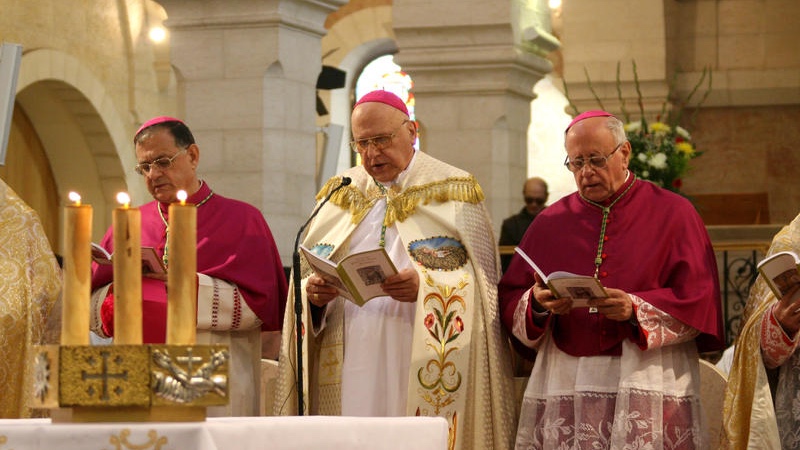

In what can only be described as an ironic and deeply troubling statement, a group of Palestinian Arab Christian leaders has issued a Christmas message that places near-total blame on Israel for the hardships of local Christians, even as Islamic radicals torch churches and drive fellow believers out of Bethlehem, Ramallah, and Jenin.
The statement, released by a group called “A Jerusalem Voice for Justice”, is signed by prominent Catholic, Greek Orthodox, and Lutheran figures—including Latin Patriarch Michel Sabbah, Greek Orthodox Archbishop Attallah Hanna, and Lutheran Bishop Munib Younan. It speaks of “genocide” in Gaza, accuses the Israeli army and so-called Jewish “settlers” of conducting “a regime of terror” in Judea and Samaria, and claims Israeli policies are meant to “Judaize” Jerusalem.
It reads as if the only obstacle to peace and Christian flourishing in the Holy Land is the Jewish state of Israel.
Yet the facts tell a starkly different story.
Christians thriving in Israel, fleeing the Palestinian Authority
According to data from Israel’s Central Bureau of Statistics, the Christian population inside Israel grew to over 180,000 by Christmas 2024, with continued growth expected into 2026. These Christians enjoy full religious freedom, hold seats in the Knesset, and include doctors, judges, and senior military officers among their ranks.
By contrast, the Christian population under Palestinian rule has seen dramatic decline. In Bethlehem, Christians made up over 80% of the population in 1950. Today, they account for less than 10%. In cities like Jenin and Gaza, Christians live in fear of Muslim majorities that have grown increasingly radicalized.
As reported by Israel Today, Palestinian Christians are fleeing primarily because of intimidation, land theft, and Islamist threats—not because of Israeli policies.
In fact, just days after this latest church statement was published, a Christmas tree outside the Church of the Holy Redeemer in Jenin was set on fire by local Muslims. Jenin is a known Hamas stronghold, and the church is regularly harassed. Yet this attack didn’t even merit a mention in the “Christmas Message.”
The Christmas tree at the Holy Redeemer Church in Jenin was set on fire and destroyed. pic.twitter.com/9rf6s0ll79
— Khaled Abu Toameh (@KhaledAbuToameh) December 22, 2025
A message lacking grace—and truth
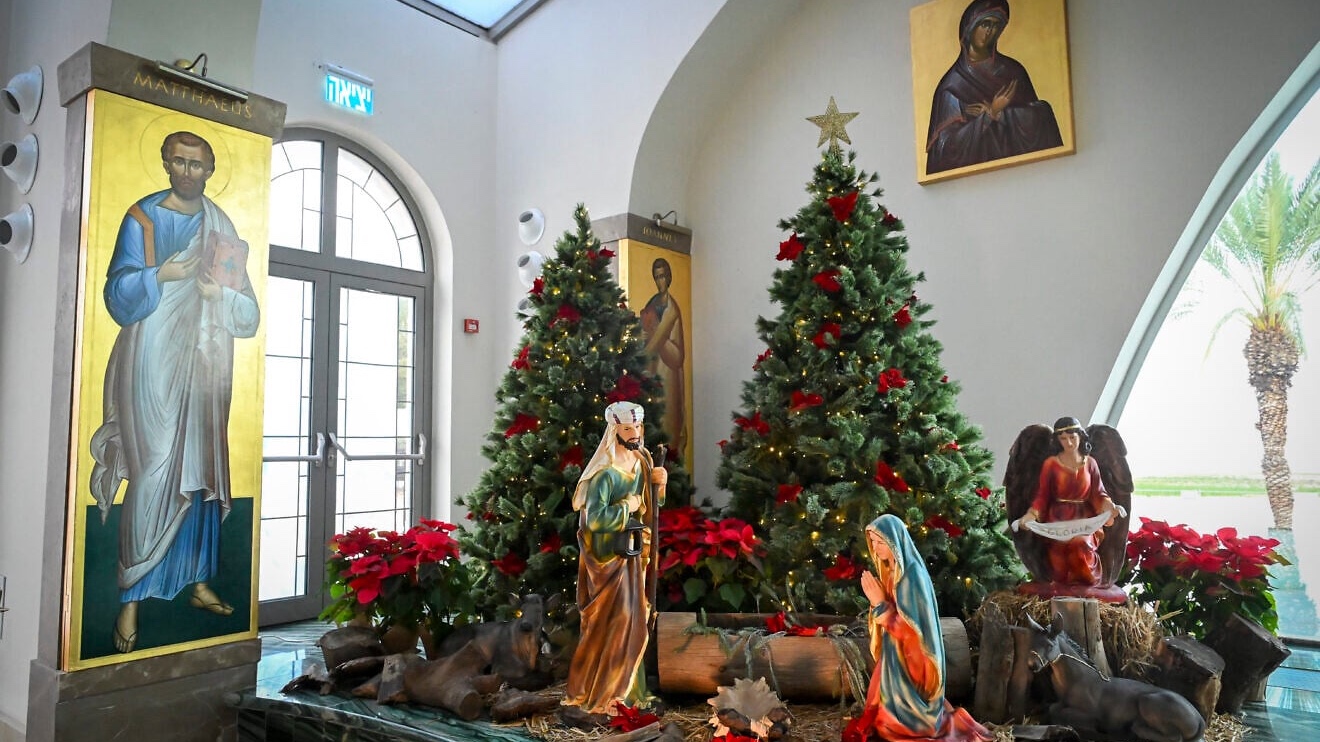
The message is not just ironic; it’s dangerously dishonest. Christmas exists because of a Jewish Messiah born in a Jewish town to a Jewish mother. To blame “the Jews” for ruining Christmas is to forget that Christmas is, in fact, a gift from the Jews to the world.
Moreover, the statement is disturbingly devoid of any Christian virtue of forgiveness or self-reflection. It offers no call for reconciliation. No acknowledgment of the suffering of Israeli civilians, no condemnation of the Hamas massacre of October 7 that sparked the current war, and certainly no mention of the deep-rooted Islamist persecution of Christians under Palestinian rule.
This selective outrage and moral blindness can be explained by the political realities faced by Arab Christians living under Palestinian Authority control. To remain in favor—or simply to remain safe—one must parrot the official narrative that blames everything on Israel.
But truth, not propaganda, should guide Christian leaders—especially during the season when they celebrate the Prince of Peace.
Want more news from Israel?
Click Here to sign up for our FREE daily email updates







The ‘Christian’ terminology which is so popular on earth is simply a universal label. It has been used and misused for many centuries by man’s invented and organized religions; and it has nothing to do with God’s kingdom or His righteousness.
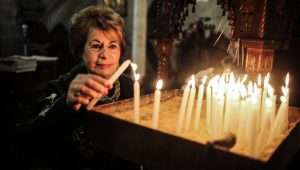
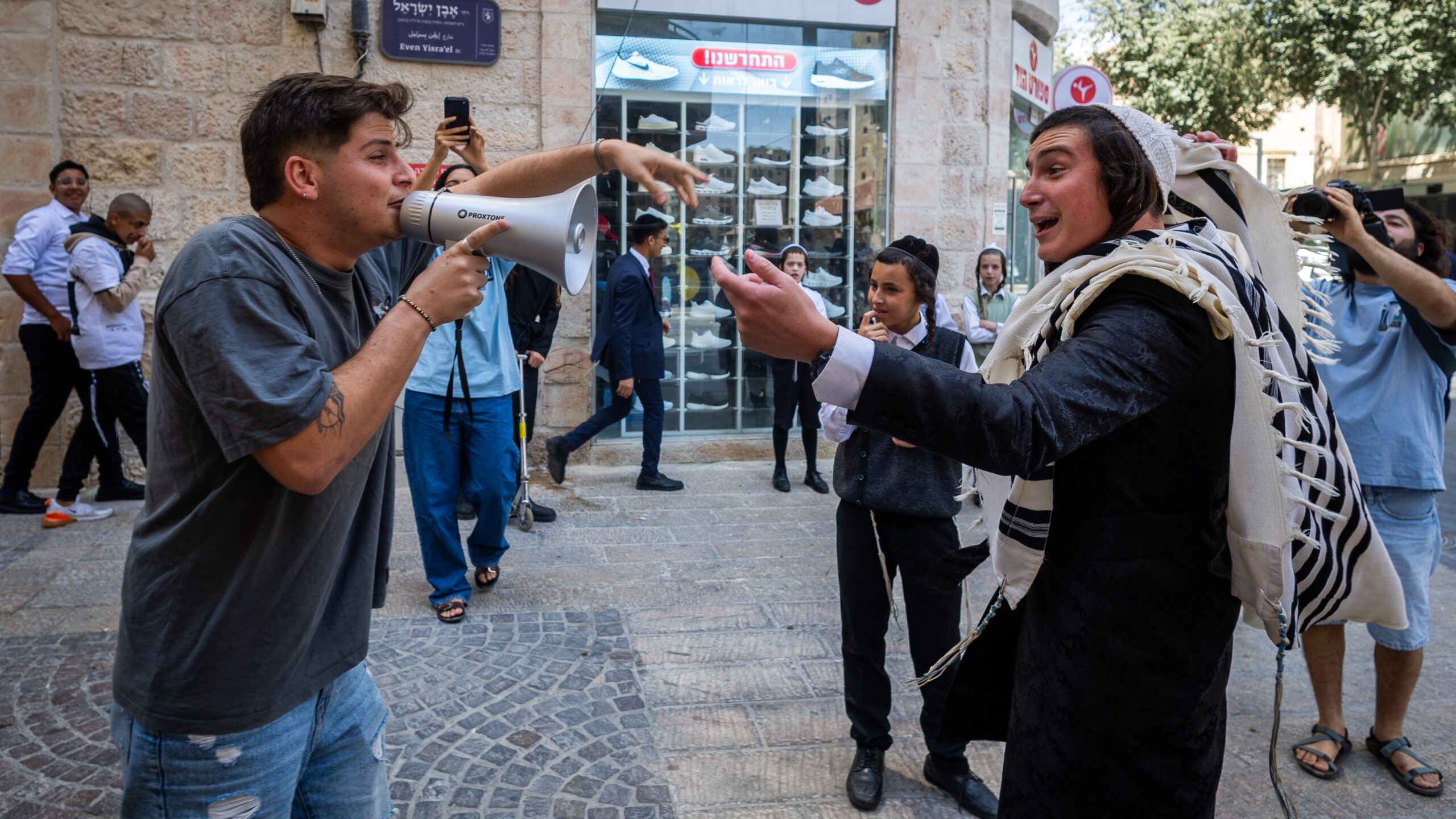
“Jerusalem boasts more than 50 Christian churches, 33 Muslim mosques, and 300 Jewish synagogues in the city. Each of the religions now coexists, and you can find religious sites spanning across all three religions, such as Temple Mount.”
So, which one of these is right? God has said very clearly in the Bible that NONE of these religions and none of their religious leaders are doing what is right in his sight.
The God of Israel has spoken…
God said to Moses: “I will be what I will be.” The true and only God of heaven and earth doesn’t need buildings built by man based on man’s ideologies and theologies to gain some form of worship.
God desires to dwell directly inside the tabernacle of men and women, who are repentant and obedient to him in everything.
God said our ceremonies and incense burnings make him weary and it is iniquity. He wants man to be obedient to his word and commandments.
Isaiah 1:16 Wash, cleanse yourselves, remove the evil of your deeds from before My eyes, cease to do evil.
People reduce God’s order to human interpretation of their philosophy for what they have determined pleases God; and it is all false doctrine and of great deception according to the Bible.
Religions are the greatest deception of mankind, they HAVE BEEN used by satan himself throughout all history to achieve his objectives. Satan is the prince of the air on earth, and loves to use the church system on earth to get people to worship him.
People are puppets, moved by satan’s sleight of hand.
Satan knows the word [scripture] more accurately than humans do, because he was a fallen angel, directly from heaven’s tabernacle of the true God.
Matthew 15:9 KJV
Jesus said:
“But in vain they do worship me, teaching for doctrines the commandments of men.”
Here’s what Jesus told us pertaining to even the [titles] used in worldly organized religions:
Matthew 23:8-12 KJV
8 But be not ye called Rabbi: for one is your Master, even Christ; and all ye are brethren.
9 And call no man your father upon the earth: for one is your Father, which is in heaven.
10 Neither be ye called masters: for one is your Master, even Christ.
THE WHOLE DUTY OF MAN IS NOT TO INVENT RELIGIOUS PRACTICES, RITUALS, CEREMONIES, AND ORNATE IMAGES THAT WE THINK GOD ACCEPTS AND IS PLEASED WITH.
Our Vain Tradition:
Mark 7:13 KJV
13 Making the word of God of none effect through your tradition, which ye have delivered: and many such like things do ye.
The TRUTH is:
Ecclesiastes 12:13 KJV
13 Let us hear the conclusion of the whole matter: Fear God, and keep his commandments: for this is the whole duty of man.
If people are [truly] loving God and keeping his commandments, then the people are doing unto their neighbors and spouses as they desire for themselves.
Matthew 22:36-40 KJV
37 Jesus said unto him, Thou shalt love the Lord thy God with all thy heart, and with all thy soul, and with all thy mind.
38 This is the first and great commandment.
39 And the second is like unto it, Thou shalt love thy neighbour as thyself.
God is not the God of religions, he is, the one and only, almighty God, who commands men and women everywhere to worship him in “Spirit and in Truth.”
John 4:24 KJV
24 God is a Spirit: and they that worship him must worship him in spirit and in truth.
Obedience is better than sacrifice.
1 Samuel 15:22
“Behold, to obey is better than sacrifice, and to hearken than the fat of rams.”
Ryan, you speak TRUTH! I am seeing a turning away from a Jewish Messiah in America too. HaShem blames false shepherds. Years ago there was a book called “When a Jew Rules the World.” What a shock that will be for Christian replacement theologists!!
To persuade the writers of “Israel Today” that Christmas can be traced all the way back to Babylonian sun worship (i.e. devil worship), and that ישוע was born on Yom Teruah (as the Gospel according to the Hebrews shows), seems as pointless as to persuade them that Yeshu is not יהוה (thanks to Fruchtenbaum, Shulam, and friendly evangelical missionaries).
Whether due to spiritual blindness, peer pressure, or the danger of losing customers, it is unlikely that they will ever abandon these idolatrous doctrines.
But looking at that photo showing that pompous clergy, maybe someone will notice something:
“Come, I will show you the punishment of the great prostitute, who sits by many waters. With her the kings of the earth committed adultery, and the inhabitants of the earth were intoxicated with the wine of her adulteries […] and I saw a woman sitting on a scarlet beast that was covered with blasphemous names and had seven heads and ten horns. The woman was dressed in PURPLE and SCARLET, and was glittering with gold, precious stones and pearls. She held a golden cup in her hand, filled with abominable things and the filth of her adulteries. The name written on her forehead was a mystery: Babylon the great, the mother of prostitutes, and of the abominations of the earth. I saw that the woman was drunk with the blood of God’s holy people, the blood of those who bore testimony to Jesus” (Rev 17.1-6, NIV).
Does no one realise that “Christian Church” is a mere label for a diabolical organisation which controls all of mainstream Christianity, all the harlot churches? Who created Islam? Who incepted the Holocaust? All roads lead to Rome Papal.
Amen, Jake. Not all who call themselves Christians are actually Christians, definitely not that bunch!