
Israel’s Coordinator of Government Activities in the Territories (COGAT) said over the weekend that food remains available in Gaza’s markets, pushing back against claims of humanitarian collapse and arguing that the primary obstacle to civilian relief is Hamas itself.
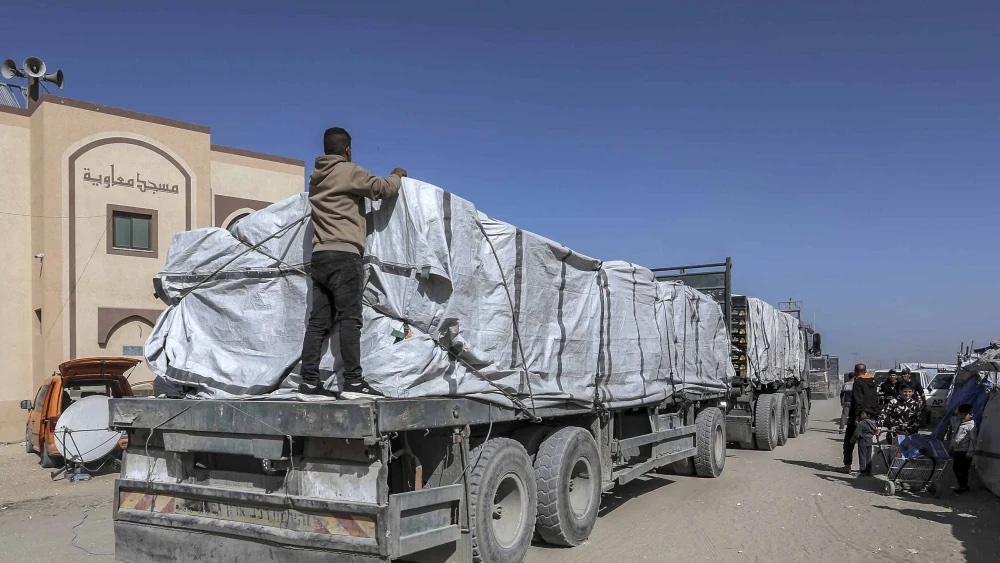
In a public statement, the Defense Ministry body said supplies entering the Strip continue to meet—and in some cases exceed—international aid standards. According to COGAT, food is reaching local markets, medical facilities remain operational, and the broader humanitarian picture is being distorted by Hamas for strategic effect.
“Hamas wants the world to see breakdown and deprivation,” the statement said in substance. “But conditions on the ground tell a different story.” COGAT maintained that the terror group is siphoning off essential resources and redirecting them toward its military and logistical networks instead of allowing them to serve Gaza’s civilian population.
Hamas wants you to see a collapse. The reality on the ground says otherwise.
Food is filling the markets,enough for sustained ammounts of time, medical centers are active, and aid is consistently exceeding international requirements.
The only real barrier? Hamas terror
They… pic.twitter.com/SiAUVKytPI
— COGAT (@cogatonline) April 17, 2026
Israeli officials have long argued that Hamas uses humanitarian pressure as a tool of political leverage, both on the battlefield and in the diplomatic arena. The latest statement reflects a broader Israeli effort to counter international narratives portraying Gaza as entirely cut off from basic necessities.
The issue has also surfaced in high-level negotiations now underway in Cairo. According to a CNN report published this week, senior US officials held direct talks with Hamas representatives for the first time since the ceasefire agreement reached on October 10, 2025.
The American delegation was reportedly led by Aryeh Lightstone, a senior official in the Trump administration, and included Nickolay Mladenov, who serves as the US president’s high representative for Gaza under the Board of Peace framework. They met Tuesday night with senior Hamas figure Khalil al-Hayya, according to Hamas sources cited in the report.
During the meeting, al-Hayya reportedly pressed the US side over Israel’s implementation of the first phase of the truce, demanding a halt to airstrikes and an increase in aid deliveries before any movement toward the next stage of the agreement.
The ceasefire that took effect on October 10, 2025, brought an end to two years of war triggered by the Hamas-led assault on southern Israel on October 7, 2023. Under the current arrangement, Israeli forces remain in control of roughly half of the Gaza Strip.
At the same time, Hamas leaders have continued to resist core elements of the broader US-backed framework. Senior figures including Khaled Mashaal and Musa Abu Marzouk have publicly rejected provisions such as disarmament, despite Hamas having previously accepted the outline of the deal.
That contradiction remains central to Israel’s case: humanitarian access, Jerusalem argues, is not being obstructed by lack of supply, but by a governing terror movement that exploits aid, embeds itself in civilian systems, and then blames others for the resulting damage.
Want more news from Israel?
Click Here to sign up for our FREE daily email updates