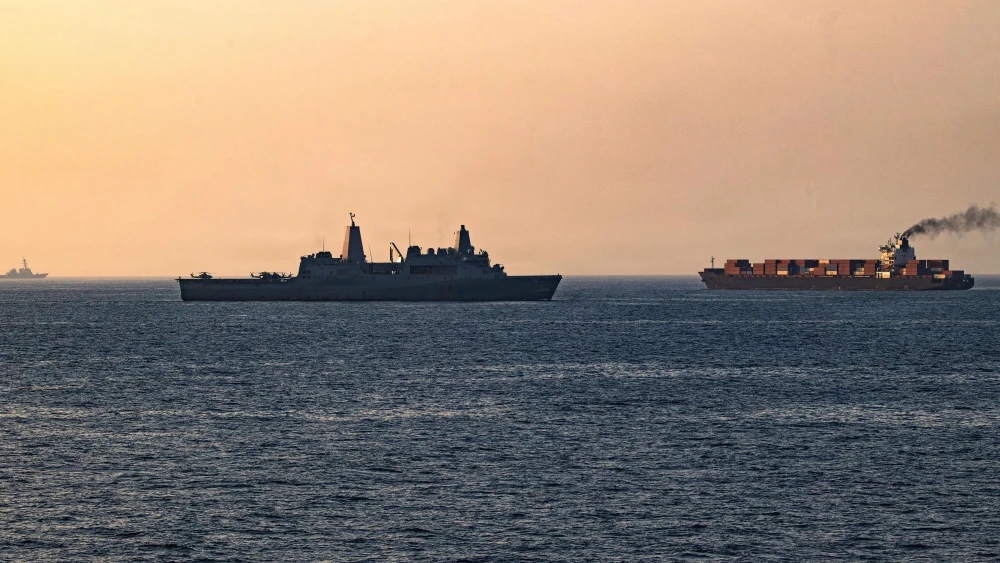
(JNS) In recent weeks, the 2026 Iran crisis has evolved from its initial “hot war” phase into a historically unique “dual blockade.” At the center of this chapter in the conflict is the Strait of Hormuz.
Measuring just 21 miles wide, this narrow geographic chokepoint has historically served as the central artery of the global oil economy. Before the conflict, the waterway accommodated the passage of approximately 3,000 commercial vessels every month, single-handedly processing roughly one-fifth of the world’s total seaborne petroleum trade. These waters are essential for sustaining the global supply chains of crude oil, liquefied natural gas (LNG) and agricultural fertilizers.
Following the commencement of hostilities, however, transit volume through the strait collapsed by more than 90%. The resulting paralysis has trapped an estimated 2,000 commercial vessels and upwards of 20,000 mariners within the Persian Gulf. Due to the absence of an alternative route to the open ocean, these commercial assets and all the supply chains downstream of them are currently stuck in a painful holding pattern.
The crisis is defined by two...
Become a Member
-
Read all member content
Get exclusive in-depth reports from Israel.
-
Get exclusive in-depth reports from Israel
Connect with Israel, right from your home.
-
Lift up the voice of truth and hope
Support Jerusalem-based Zionist journalism.

Already a member? Login here.