What can already be asserted with worrying certainty, however, is that the case being made for the urgency in signing the MoU is in itself quite dangerous. It did not take long for the IRGC regime in Tehran to conclude that if the Americans were overtly driven by the fear of an economic crisis—and by their declared inability to open the Strait of Hormuz by any other means—then it could use its whip hand to impose its will in Lebanon and drive a deeper wedge between Washington and Jerusalem.
If allowed to stand, this Iranian conclusion is bound to create a slippery slope leading to further demands, in Gaza and beyond. In response, Israel must develop a balanced strategy—as distinct from hot-headed verbiage—to avert this outcome.
In the short term, as evidenced by events in Lebanon, it may have no choice but to accept some temporary restraints. At the same time, Israel must engage key players in Washington, the United States administration and Congress to make it clear that we are standing on the edge of a slippery slope.
Clearly, no Israeli government can accept a forced retreat from Lebanon, placing the entire north under threat, without proven active steps to disarm Hezbollah; nor can it tolerate a broader pattern in which Tehran can use its newly established leverage to demand further concessions.
What is—and what is not—in the MoU?
The US administration, with Vice President JD Vance in the lead, has gone on the offensive in the public domain to make the case for the MoU and the urgent manner in which it was reached. They describe it as being in line with the primary goal of bringing an end to the Iranian military nuclear project and creating the conditions for stability and prosperity in the region.
Systematic attempts are being made to hint at unannounced understandings holding the promise of Iranian compliance with American expectations, and to suggest that it was Iran’s leadership that caved in under pressure from the American blockade and covert operations against its infrastructure.
The increasingly sharp criticism heard from key Republicans in Congress only serves to intensify efforts to justify the deal. It is perhaps fair to say that the ultimate judgment on the validity of such claims can be fully rendered only after the next phase of negotiations firmly demonstrates whether Iran is indeed acting under pressure, or that the opposite is true.
But even at this point, it is safe to say that the MoU is highly problematic, regardless of whether the talks in Switzerland lead to progress and the narrowing of gaps on the nuclear issue. The latter can legitimately be described as the overriding Israeli, regional and global purpose of the war to begin with. The problems are evident both in terms of what is (and is not) in the MoU, and because of the argumentation being made in support of its rapid endorsement.
There are, indeed, several aspects in the MoU that give rise to serious concern, and not only in Israel. To begin with, it openly commits the US to accept the legitimacy of the (murderous) Islamic Revolutionary Guard Corps regime in Tehran, and to abstain from intervention in Iran’s internal affairs.
That is a far cry from US President Donald Trump’s statement that “help is on the way” in the wake of the slaughter of anti-regime protesters in January 2026. In this respect, it already betrays the fervent hopes of those in Iran and beyond who wanted to see the regime fatally weakened. In the realm of public propaganda, Iran’s new leaders are openly speaking of an American surrender.
Moreover, the MoU has already made it possible for Tehran to resume oil exports, removing an economic lever that could have helped destabilize the regime. More sanctions relief is on its way. The reference to a $300 billion investment fund—even if hedged and dependent upon the future overall agreement—is almost by definition an awkward invitation to the Gulf states to buy off Iranian enmity, after nearly four months of being exposed to Tehran’s strikes.
What is missing from the text is no less alarming. There is no reference to the ballistic missile program—indeed, Trump has dismissed this as irrelevant—as he put it, “after all, others in the region have missiles too …”
Given the Israeli rationale for “Operation Roaring Lion/Epic Fury,” which focused on Iran’s missile threat (whereas its nuclear capabilities were the main target of “Operation Rising Lion” in June 2025), this is a troubling omission, even if there are reasons to believe that serious damage has been done to Iran’s capability to resume mass missile production in the near future.
The same may be said for the question of support and funding for Iran’s proxies across the region: By allowing Iran to bring Lebanon into the equation (to protect Hezbollah from the consequences of its own decision to join the war), the MoU has lent legitimacy to the regime’s system of patronage over its regional clients.
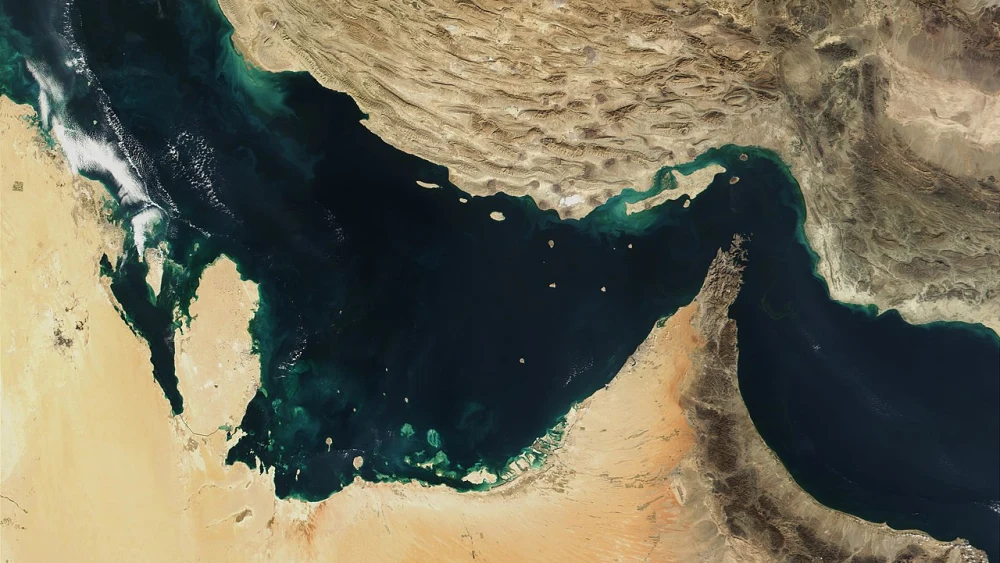
Even more damaging, in terms of its immediate as well as long-term strategic consequences, is the manner in which the MoU is being justified as an urgent necessity. In effect, what Iran has been told (albeit side by side with the repeated warning that the US would attack it again if the negotiations fail) is that its closure of the Strait of Hormuz has proved to be a victorious tool of statecraft:
- The American military found itself powerless to reopen the Strait of Hormuz by force—not in weeks or even in years. This amounts to a harsh indictment of America’s conventional naval, air and ground capabilities, built at a cost of trillions of dollars and perhaps the one deterrent restraining the aggression of other parties in the CRINK (China, Russia, Iran, North Korea) grouping against their neighbors. It is Washington’s determination not to put “boots on the ground” driven by fear of casualties, and because it judged the risks unjustified, that led to this result.
- Iran has thus found itself in a position to continuously disrupt the entire global economy, and, potentially, to bring about a crisis akin to that of 1929. Trump, by his own admission, has no wish to be remembered in the same breath as US President Herbert Hoover, often blamed for failing to avert America’s economic meltdown.
While the validity of both claims can be questioned, what is certain is that they were read in Tehran as evidence that it now holds the whip hand. Almost immediately, it used this newfound leverage to demand American action to coerce Israel in Lebanon.
On June 20, after hours of intense strikes against Hezbollah targets in South Lebanon, Iran extracted from Israel a willingness to hold IDF fire (or rather, to confine it to a response to local challenges). The overarching problem is that, given the messages it has received on its current advantage, the IRGC regime may well push further down the slippery slope, on the assumption that the American administration would be willing to impose its will on Israel to keep the strait open.
In Lebanon, this could lead to a demand for a full Israeli withdrawal, and from there, Iran’s influence could spread to Gaza and beyond. Slippery slopes are dangerous by definition. Trump’s change of tune, and his warning to Iran on 21 June, apparently following a prolonged consultation with US Sen. Lindsey Graham, seem to reflect an understanding of this point.
What can Israel do?
Dramatic posturing and hot-headed bravado are of little use at this stage. Indeed, reckless statements have already caused damage, serving Iran’s interest in driving a wedge between Israel and the US. What is needed is a sober and carefully balanced combination of two seemingly contradictory responses:
- On the one hand, Israel should demonstrate to an angry and impatient administration that it is prepared to take Washington’s short-term needs into account, to the extent possible and without unduly risking the safety of soldiers or civilians in northern Israel, so long as this does not require irreversible concessions on the ground.
- On the other, considering what transpired between Trump and Graham, Israel should pursue a systematic effort in Washington—as discreetly as possible, given the extreme sensitivity of the administration to any open criticism—to alert senior administration officials and key congressional players to the danger inherent in the slippery-slope dynamics, and not only to Israeli interests.
- This effort should aim to coordinate, to the greatest extent possible, a strategy to “gain a foothold” and dispel Tehran’s assumption that it can now impose its will and its narrative on Israel and the region.
Originally published by the Jerusalem Institute for Strategy and Security.