

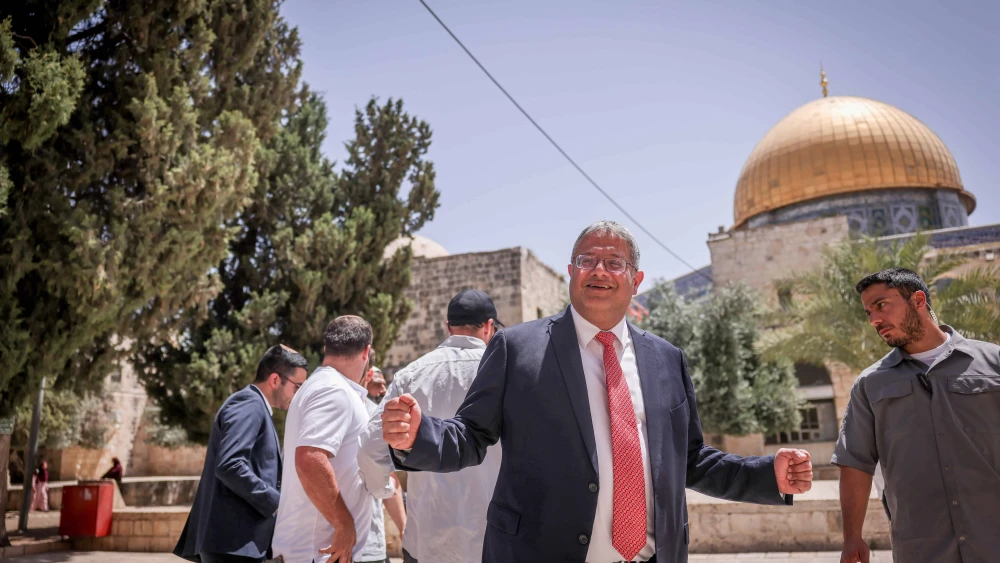

Israeli National Security Minister Itamar Ben-Gvir visited the Temple Mount on Tisha B’Av and called the sight of Jews praying there “tremendous progress.”
Tisha B’Av is the Jewish people’s day of mourning for the destruction of the First and Second Temples, both of which stood on the Temple Mount in Jerusalem. Yet for decades after Israel liberated the Old City in 1967, the so-called “status quo” left Jews in the strange position of being allowed to visit their holiest site, but not openly pray there.
That arrangement was a concession made in the hope of keeping the peace. In practice, it taught Israel’s enemies that Jewish restraint could be turned into a permanent veto over Jewish rights.
On Thursday, thousands of Jews ascended the Mount. Some prayed openly. Ben-Gvir said Jews there felt that the State of Israel was “in charge,” and tied the moment to a broader message of restored Israeli authority.
More than 2,300 Jews entered the Temple Mount area today for Tisha B’Av pic.twitter.com/V6pyEyAuhK
— Documenting Israel (@DocumentIsrael) July 23, 2026
Ben-Gvir’s critics, predictably, called the visit provocative. Jordan condemned it as a violation of the status quo. Palestinian and international voices again described Jewish presence on the Temple Mount through the language of escalation.
But the real provocation is the idea that Jewish prayer in Jerusalem is uniquely dangerous.
Israel must always weigh security concerns carefully, and the Temple Mount is one of the most sensitive places on earth. Reckless symbolism can carry consequences, but sensitivity cannot mean permanent Jewish submission at the very place where Jewish history, worship, and national identity converge.
Tisha B’Av is about destruction, exile, and return. Jewish prayer on the Temple Mount affirms a basic truth: Jerusalem is not foreign territory to the Jewish people.
Want more news from Israel?
Click Here to sign up for our FREE daily email updates







The third temple will be built, it will be Islam who will clear the way for that to happen. There will only be one building on the mount, the temple itself.