(JNS) UNESCO’s Intangible Heritage Committee will meet in China for its 21st session at the end of the month (Nov. 30-Dec. 5). Among the decisions it will make is whether to accept the Jerusalem bagel as the unique cultural property of “Palestine.”
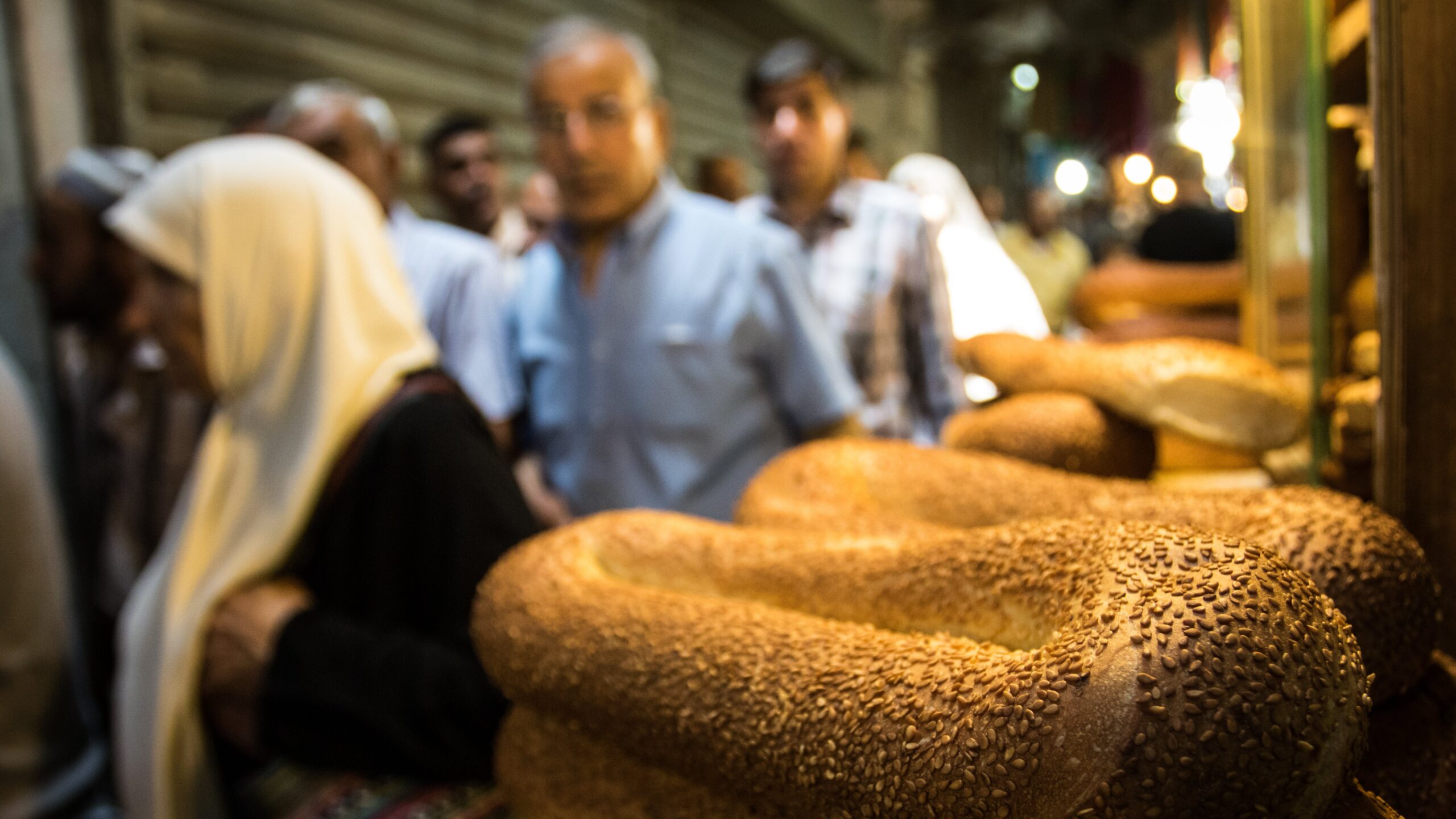
On Sept. 23, 2025, the Palestinian Authority nominated ka’ak al-Quds, or Jerusalem sesame bread, better known as the Jerusalem bagel, as part of the “State of Palestine’s” cultural heritage.
In its UNESCO submission, the P.A. described ka’ak al-Quds as “a popular, light, and delicious bakery item for which the city of Jerusalem is famous. It is considered a symbol of the city’s heritage and religious identity.”
It added that Palestinians from Jerusalem are considered the main group who are “bearers of this craft.”
Asaf Rost, vice president of Preserving the Eternal, an Israeli NGO that focuses on protecting and developing heritage sites in Judea and Samaria, told JNS: “The Palestinian attempt to appropriate the Jerusalem bagel, a pastry whose various versions are widespread throughout the Middle East, and whose origins date back much earlier than the invention of Palestinian nationalism, may seem amusing at first glance, but behind it lies a much more dangerous and broader strategy.”
The P.A. has already laid claim to ancient Jewish sites as “Palestinian,” something that UNESCO (the United Nations Educational, Scientific and Cultural Organization) has accepted despite the ahistorical nature of those claims given the recent provenance of Palestinians as a people in the mid-20th century.
Most recently, the P.A. registered “Sebastia (State of Palestine),” as a UNESCO World Heritage Site. Sebastia served as the capital of the northern Kingdom of Israel in the Iron Age.
“The Palestinian Authority systematically works to turn UNESCO into a tool for promoting a one-sided historical narrative that erases the Jewish connection to the Land of Israel and Jerusalem,” Rost said.
On Jan. 1, 2019, Israel dropped out of UNESCO over its persistent anti-Israel bias after Prime Minister Benjamin Netanyahu instructed the Foreign Ministry to prepare to withdraw in 2017. “UNESCO has become a theater of the absurd and instead of preserving history, distorts it,” Netanyahu said.
He made the decision shortly after UNESCO recognized Hebron’s Old City as a Palestinian World Heritage site. This included the Tomb of the Patriarchs, the resting place of the patriarchs Abraham, Isaac and Jacob along with their wives, matriarchs Sara, Rebecca and Leah.
UNESCO’s Intangible Heritage section deals with cultural practices such as embroidery, music and crafts. Its committee, made up of 24 countries, will debate at the next meeting such things as the art of architectural ornamentation in Algeria, music and dance in Angola, and the wine-making tradition of Armenia.
“After the attempt to appropriate the archaeological heritage of ancient Samaria and other sites of historical and national importance, it is now the turn of the Jerusalem bagel,” Rost said. “There is nothing wrong with preserving Arab culinary traditions in Jerusalem, but there is a vast difference between preserving heritage and using it as a tool in a political struggle over the city’s identity.”
That the P.A.’s bagel claim carries political overtones is clear from its UNESCO documentation. “The ka’ak … serves as part of the collective memory and longing for Palestinians in the diaspora, reinforcing its status as a cultural symbol of Jerusalem,” one of the supporting documents submitted to the P.A. stated.
Another document speaks of a nonexistent “siege of Jerusalem,” which has made it difficult to distribute the Jerusalem bagel, leading Palestinians to buy it from other regions so they can enjoy its “special taste.” It describes the bagel as a cultural element representing “resilience and permanence” as Jerusalem families face the city’s “Judaization.”
“The State of Israel must awaken and understand that the struggle for heritage is not only conducted on the ground, against destruction and looting of antiquities, but also on the international stage, where history is being rewritten,” Rost said. “It is time to formulate a determined national policy to protect the historical heritage of the Land of Israel and the historical truth for future generations.”
Want more news from Israel?
Click Here to sign up for our FREE daily email updates