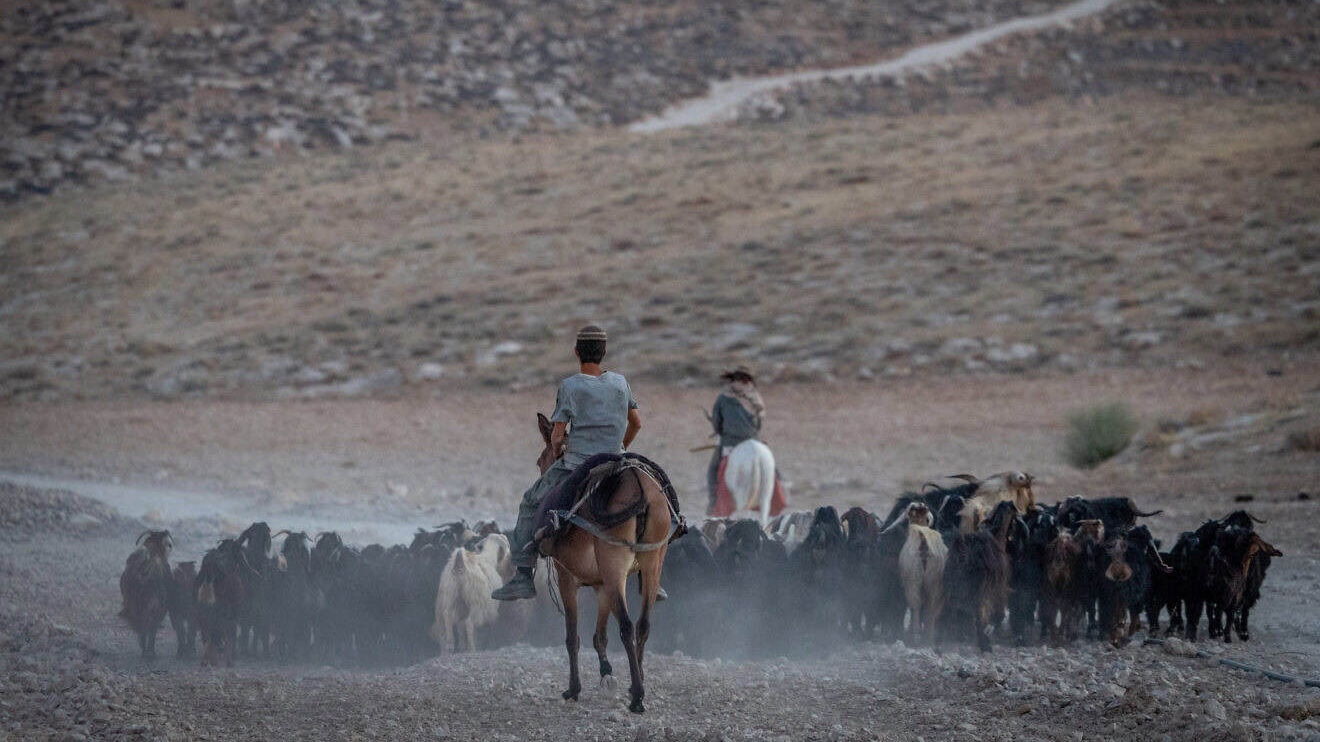
(JNS) Shlichut in Hebrew means, loosely translated, “a sense of mission.” Perhaps nowhere is such a sense more sharply on display than in the Hebron Hills Regional Council, where volunteers defend vast spaces from Arab takeover. They live in secluded, extreme conditions, and when trouble inevitably comes, they’re the first line of defense.
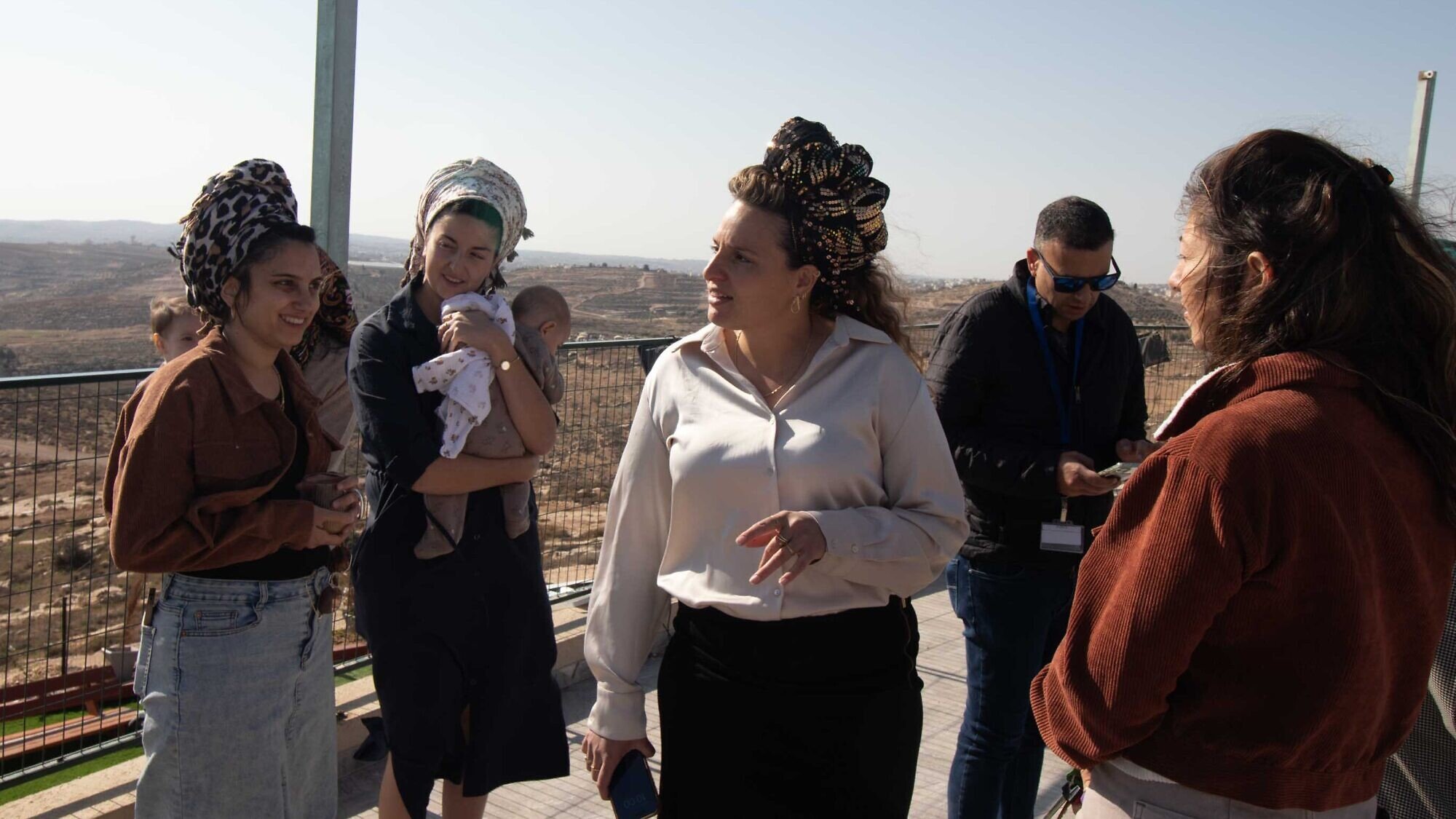
“It’s a privilege to be here. It’s our duty. What we do, we do for the nation of Israel,” said Tzofia Lichtenstein, 30, an attorney from the new yishuv, or settlement, of Mitzpe Ziv, the first stop on a tour organized by the Hebron Hills Regional Council on Nov. 27.
All those JNS met on the tour expressed similar sentiments. They wore their personal privations lightly, cheerful at the thought that they were serving their country.
Tzofia spoke to a group of journalists in front of a small, circular synagogue with a view of rolling hills to the south. Local Arabs had attempted to set the synagogue on fire on three separate occasions, she said.
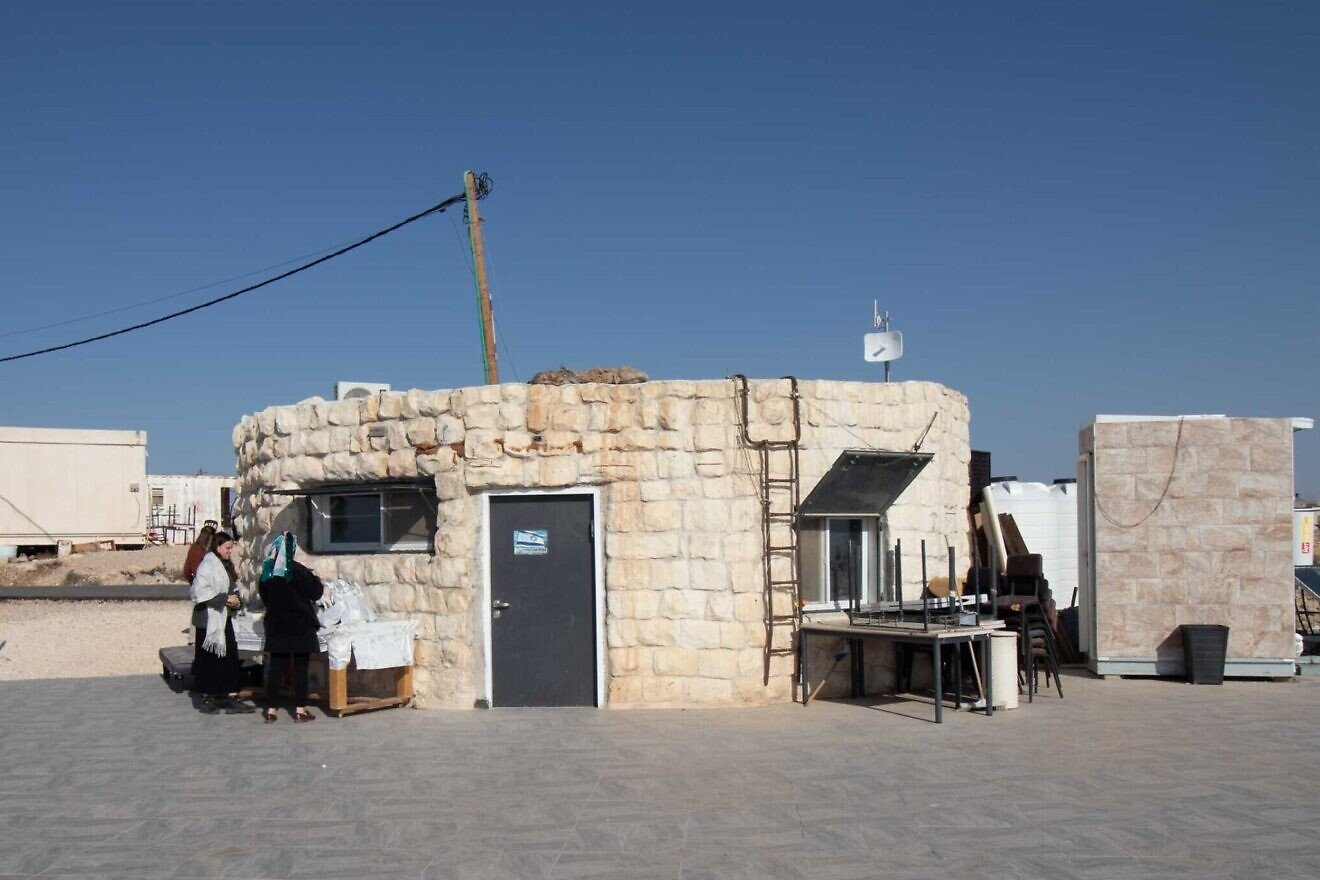
Arabs tried to set fire to the synagogue at Mitzpe Ziv three times. Photo by David Isaac.
Forty people, including 14 children, currently live in Mitzpe Ziv. Most live in caravans. Their yishuv has been connected to the power grid, but water still needs to be trucked in. The mother of the first baby born in Mitzpe Ziv related how she needed to go to the nearby city of Kiryat Arba (about a 10-minute drive) simply to take a shower.
At Mitzpe Midrag, the situation is still more extreme. Yoav, a young man, decided on his own initiative to move to the area three years ago. He felt it was important to establish a Jewish presence in the area. He took up residence in the Um Daraj police station, a gutted building dating back to Jordanian rule in the area, which served as part of a system of border outposts.
It sits on a ridge at the edge of the Negev desert and offers stunning views in three directions. Yoav says it’s possible to see 100 miles on a clear day.
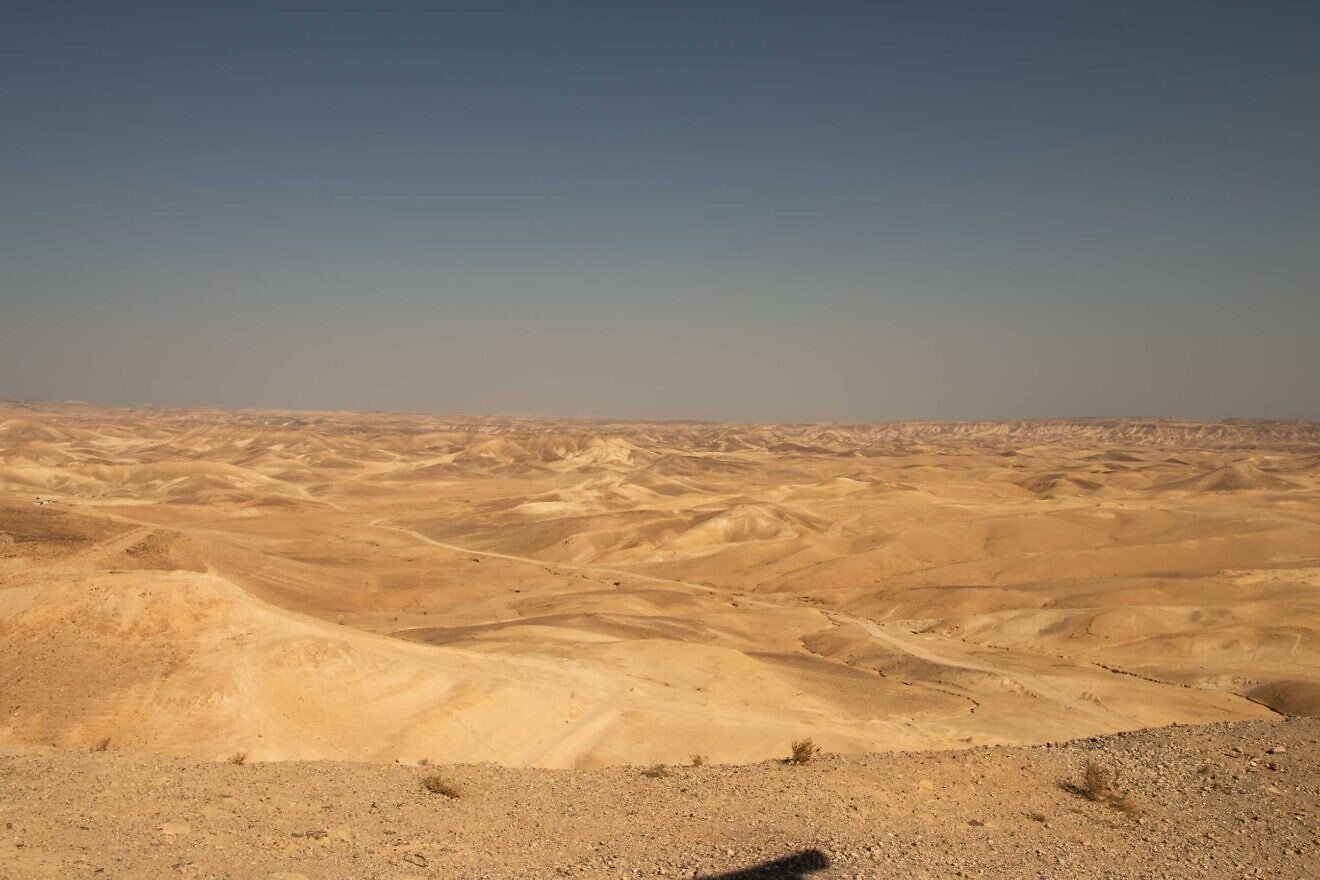
View overlooking the Negev Desert from Mitzpe Midrag, the former Um Daraj police station in the Hebron Hills, Nov. 27, 2025. Photo by David Isaac.
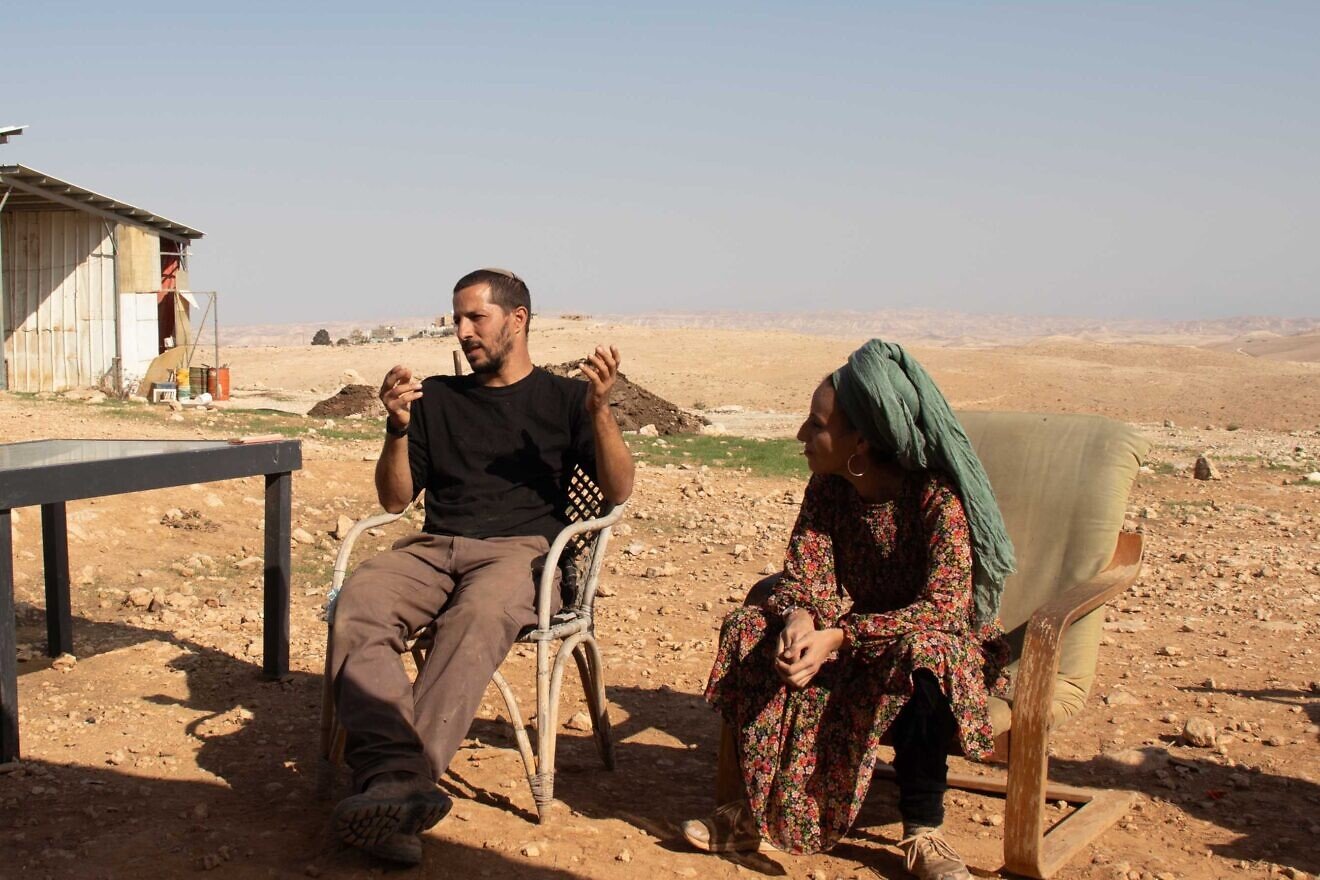
Yoav recently married, and his wife, Tzofia (not to be confused with Tzofia Lichtenstein), has joined him at the remote outpost. Yoav’s friends have started helping him fix up the area.
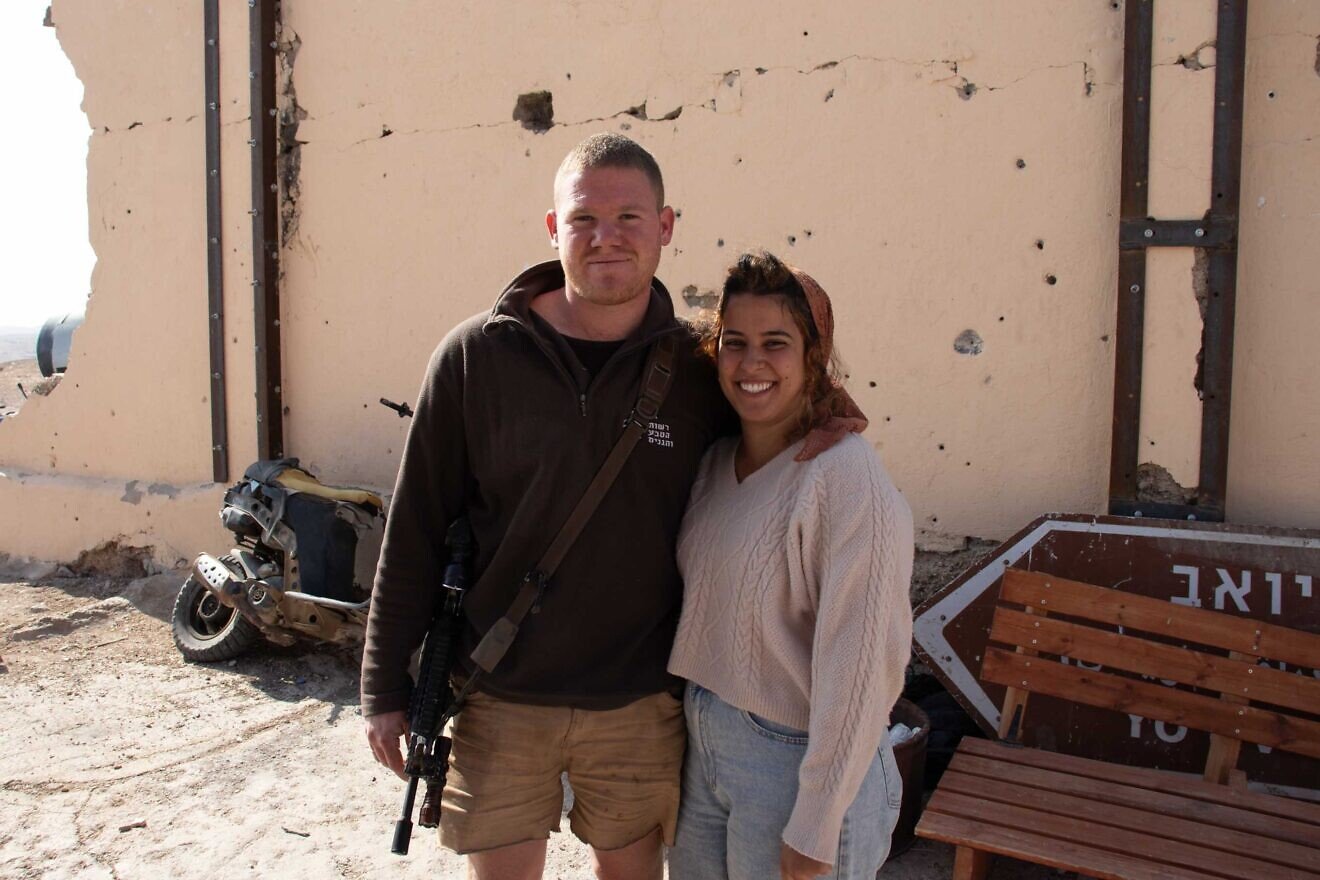
Yoav and his wife Tzofia at Mitzpe Midrag. Nov. 27, 2025. Photo by David Isaac.
The Har Hebron Regional Council covers an area of 1 million dunams, (386 square miles). Of that, 600,000 dunams, or 231 square miles, is state land.
Eliram Azulay, who heads the regional council, explained that unlike other areas in Judea Samaria, the plan isn’t to build numerous settlements here, but to strengthen Israel’s hold on the open spaces; to preserve them as a giant nature reserve for generations to come.
“Part of the challenge is to make Israelis aware they are here,” Azulay said. Six months ago, the council hired an international spokeswoman to spread the word worldwide. He said that even Jews who care about settlements know very little about the Hebron Hills region, which is located at the southern tip of Judea and Samaria.
What the council is up against is a systematic plan by the Palestinian Authority to take over Israeli-controlled territory through illegal building and illegal farming; the PA has built some 100,000 illegal structures in Israeli-controlled Area C.
Azulay lamented that when it comes to enforcement his own authority is limited to the areas within the municipal borders of the council’s towns and cities.
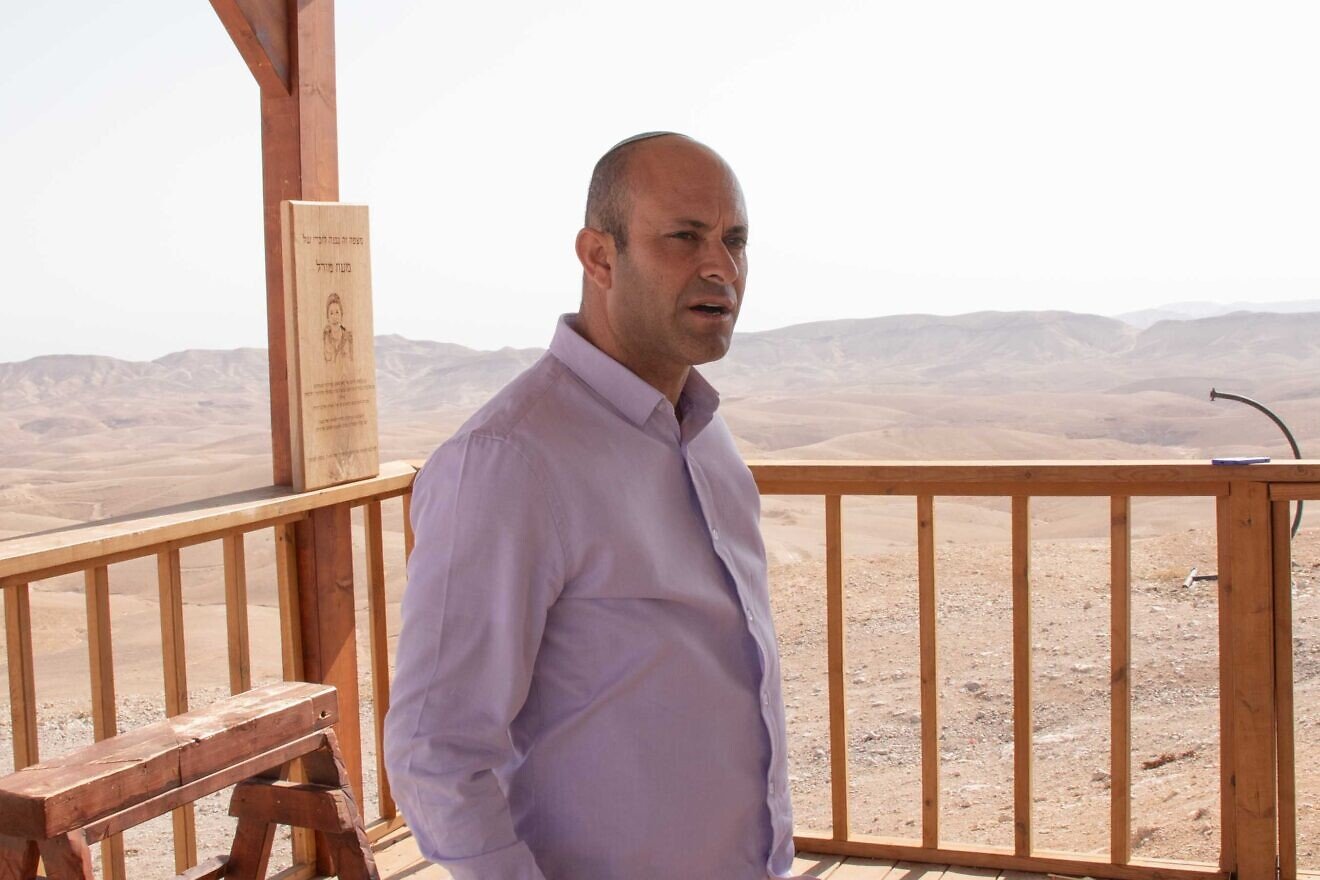
Eliram Azulay, head of the Hebron Hills Regional Council, at Mitzpe Midrag, Nov. 27, 2025. Photo by David Isaac.
To hold the open areas, the council devised a strategy of placing chavot—ranches or farms—at strategic points, which are manned by volunteers to prevent encroachment.
One such ranch, Havat Shorashim, or “Roots Ranch,” is staffed by Avital and Shimshon, a young couple who volunteered to move there three years ago. They came to the secluded site with their six children (a seventh was born while they were there).
“When we arrived, there was nothing here. We had nothing,” said Avital, who came with her husband from a yishuv in the area where they had their own home and “a wonderful life.”
“We had everything we needed, but we wanted to contribute what we could for the nation of Israel. We left our home and moved here. It wasn’t an easy decision—to be here with children in the winter and the rain, and in boiling summers. And to be alone and not to be able to leave the area for a moment. It’s 24/7,” said Avital.
The family moved into a truck, where they lived for three years. Shimshon joked that their former home’s bedroom and en suite was bigger than the entire truck. The council has now built a home for them onsite.
Shimshon and Avital own nothing of the ranch. For them, it’s not a business. They’re there to protect the area.
“From the Arab point of view, if the Jews aren’t here, the land belongs to them,” said Avital.
Shimshon and Avital, who live with their seven children at Chavat Shorashim, Nov. 27, 2025. Photo by David Isaac.
Friction is frequent. Shimshon noted that only three days before, on Nov. 24, an Arab threw a rock through the driver’s side window of a car near a nearby settlement. The driver captured the event on his cellphone camera, causing it to be reported widely. Normally, such incidents are not documented.
Arabs show up every few months to demonstrate, said Shimshon. “There is no deterrence. The [defense] establishment still hasn’t made the mental switch that we have an enemy here that needs to be defeated,” he added.
The Arab villages are flooded with weapons, he said.
“These are young Arabs. When did they grow up? In the years from 2000 on, after the Second Intifada, the Israel Defense Forces leaving Lebanon, the exile of Jews from Gush Katif. What did they learn? That violence works,” he continued.
However, a point repeated by various residents throughout the tour was that the biggest problem wasn’t Arabs, but “anarchists”—a term used to describe international and Israeli “peace” activists who come to the area to make trouble. They station themselves permanently in Arab villages and come out with cellphones to harass Jews, hoping to antagonize them into lashing out. They then distribute the footage to feed the “violent settler” narrative.
Council head Azulay said these activists especially focus on areas from which the Israeli Supreme Court has ordered Arabs evicted. They do so to show that international pressure can work to block Israeli law, he said. The activists’ strategy seems to be effective. In the case of IDF Firing Range 917, which Arabs have encroached upon, the Supreme Court ordered evictions 19 years ago which have yet to be carried out.
The activists also take advantage of Israeli regulations to make life difficult for Jewish residents. For example, according to police rules, if a certain number of complaints are filed against an individual, regardless of whether they are true, his personal weapon is impounded pending an investigation.
It should be noted this is in an area under constant threat of attack. In 2024, Arabs targeted Jews in Judea and Samaria at least 6,343 times, according to figures published by the group Rescuers Without Borders. That averages out to 17 incidents a day.
Want more news from Israel?
Click Here to sign up for our FREE daily email updates