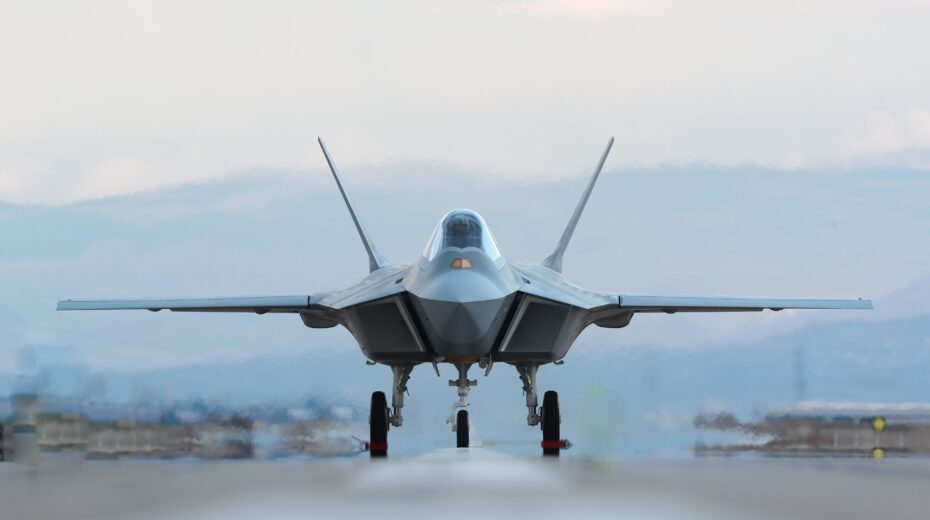
(JNS) As the United States prepares to sell 80 F110 jet engines to Turkey for its indigenous KAAN fighter project as a diplomatic gesture from US President Donald Trump to Turkish President Recep Tayyip Erdogan, according to multiple media reports, Jerusalem is disturbed by these developments.
Trump has also indicated he is open to approving F-35 jet sales to Turkey, though this would require Congressional approval and demands of Turkey to disengage itself from the acquisition of the Russian-made S-400 air defense systems.
Israeli Prime Minister Benjamin Netanyahu intends to meet Trump following the NATO summit in Ankara, where the president is expected to praise the Turkish leader and discuss defense deals. The diplomatic maneuvers sparked fears in Jerusalem that the moves toward Ankara will strengthen Turkey’s military capabilities and sideline Israeli security interests regarding the balance of power and the F-35 fighter jet program.
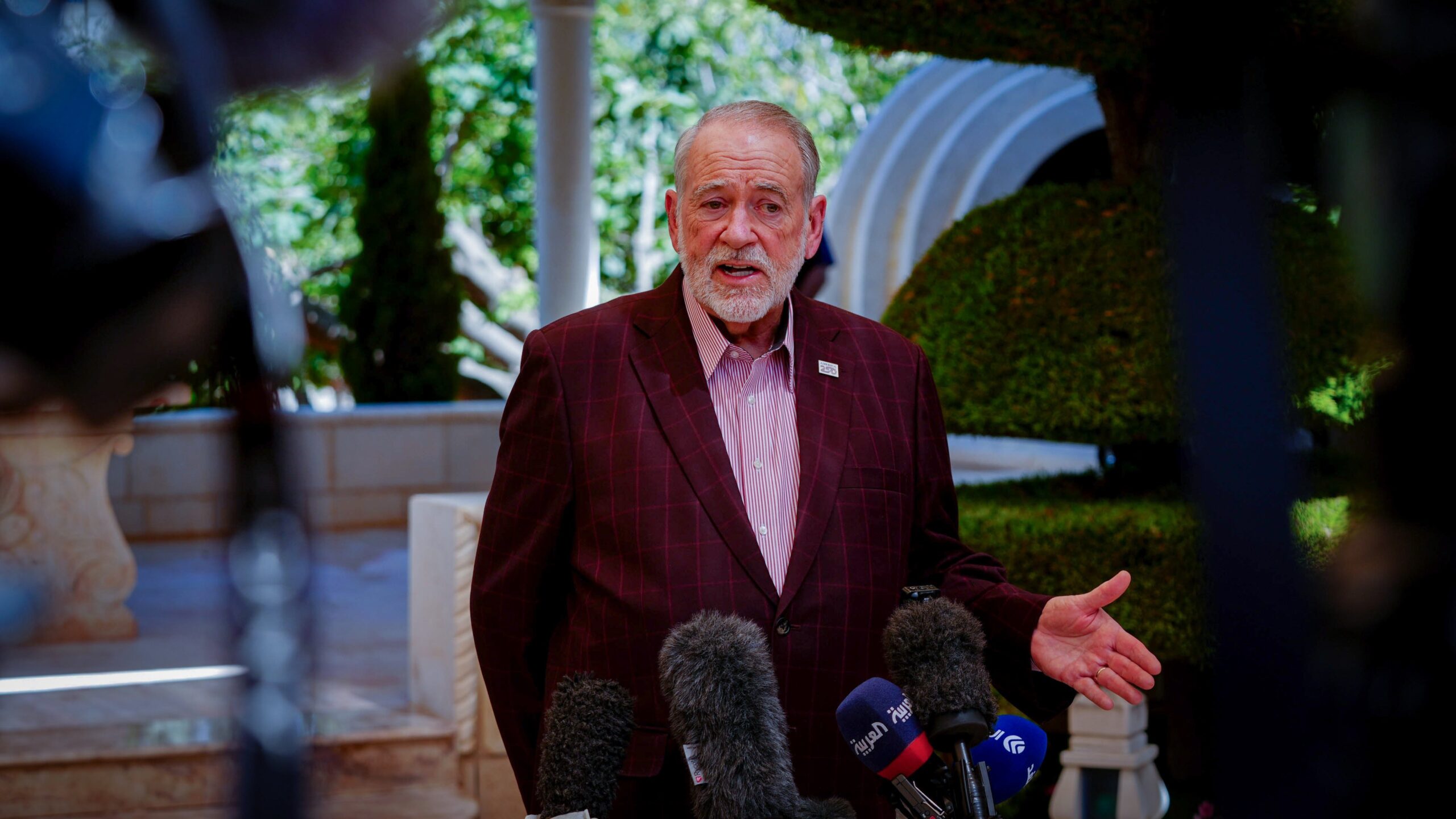
Sinan Ciddi, Turkey program director and senior fellow at the Washington DC-based Foundation for Defense of Democracies, warned against transferring advanced capabilities to the Turkish government.
“Turkey seeks to gain access to cutting-edge US defense articles, including reentry into the F-35 program, from which it was removed in 2019 for purchasing a Russian missile defense system and an F-110 engine to power its indigenous fifth-generation fighter plane, the Kaan,” Ciddi told JNS.
“Equipping Erdogan with such US capabilities would be a tremendous mistake,” Ciddi stated. “Transferring them to Turkey would not be the same as transferring them to other stalwart NATO allies, such as Great Britain, Germany or Poland.”
He contrasted the goals of European allies with the Turkish president’s regional ambitions, stating that the traditional allies have “all demonstrated a desire to uphold the collective interests of European and NATO security; Erdogan’s aim is to equip his military for revisionist purposes that could attempt to redraw the boundaries of the Eastern Mediterranean and the Middle East.”
“NATO is a collective alliance that safeguards the security interests of all its members; it is not a body created to further one autocrat’s irredentist vision,” Ciddi added.
He highlighted the direct threat to American allies extending beyond Israel.
“Given Ankara’s demonstrated willingness to forward-deploy US-origin combat aircraft to occupied parts of Cyprus without consultation with the US, there is every reason to expect that the F-35 would be used not as a contribution to shared defense but as an instrument of coercion against three US partners [Greece, Cyprus, and Israel],” he assessed.
He detailed the intelligence risks posed by Turkey’s existing military infrastructure, warning, “The danger is compounded by Turkey’s retention of the Russian S-400 air defense system. The rationale for expelling Turkey from the F-35 program in 2019 was that operating the S-400 alongside the aircraft would allow its advanced radar to collect data on the F-35’s stealth signature and expose sensitive tactical characteristics to Moscow—intelligence that Russia could be expected to share with Iran and China.”
That risk has not diminished; the S-400 remains on Turkish soil, Ciddi stated.
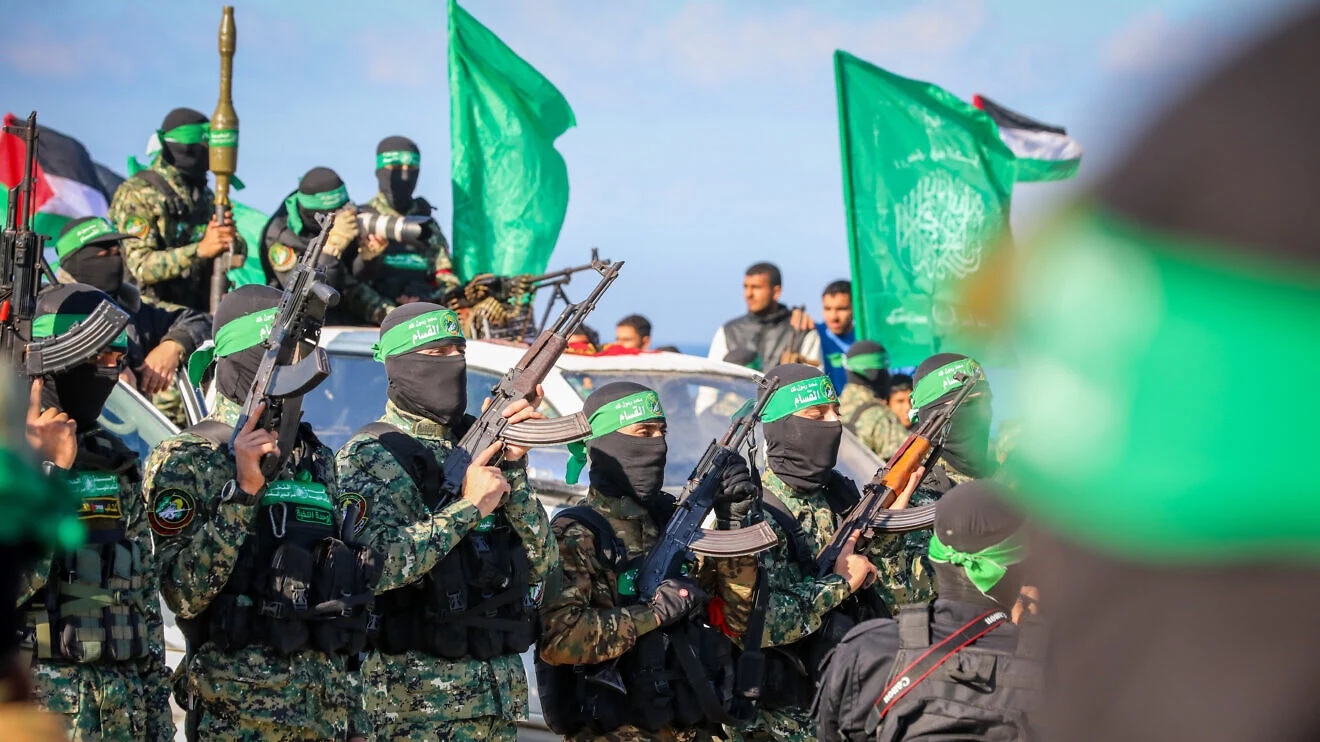
“Placing the world’s most advanced stealth fighter in the hands of a government that simultaneously fields Russian air defenses, shelters Hamas, and is openly hostile to Israel would not strengthen the alliance,” Ciddi observed. “It would hand a revisionist actor a capability it could turn against the very partners NATO exists to protect.”
Addressing the July 2026 NATO summit in Ankara, Ciddi dismissed the Turkish president’s diplomatic posturing and attempt to posture as a potential bulwark against Russia, describing it as a “marketing campaign.” .
“His true priority is strategic autonomy—independence from the West sufficient to pursue his revisionist and irredentist goals without constraint,” Ciddi wrote.
Prof. Eyal Zisser, the vice rector of Tel Aviv University and the holder of the Yona and Dina Ettinger Chair in Contemporary History of the Middle East, added, “The friendly relations between Trump and Erdogan, including expressions of admiration that Trump makes toward Erdogan and his ignoring of the negative aspects of Erdogan’s regime in Turkey—his dictatorial rule—certainly constitute a possible threat to Israel.
He cautioned that this relationship could directly impact Israeli military operations in the region.
“There is a concern that at the moment of truth, in the event of a conflict or dispute between Israel and Turkey—for example, regarding the Syrian issue, or the question of the Air Force’s freedom of action over the skies of Syria—Trump will side with Turkey and not with us,” Zisser told JNS.
“In the past, he decided in favor of Israel, for example, that there would be no Turkish presence in Gaza, but that could change,” Zisser stated.
Evaluating Ankara’s motivations ahead of the summit, Zisser pointed to broader strategic ambitions.
“Erdogan wants, of course, to advance his relations with Trump to receive recognition as a regional leader, to strike at the Kurds in Syria and Iraq (which, by the way, Trump has not yet given him), and of course, to receive advanced American weapons, for example, stealth fighters,” Zisser said.
Despite the hostile rhetoric from Ankara, Zisser assessed that the Turkish president was managing the escalation in a calculated manner.
“I do not think he is foolish enough to reach an open and direct conflict with Israel,” Zisser argued. “He exploits the tension and uses harsh expressions for domestic purposes. But he is careful enough at this stage not to reach a direct conflict. But he wants to politically marginalize Israel.”
Israel, Zisser added, has no interest in getting into a direct conflict with Turkey, and should work behind the scenes with the United States and to “advance a diplomatic process in the region that will neutralize any Turkish influence or move against us.”
He emphasized that regional partnerships were critical to countering Ankara.
“The move must be vis-a-vis the Arab states, which are also somewhat afraid of Turkey,” Zisser wrote.
Want more news from Israel?
Click Here to sign up for our FREE daily email updates