(JNS) The Israeli military’s destruction of Hezbollah’s underground command network on Ali al-Taher Ridge in Southern Lebanon has handed Israel new leverage in negotiations with Lebanon, a former IDF officer tells JNS,
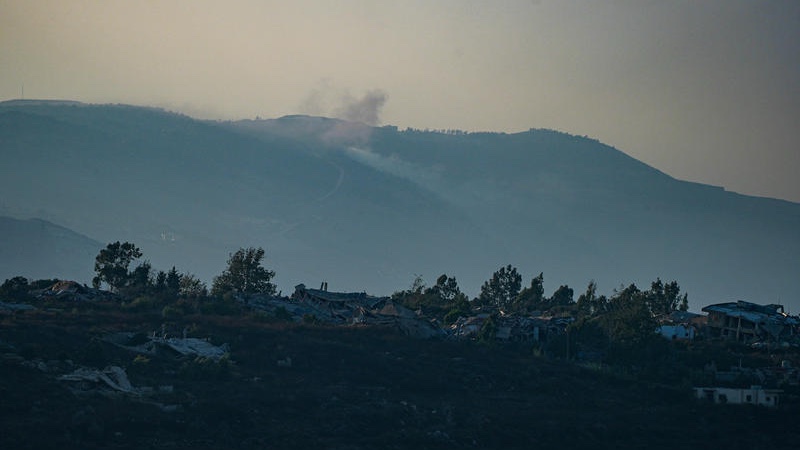
In a joint statement on Thursday evening, Prime Minister Benjamin Netanyahu and Defense Minister Israel Katz confirmed that the IDF destroyed the Hezbollah terrorist organization’s underground infrastructure on the Ali Taher Ridge, “thereby completing the establishment of the security zone in Southern Lebanon.”
They said the infrastructure “constituted a strategic terrorist asset built over two decades with Iranian funding and planning,” and that the terrorist infrastructure and command post on the ridge “were designed to serve as a staging ground for the conquest of the Galilee and provided observation and fire control over Metula and Kiryat Shmona.”
They pledged that the IDF will remain in the security zone, continue to destroy terrorist infrastructure, and thwart any attempt by Hezbollah to rebuild its capabilities.
A military official added that the network functioned as a central command-and-control center for Hezbollah’s Badr territorial unit (responsible primarily for the area north of the Litani River toward Sidon), and gave Hezbollah commanding terrain overlooking Nabatieh, the capital of the Shi’ite community in Southern Lebanon.
The command-and-control center was composed of eight underground routes spanning more than 5,400 meters (3.35 miles) throughout the ridge. The official said its dismantling followed the earlier clearing of the main underground routes at Beaufort Ridge and the villages of Arnoun, Yohmor and Kfar Tebnit.
An additional IDF official traced the tunnels to joint Hezbollah-Iranian funding and planning, saying they had been used “to manage missile, rocket and drone arrays; conduct combat against IDF soldiers; and carry out terror attacks against Israeli civilians over the past several decades,” including continuously through IDF operations “Northern Arrows” (Sept. 23 to Nov. 6, 2024) against Hezbollah and “Roaring Lion” (launched on Feb. 28 this year against Iran).
Col. (res.) Moshe Elad, one of the founders of security coordination between the IDF and the Palestinian Authority, and a former Israeli military governor in Tyre, Lebanon, told JNS in recent days that Ali al-Taher Ridge sits roughly 15 kilometers (9.3 miles) from the Israeli border, meaning that control over it “grants a significant advantage for observation and fire control in the Southern Lebanon area.
“In military terms,” he added,” from now on, there is Israeli control of the ridge after the destruction of the underground infrastructure, and Hezbollah’s freedom of movement has been reduced. Hezbollah will struggle to return to having observation and firepower in the sector.”
More important, he said, Hezbollah has been denied the ability to renew underground reconstruction capacity. “According to reports,” Elad said, “the infrastructure was not just a series of passage tunnels, but an array that included control centers, storage facilities and living quarters that allowed forces to remain underground for a prolonged period. Hence, even if Hezbollah still holds other firepower abilities in Southern Lebanon, it loses here a local ‘operating system’—observation, command, storage, hiding capabilities, and activating firepower from the same sector.”
Still, Elad cautioned against rushing to the conclusion that this “eliminates the anti-tank or rocket threat to northern Israeli communities, adding, “It mainly reduces the depth and operational freedom of the threat in this particular sector.”
Diplomatically, Elad argued, “Israel is changing the starting point for the negotiation, since the action strengthens the Israeli position that any future withdrawal from the area must be conditioned on a real ability to prevent Hezbollah’s return.”
The American-brokered post-ceasefire framework in Lebanon was supposed to include a gradual Israeli withdrawal from Southern Lebanon in parallel with the dismantling of Hezbollah’s capabilities, Elad noted, a process he said has stalled because Hezbollah refuses to disarm.
“In other words, Ali al-Taher produces for Israel a physical card, not just a diplomatic one: We can hold the territory and prove that the territory from which Hezbollah operates can be closed off,” he said.
Hezbollah’s dilemma
Elad said Hezbollah now faces a dilemma in how to respond, risking either an “image of defeat,” or sparking a military campaign that will cause more destruction of its capabilities. A limited response by Hezbollah could be aimed at gaining a “cognitive gain without being dragged into a major escalation,” he cautioned.
On Iran, he pointed to an earlier report that Tehran had warned Washington it would respond forcefully if Israel seized Hezbollah’s positions on the ridge, but said, “The most likely scenario is that Iran allows Hezbollah to respond in a limited way, while trying to preserve ambiguity and not open a direct Iranian front.” A direct Iranian response, he said, would be “the most dangerous scenario, but also one that has a far higher price from Iran’s perspective.”
The harder test, Elad said, falls on the Lebanese army, which international arrangements assume will replace Israel in the vacated territory. “The Lebanese army needs not only to physically reach the Nabatieh area, but to be able to prevent Hezbollah from rebuilding” underground infrastructure, weapons depots, observation posts, anti-tank arrays and command posts, he said, adding, “This is a big difference between presence and control.”
If Beirut cannot demonstrate that control, Elad said, Israel may find itself holding the ridge indefinitely rather than risk the infrastructure’s reconstruction. “I see Ali al-Taher less as a ‘tunnel destruction event’ and more as an event of geographic-operational change,” he said.
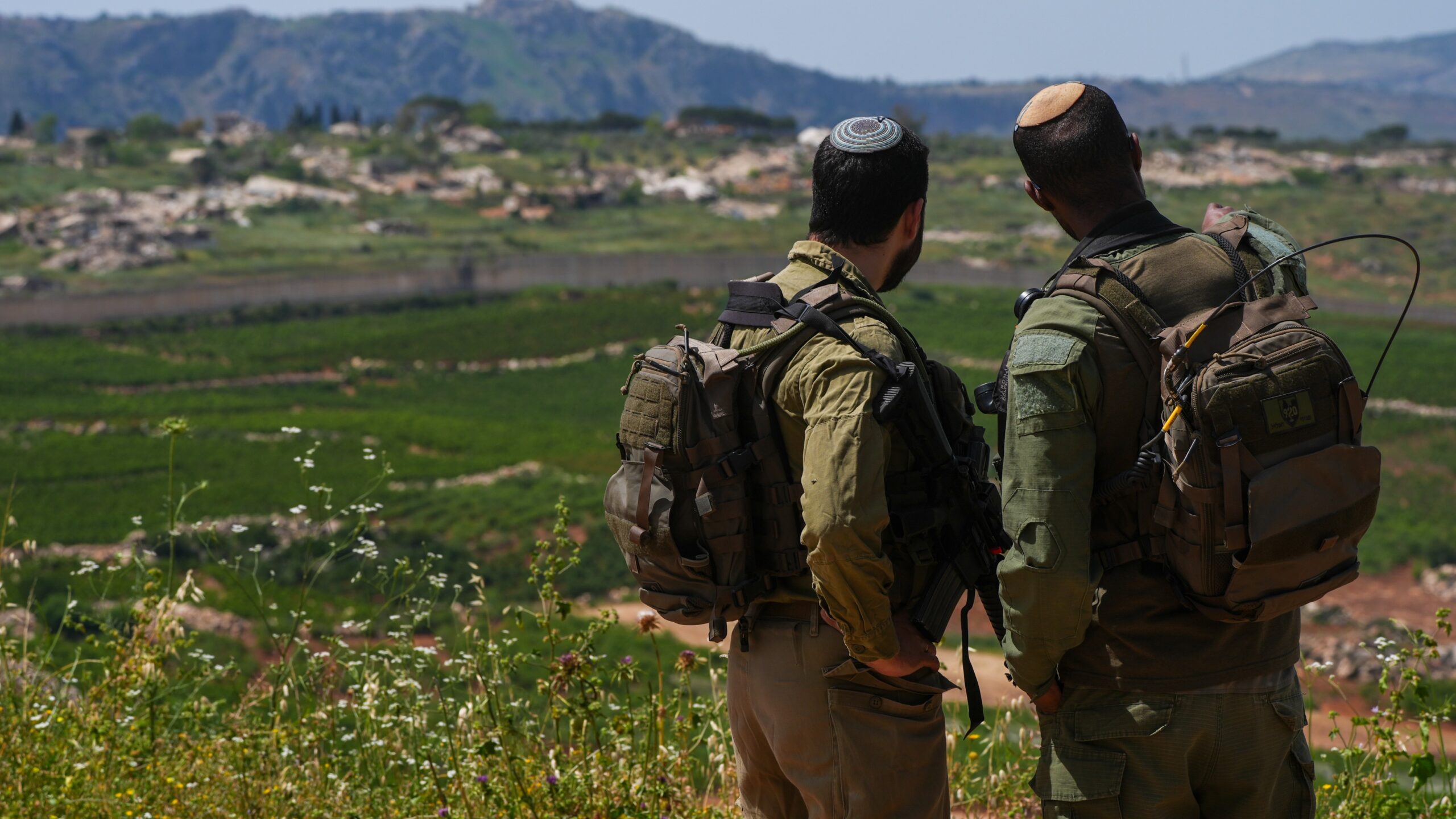
During a visit to troops on the ridge on Sept. 9, Katz said, “The capture of the Ali Taher Ridge is the conclusion of the stage of completing the hold on the security zone in Southern Lebanon.” He said the tunnels had served as “a command center for attacks on our forces and on the Galilee region,” and “a last controlling position for the defense of the Nabatieh region.”
Katz said, “Prime Minister Netanyahu and I are leading a clear and uncompromising line, which is validated daily by the IDF: Israel will not withdraw from the security zone in Lebanon until Hezbollah disarms throughout Lebanon and the threats to the residents of the Galilee are removed. The capture of Ali Taher is an important step in achieving the goal.”
Speaking separately after the demolition was completed, Katz said, “The IDF blew up the Ali Taher tunnels, those tunnels on the ridge that constituted a very strong forward bastion of Hezbollah, which was built with Iranian backing and funding over the last 15 years, in order to serve as a springboard for the conquest of the Galilee, for harming IDF soldiers and for the defense of the entire city of Nabatieh and the Nabatieh region.”
He said, “Now there is a security zone as strong as it has never been, which protects the communities from attack, from direct-line-of-sight fire, and allows us to control and threaten Hezbollah in the depth of the territory,” adding, “We are ready and prepared to continue the campaign, to continue striking Hezbollah in additional places as well.”
Want more news from Israel?
Click Here to sign up for our FREE daily email updates