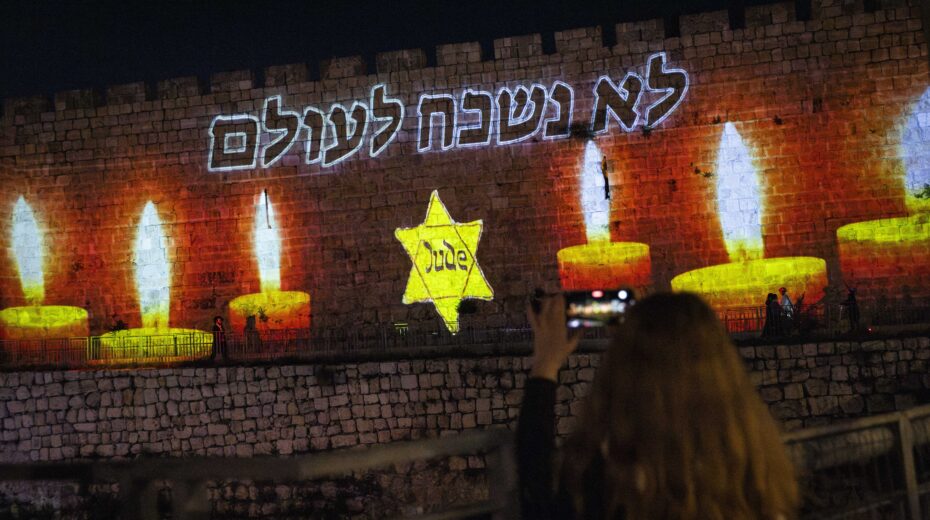

For Yom HaShoah, Holocaust Remembrance Day, Tel Aviv University is publishing its latest report on the state of antisemitism. The figures for 2025 paint a clear picture: violence against Jews is increasing worldwide.
In the shadow of the Gaza war, antisemitism around the world has reached new heights. The annual report documents a dramatic rise in severe violence against Jews.
Over the past year, a total of 20 Jews were murdered in four antisemitic attacks. This brings the death toll to its highest level in more than three decades.
The number of physical assaults—such as beatings or stone-throwing—has also risen significantly in many countries. In numerous Western states, more Jews became victims of physical violence than in the previous year. At the same time, the overall number of antisemitic incidents—including vandalism, threats, and online incitement—remains at a markedly elevated level and is still many times higher in all countries surveyed than it was in 2022, before the Gaza war began.
The report is based on data from law enforcement agencies, Jewish communities, specialized institutions, and the researchers’ own fieldwork, and spans 152 pages.
The trend is particularly clear in Germany. While the total number of antisemitic incidents fell from 6,560 in 2024 to 5,729 in 2025, the level remains more than twice as high as in 2022, when 2,811 cases were recorded. At the same time, the number of physical assaults declined only slightly, from 148 to 144.
In the United Kingdom, the total number of antisemitic incidents rose from 3,556 in 2024 to 3,700 in 2025. Especially striking is the trend after the end of the fighting in Gaza: while 741 incidents were recorded between October and December 2024, the same period in 2025 saw 1,078 incidents. The number of severe violent acts doubled from two to four cases, while other forms of violence declined and vandalism increased.
Canada also recorded a significant rise: the number of antisemitic incidents increased from 6,219 to 6,800, putting it at more than three times the level recorded in 2022.
Australia saw especially grave incidents. Alongside a high number of antisemitic attacks, there was an attack near Sydney during Hanukkah in which 15 Jews were murdered. The total number of antisemitic incidents there rose from 1,727 in 2024 to 1,750 in 2025, after 1,200 in 2023 and 472 in 2022. Here too, the number of incidents continued to increase even after the end of hostilities.
In France, the total number of antisemitic incidents fell from 1,570 in 2024 to 1,320 in 2025, but remained well above the 2022 level of 436 cases. At the same time, the number of incidents involving physical violence rose from 106 to 126.
In Belgium, the number of antisemitic incidents nearly doubled from 129 to 232, while the number of physical assaults increased from 27 to 32.
The United States also presents a mixed but overall troubling picture. In New York, the largest Jewish city in the world, the total number of incidents fell slightly from 344 to 324. But in the months following the Gaza war, it rose again, from 68 to 80. In Chicago, the total number fell from 79 to 47, while the number of physical assaults increased from eight to ten.
A similarly uneven but overall elevated trend can also be seen in other countries: in Italy, 963 incidents were recorded (2024: 877), including 11 physical assaults (2024: 8). In Spain, the figure rose from 193 to 207; in New Zealand, from 131 to 143, including five physical assaults (2024: 2). In Mexico, 70 incidents were recorded (2024: 53), and in Bulgaria, 55 (2024: 50). In Chile, by contrast, the number fell from 51 to 27, and in South Africa from 128 to 95.
The report’s editor-in-chief, Prof. Uria Shavit, warns that society is increasingly becoming accustomed to a high level of antisemitic incidents. Although there was a decline after the peak immediately following October 7, that trend did not continue in 2025.
The authors also sharply criticize the Israeli government. They say it has taken “not a single effective measure” in the fight against antisemitism and has diluted the meaning of the term by expanding its definition too broadly. Instead, the report recommends shifting more authority and resources to diplomatic missions so they can respond more effectively on the ground.
Prof. Irwin Cotler also warns of a dramatic development: in Canada, Jews make up only about one percent of the population, yet they are the targets of 72 percent of reported hate crimes. Their risk of becoming victims of such a crime, he says, is 25 times higher than that of other minorities.
In the United States, the problem is not limited to rising case numbers. Dr. Carl Yonker, who is represented in the report, warns of an ideological shift: open antisemitism, including Holocaust denial and admiration for Hitler, is increasingly entering mainstream currents within the Republican Party. At the same time, social media has made combating this trend far more difficult—perhaps even nearly impossible.
Yonker speaks of a “massive and dangerous trend against Israel” and of a form of antisemitism that has reached a scale not seen since the Second World War.
The report thus paints a clear picture: antisemitism is not only present around the world, it is intensifying—and is increasingly expressing itself in open violence.
Want more news from Israel?
Click Here to sign up for our FREE daily email updates