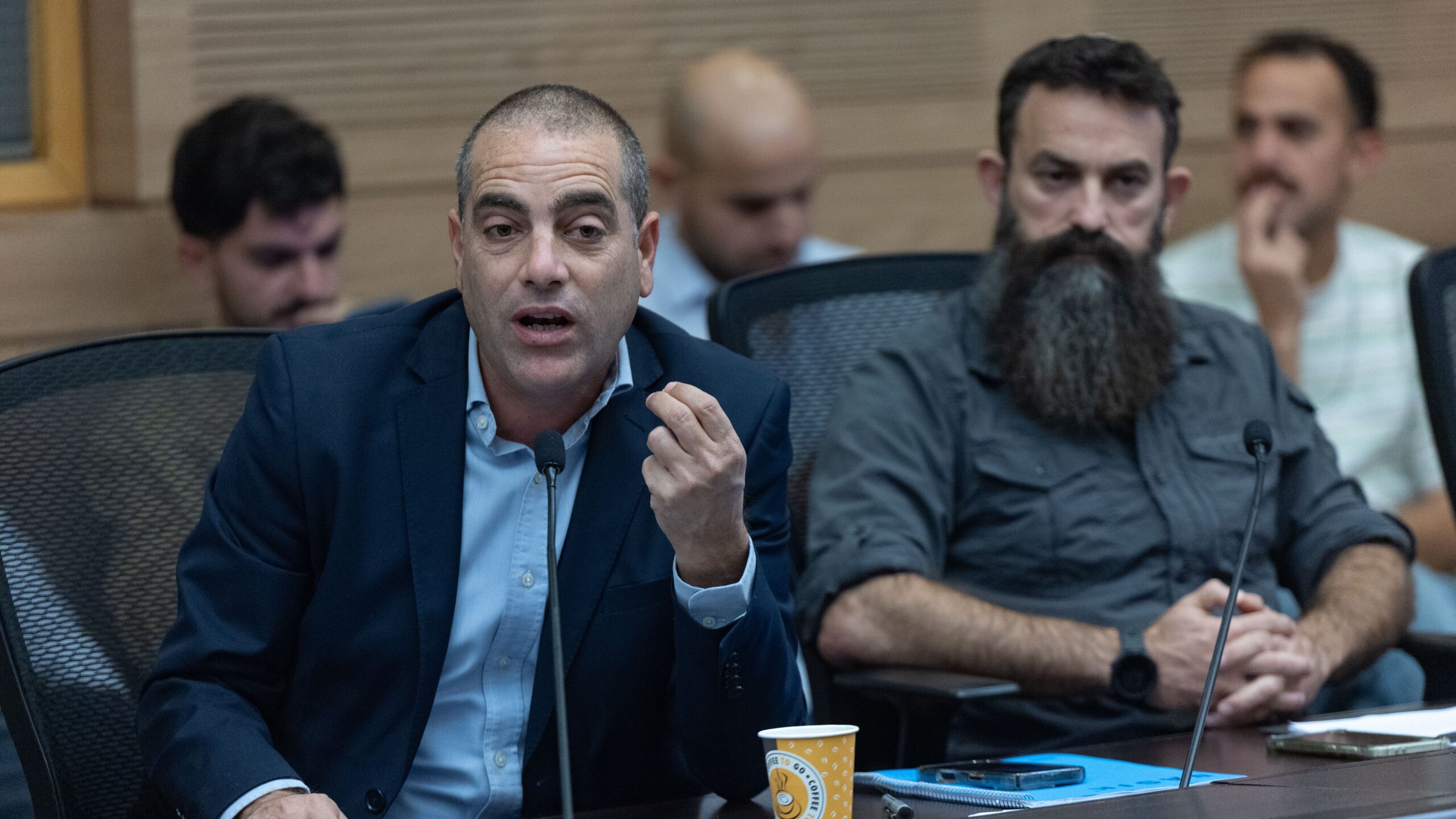

The Israeli Knesset passed a bill on Wednesday (November 18) in a preliminary reading that would strip members of parliament of their parliamentary rights and salary payments if they refuse to recognize Hamas as a terrorist organization. The proposal received 48 votes in favor with no votes against. Members of the Eisenkot bloc and the Arab parties had left the plenary chamber before the vote.
The bill was introduced by Likud member Ofir Katz. It provides for an amendment to the Basic Law on the Knesset and targets parliamentarians who do not recognize a terrorist organization as such. Hamas is at the center of the initiative.
The documented voting data confirms the result of 48 to zero votes. Members of Likud, the religious parties Shas and United Torah Judaism, as well as the Religious Zionism and Otzma Yehudit parties voted in favor of the proposal.
The bill was referred to a committee yet to be determined for further deliberation. Before the regulation can take effect, it must pass three additional readings.
Eisenkot bloc calls it political theater
The four-party bloc led by Gadi Eisenkot boycotted the vote together with the 19 members of the Arab parties Ra’am and the Joint List.
Eisenkot’s party Yashar described the legislative initiative as political theater by Likud. The party stated that it would not participate in parliamentary maneuvers which, in its view, were aimed at pitting the parties of the Eisenkot bloc against each other.
Yashar faction leader Roy Folkman accused Likud of advancing legislative initiatives that had not been a priority during its four years in government. Now that Likud had lost its parliamentary majority, it was attempting to set the political agenda.
Folkman emphasized, according to Israeli media reports, that his party would not allow Likud to drive a wedge between the parties of the Eisenkot bloc.
Arab parties at the center of the dispute
The legislative initiative is connected to the changed political landscape following the Knesset elections of October 27. Eisenkot’s bloc holds 48 seats. Together with the 19 members of the two Arab parties, it reaches 67 votes, thus securing a parliamentary majority.
Benjamin Netanyahu‘s bloc, by contrast, holds 53 seats. A new government has not yet been formed.
Likud is particularly critical of the Eisenkot bloc’s parliamentary cooperation with the Arab parties. Some of their members have explicitly condemned the massacre of October 7, 2023, and the killing of Israeli civilians, without designating Hamas itself as a terrorist organization.
The legislative initiative could therefore primarily affect these members of parliament. Supporters of the proposal want to prevent parliamentarians from receiving state salaries and parliamentary rights while rejecting the classification of Hamas as a terrorist organization.
New majority dynamics in the Knesset
The vote took place just one day after a significant parliamentary success for the Eisenkot bloc. On Tuesday, Matan Kahana of the Yashar party was elected as the new Knesset Speaker. He succeeded Amir Ohana of Likud.
This has also shifted the influence over the parliamentary agenda. Although Likud’s bill has cleared the first parliamentary hurdle, it remains unclear whether it will find a majority in the relevant committees and subsequent readings.
The dispute illustrates the central role that the Arab parties play in the new Knesset. Their votes currently give the Eisenkot bloc a parliamentary majority, while the question of possible political cooperation with them continues to be one of the greatest points of contention between the political camps.
Want more news from Israel?
Click Here to sign up for our FREE daily email updates