(JNS) The surge in antisemitism following the Hamas-led Oct. 7, 2023, massacre was fueled by a sense of empowerment among those who believed Israel—long viewed as a safe haven for Jews—could be vulnerable, Israeli Ambassador to France Joshua Zarka told JNS at the embassy in Paris.
“The rise in antisemitism was not sparked by Israel’s response to Oct. 7, but rather by the sense of empowerment and victory that Oct. 7 gave them. They felt that if they were cruel enough, they could become strong enough to kill Jews and live to tell the world about it. Well, most of them are no longer here, and we are fighting antisemitism wherever we can,” Zarka told JNS on May 11.
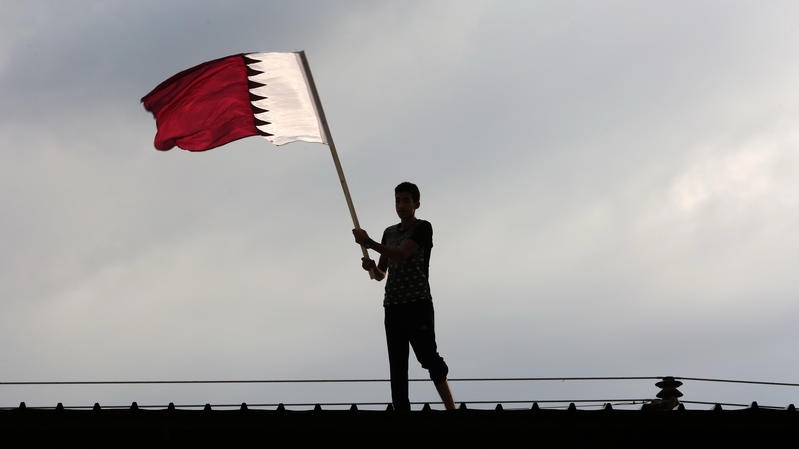
Although antisemitism surged even as Israel was counting its dead, Zarka said the phenomenon had long been latent, fueled by an infrastructure built by Qatar.
“I would happily be quoted as saying that Qatar is the enemy of the Jewish people in general, and not just of Israel,” he said.
According to Zarka, Doha has infiltrated American campuses through funding that helped fuel antisemitic movements in the United States. He said a similar pattern emerged in France, where Qatar’s campaign against Israel began with the BDS movement and intensified into what he described as an openly antisemitic campaign after Oct. 7.
Still, the vibrancy of the Jewish community in France—the largest in Europe and the second-largest in the Diaspora after the United States—remains evident. The fact that Jews are not hiding, Zarka said, is part of what has changed over the past 80 years since the Holocaust and one of the reasons for the existence of the Jewish state.
“I served in Montreal once, and I remember the rabbi in a synagogue saying that with the creation of the State of Israel, Jews grew by 10 centimeters. We don’t have to hide, we don’t have to be afraid of what people think of us, because we are a powerful people with a powerful country behind us,” he said.
Zarka described the French Jewish community as deeply Zionist and among the communities closest to Israel worldwide.
“Being proud of who we are is part of being Jewish. The Jewish people and Israelis have contributed to humanity more than any other people or country in the world. We have to acknowledge that and be proud of it,” he said.
While emphasizing the importance of supporting the Jewish community, Zarka noted the need for Israel not to overstep or assume the responsibilities of countries hosting Jewish communities.
“The French are very proud of the way they are fighting antisemitism, and rightfully so. They are present and trying to make sure nothing happens. The number of incidents is so high that even if you put a policeman on every corner, it would still not be possible to stop everything,” Zarka said.
“Our job as an embassy is mainly to provide moral support when needed and share intelligence when we have it. We are not trying to do the job of other governments, because it is their responsibility to safeguard their communities. We are here to support the Jewish community and make sure that when they need us, we are there to help,” he added.
Canada is lost
Zarka, who lived in Montreal for three years, told JNS that in his view Canada is “a lost cause” when it comes to antisemitism, after once having been perceived as a safe haven.
“Jews in Montreal used to tell me they were perfectly safe and that nobody was trying to harm them. Look at what is happening now—Jews are being attacked everywhere in Canada, and a synagogue was recently shot at,” Zarka said.
Among the reasons for the rise in antisemitism, Zarka pointed to large-scale immigration from Arab countries as well as the influence of the woke movement, which he said had labeled Israel a colonialist entity instead of recognizing it as “the perfect result of anti-colonialism.”
“Artificial wokism that negates reality is very strong in Canada and in the Western world in general, but especially in the United States, and the result is terrible,” he said.
In American culture, Zarka noted, there are certain words one can no longer use, not because they are legally sanctioned, but because society has recognized that certain things cannot be said. He suggested it should be the same for phrases such as “dirty Jew,” “death to Jews,” “globalize intifada” and “from the river to the sea,” but it is not.
“Anything that is connected to antisemitism, for some reason, has become part of freedom of speech, and I believe it is wrong,” he said.
“In those countries, there is a sanctity attached to freedom of speech, where people can say whatever they want, even if it is harmful, and nothing will happen to them. Here, that is not the case. If you use slogans like ‘Globalize the intifada’ or ‘Death to Jews,’ you will go to prison,” he added.
Zarka described a crisis in bilateral relations between Israel and France, driven mainly by certain decisions and statements made by the French government over the past two-and-a-half years.
“It started with the decision by the French government to boycott the Israeli defense industry and bar Israeli companies from participating in exhibitions, claiming they did not want to encourage the use of certain weapons, when in fact the decision was driven by fears of demonstrations,” the ambassador said.
The crisis deepened with statements by President Emmanuel Macron calling for a boycott of defense exports to Israel during the war against Hamas in Gaza, and accusing Israel of behaving in a barbaric manner, remarks that were made publicly and deemed unacceptable by Israel. Then came, Zarka said, the issue of recognizing a Palestinian state.
“It was not the fact of recognition itself, but the way it was done, essentially without any conditions while our hostages were still being held in Hamas tunnels. Instead of helping us end the war and forcing Hamas to accept a ceasefire, that recognition had the opposite effect. It gave Hamas a sense of power. We know this because Hamas leaders made statements accordingly, and we saw it reflected in our intelligence as well,” he said.
The French decision, Zarka said, gave Palestinians the sense that events were working in their favor even after what he described as the most atrocious attack against Israel. He called it a significant strategic error.
“This is the most tense period I think Israel and France have ever experienced, certainly since I became ambassador. I would even say that since I joined the Foreign Ministry,” he said. “We will have to overcome it, but at the moment we are in one of the deepest crises we have ever had in our bilateral relations.”
Want more news from Israel?
Click Here to sign up for our FREE daily email updates