

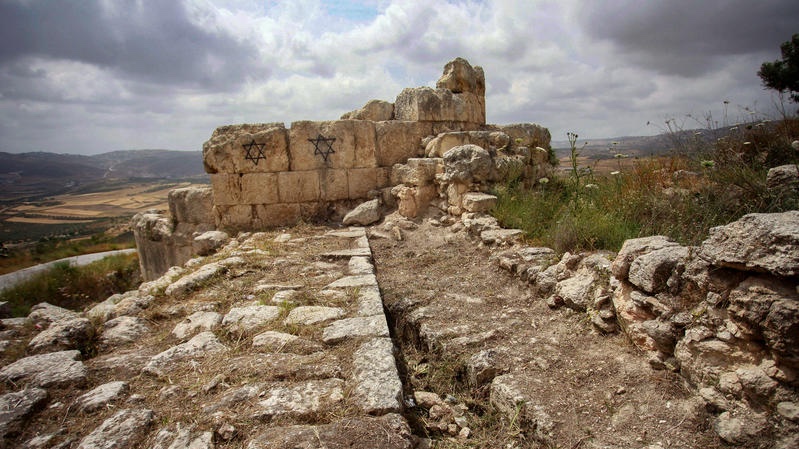

Israeli officials reportedly raised concern after a Foreign Ministry video about Sebastia in Samaria appeared to touch one of the most sensitive episodes in Christian history: the beheading of John the Baptist.
The video was part of an Israeli public diplomacy campaign meant to defend the Jewish and biblical connection to Sebastia, ancient Samaria, against Palestinian efforts to claim heritage sites through international bodies such as UNESCO. The site was once the capital of the Kingdom of Israel appears in the New Testament in the story of John the Baptist.
But according to Ynet, some officials inside Israel’s Foreign Ministry feared the video could backfire. Their concern was not that Israel should avoid Christian history, but that official Israeli messaging must handle it with care, especially when dealing with stories that hostile voices have long twisted against the Jewish people.
John the Baptist was executed under Herod Antipas after condemning Herod’s unlawful marriage to Herodias, a fact highlighted in the Israeli Foreign Ministry clip on social media.
History feels different when you’re standing where it happened. ✨
Welcome to Sebastia, a place that is more than just an archaeological site. First named Shomron, it was the capital of the Kingdom of Israel. Later it became a central city in Judea and according to Christian… pic.twitter.com/V2qAlZiLqG
— Israel ישראל (@Israel) July 19, 2026
Critics inside the ministry reportedly warned that careless presentation of that episode could be misused to reinforce the old and dangerous accusation that “the Jews” were responsible for crimes against the early figures of Christian history, including Jesus Himself.
That concern reveals that at least some within Israel’s diplomatic establishment understand the importance of protecting the Jewish state’s relationship with the Christian world, especially Evangelical Christians, who remain among Israel’s most steadfast allies.
Foreign Minister Gideon Sa’ar recently appointed veteran diplomat George Deek, an Arab Christian from Jaffa, as Israel’s first special envoy to the Christian world. The appointment was meant to deepen ties with Christian communities and strengthen Israel’s message as guardian of the land where both Judaism and Christianity were born.
The Foreign Ministry defended the Sebastia video, saying it accurately presented Christian tradition and did not assign collective blame to Jews. It also said the campaign had been received positively by target audiences.
Still, the internal debate matters. Israel is right to defend Sebastia as part of Jewish history. But doing so effectively requires not only biblical precision, but an understanding of what drives antisemitism in the Church, and how to counter it.
Want more news from Israel?
Click Here to sign up for our FREE daily email updates








What drives antisemitism in the christian churches today is unbelief. Replacement theology made a bigger dent in the christian theology than has been recognized by the church. It allowed more of the spiritual weapons of the devil to open up and deceive people. The scripture tells us that the weapons of our warfare are not carnal, it is talking of spiritual warfare. To not learn of Yeshua is to not learn how to fight the spiritual war that is raging throughout the world today. To not except Him and His gift of the Holy Spirit is to leave oneself open to the ravages of the carnal world around us. The enemy of our soul knows every weapon he has can destroy us unless we have the shield of the word of the lord around us. The scripture tells us that no weapon formed against us shall prosper, it is talking about the weapons of spiritual warfare, the kind of warfare that is fought in the minds of every person on this planet. The scripture has told us that the battleground is in the mind, that is where every battle is fought as humans before it is fought on the ground. I am an old war veteran, I have been there, but the battle is still the same. Being prepared spiritually beforehand, is far better than not being prepared at all. The church seems to have forgotten about that.