
After the Iranian missile strikes on several targets in southern Israel, Prime Minister Benjamin Netanyahu and President Isaac Herzog strongly condemned the attacks and warned of the worldwide consequences of the current escalation.
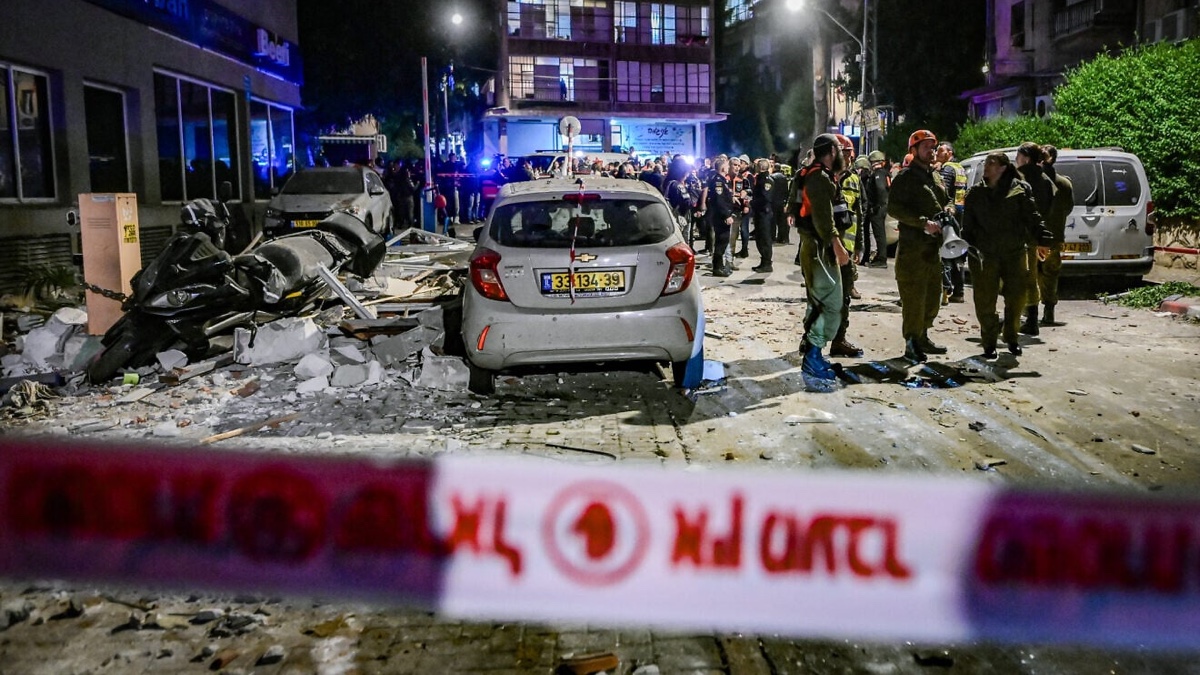
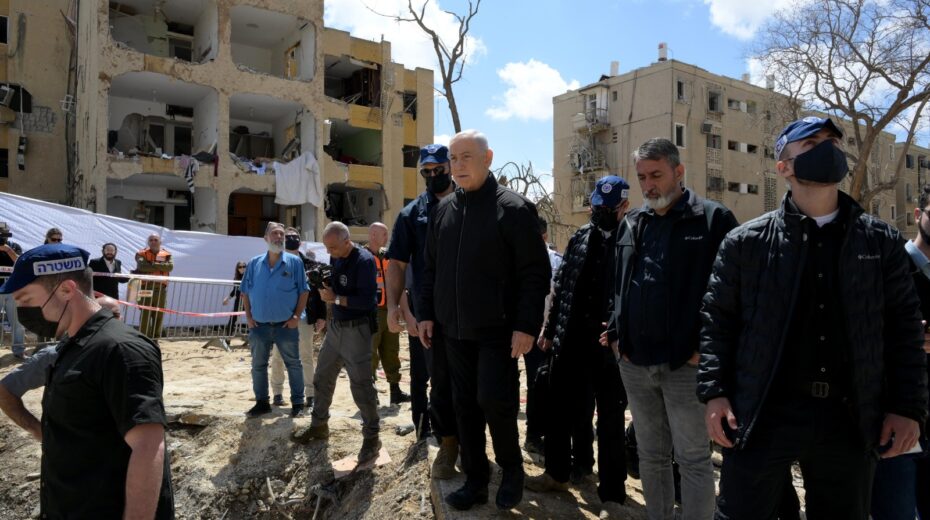
During a visit to the impact site in Dimona on Sunday, Netanyahu said that the events of the past 48 hours clearly showed why Iran is “an enemy of civilization.” Tehran had deliberately attacked civilian targets, including a daycare center and a nursing home. Cluster munitions had also been used, which are banned under international law.
At the same time, the prime minister referred to the missile fire on Jerusalem, which occurred in immediate proximity to the central holy sites. Ballistic missiles had endangered the Church of the Holy Sepulchre, the Al-Aqsa Mosque, and the Western Wall — places of outstanding significance for Jews, Christians, and Muslims worldwide.
In addition, Iran had for the first time fired an intercontinental missile over a distance of around 4,000 kilometers at the American-British military base on Diego Garcia. This development showed that large parts of Europe are now within range of Iranian missiles, Netanyahu said. For years, Israel had warned about exactly this capability.
He described the blockade of the Strait of Hormuz as a further step of escalation. Iran was trying, through the threat to global oil transport, to exert political pressure on the international community.
At the same time, President Herzog visited the impact site in Arad, where a heavy missile had caused massive damage during the night. At the scene, he spoke of the destructive power of a “half-ton missile” and stressed that the Iranian regime deliberately makes no distinction between civilians.
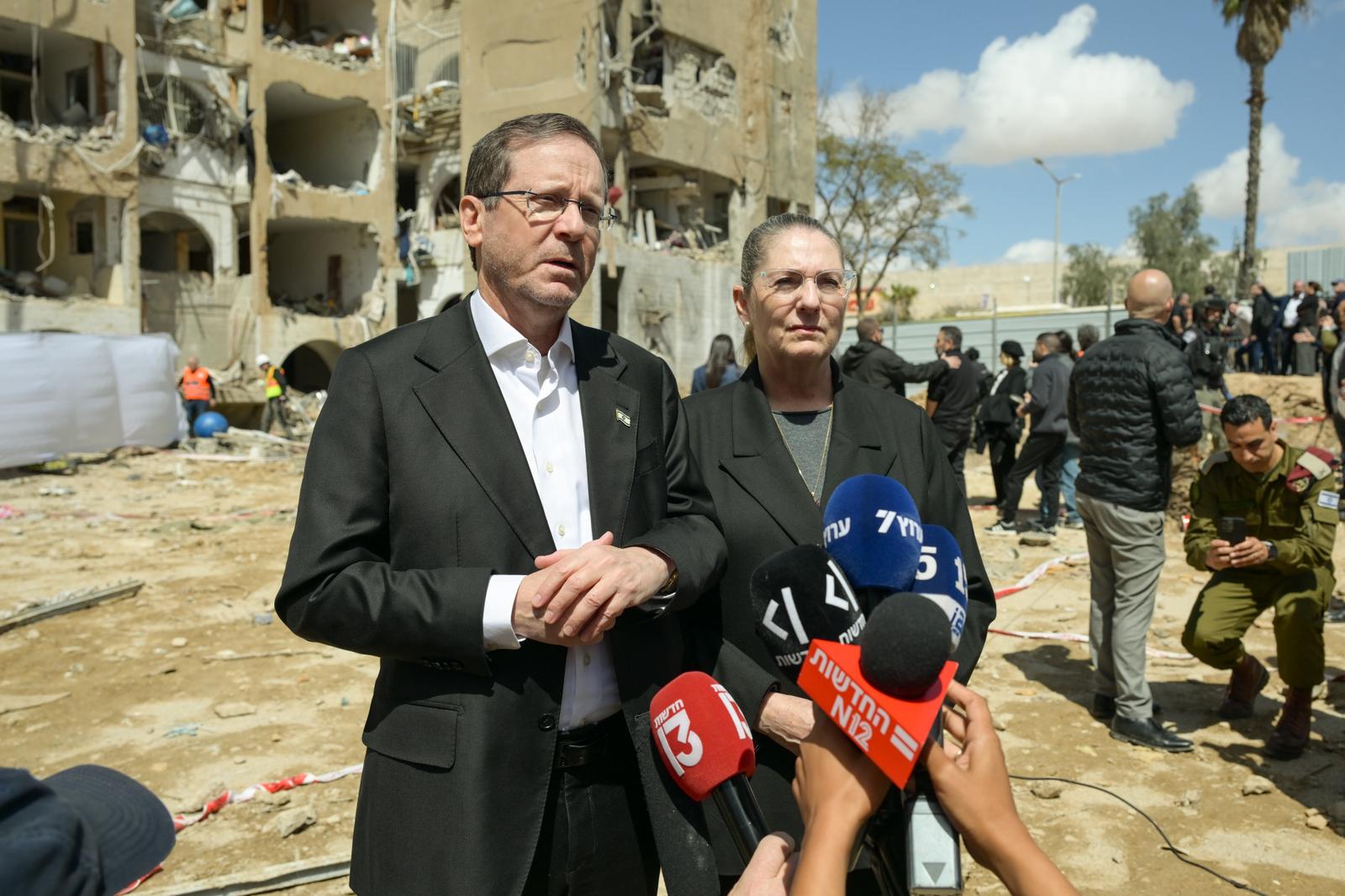
Israeli President Isaac Herzog and his wife Michal Herzog address the press at the site of the rocket attack in Arad. Destroyed residential buildings can be seen in the background. Photo: Ma’ayan Toaf/GPO.
“For the Iranian leadership, it makes no difference whether they are Muslims, Jews, or Christians — or whether it hits the elderly or children. All civilians are targets,” Herzog said.
At the same time, he emphasized the resilience of the Israeli population. Despite the attacks, people would not be intimidated. “We are here to show something else: our resilience,” the president said.
Herzog also referred to the missile attack on the Diego Garcia base and stressed that Iran is deliberately using its military capabilities to spread fear worldwide. This confirms the warnings Israel has voiced for years about the danger posed by the regime in Tehran.
“This head of the snake, this evil empire, must be stopped,” Herzog said. Israel is waging this war out of necessity — and with confidence in the strength of its people. The destroyed areas will be rebuilt.
Meanwhile, Netanyahu appealed to the states of the West and to the international community to stop waiting any longer. Together with the United States, Israel is fighting not only for its own security, but for the stability of the entire free world.
Want more news from Israel?
Click Here to sign up for our FREE daily email updates