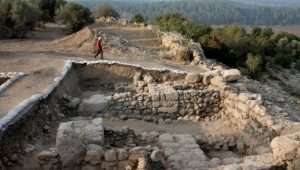
The underground hideout, the largest of its kind ever discovered in the area, was prepared by the Jewish residents of Hukok ahead of the Jewish revolts against the Roman empire, according to the Israel Antiquities Authority.
The underground hideout, the largest of its kind ever discovered in the area, was prepared by the Jewish residents of Hukok ahead of the Jewish revolts against the Roman empire, according to the Israel Antiquities Authority.
“The seal supports the biblical record of there being a governor of Jerusalem during the period.”
The study also proposes parallels between Philistine and Aegean ceremonial practices.
The box is likely related to the unique economy of Jerusalem in the shadow of the Temple, which involved strict adherence to Jewish law, researchers say.
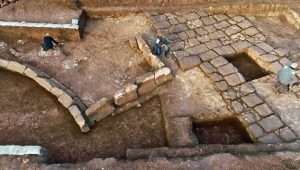
The site, at the foot of Tel Megiddo, served as a permanent base for more than 5,000 soldiers, for more than 180 years, according to excavation director Yotam Tepper.
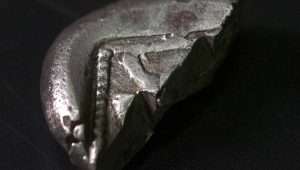
The excavation also exposed a building from the First Temple Period, with even earlier evidence for commerce in the form of a shekel weight.
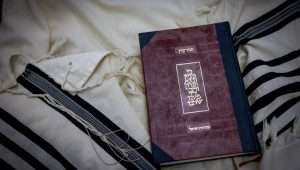
Researchers from four Israeli universities again use breakthrough technology to prove the biblical record accurate.
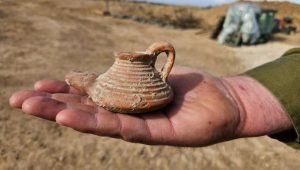
The soldiers handed over the ancient find, a “sandal candle” from the Byzantine period, to the Israel Antiquities Authority.

“We even recruited the help of the police forensic unit and its research colleagues around the world, but so far – to no avail.”
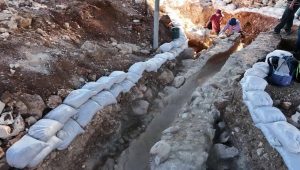
The system concentrated spring water in the Bethlehem area and transferred it to Jerusalem by taking advantage of topography, the laws of gravity and large pools.