(JNS) The last concerted effort by the Israeli government to deal with the illegal immigration problem took place in 2018. That effort, to remove some 38,000 Sudanese and Eritreans, was derailed by the combination of a public campaign organized by left-wing groups, international condemnation and Supreme Court intervention.
“The reason you don’t hear about this anymore isn’t because the situation has changed or improved. It’s because in Israel there are more important problems than illegal immigrants,” Sheffi Paz, a prominent activist on the subject, told JNS.
“Obviously, when there are missiles dropping in from Iran, no one cares if a drugged-up Sudanese is wandering around the streets of south Tel Aviv,” Paz said.
Nonetheless, she continues to bring attention to the issue. In September 2024, she was handed a jail sentence for spraying graffiti on a European Union office in Israel to protest its involvement in facilitating illegal immigration. In 2022, she was physically attacked when protesting an event sponsored by a pro-illegal immigration NGO.
JNS recently spoke with Paz.
Q: Describe for us the current situation with illegals in the country.
A: Israel managed, at least in part, to stop illegal migration even before Europe realized that it was in trouble. We built a fence which pretty much stopped the massive land route illegals used through the Sinai Peninsula.
What the government didn’t stop—they try, but not enough—is immigration coming through the airport. There are various types: a) tourists who come and forget that they have a home to go back to; b) people who are licensed to come work for a limited period, but after a month or two, decide there’s a better job for them in Tel Aviv.
In short, we have less illegal immigrants coming from Sinai. We have some crossing across the Jordan border. But mainly we have immigrants coming through Ben-Gurion Airport.
Q: What is the situation where you live in south Tel Aviv?
A: The situation in south Tel Aviv is catastrophic. We have two generations here. The older generation, the parents, arrived 10 to 15 years ago. Some are normal people, who are working. A lot of them are addicts. At first, it was mostly alcohol. Now they are on drugs. Drugs bring the problem of theft—home burglaries, car break-ins.
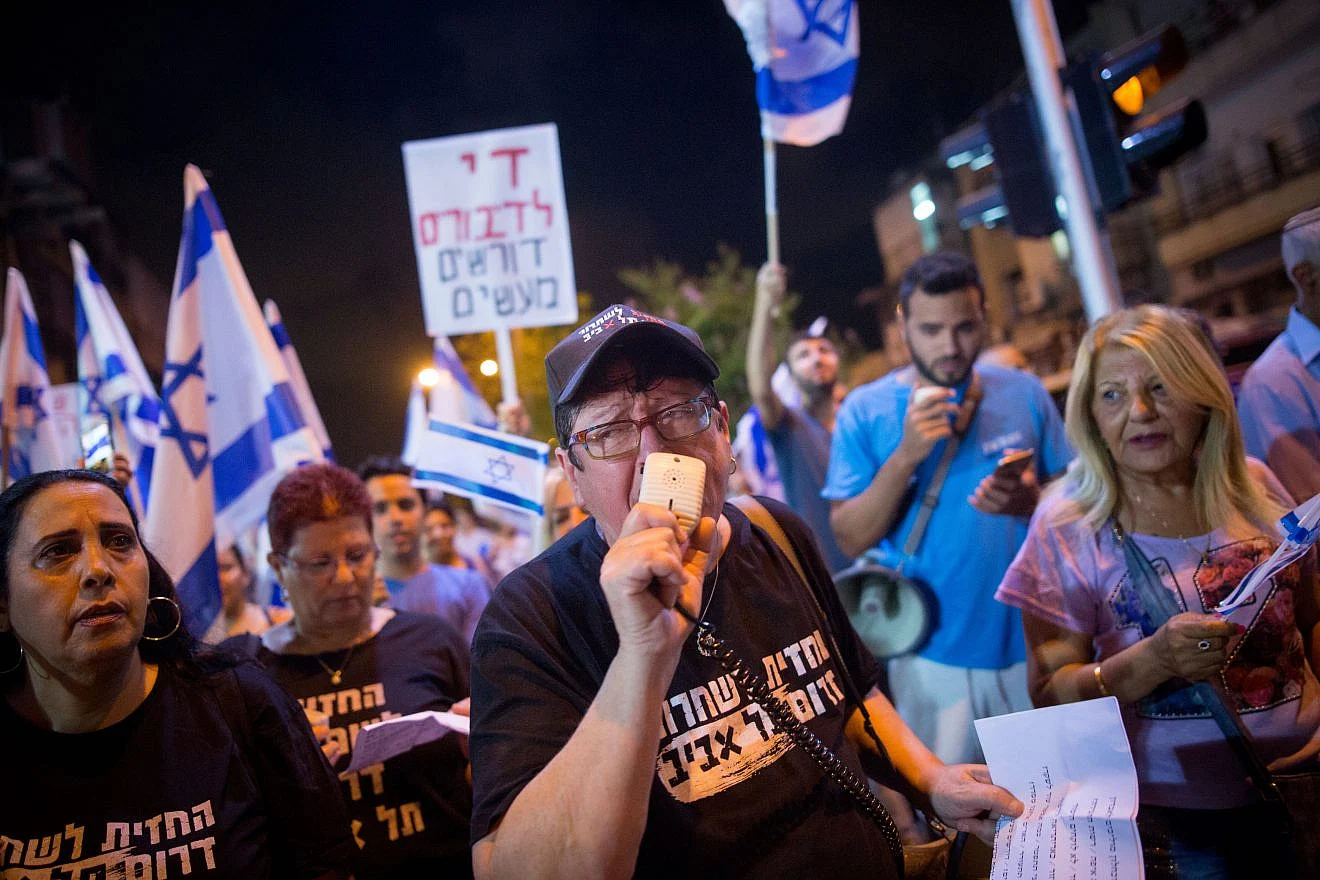
Sheffi Paz with other residents at a protest march in south Tel Aviv against African illegal aliens, June 2, 2018. Photo by Miriam Alster/Flash90.
Two to three years ago, the youth started roaming the streets in gangs. They start as young as 7-to-8. Every evening, groups ranging from 15 to 40 children go out looking for action. They throw stones onto balconies. They break car windshields. They bang on doors and laugh. If someone tries to photograph them, they throw stones.
The older ones are on scooters or electric bikes with knives in their hands. They don’t stay in south Tel Aviv. The police in central Tel Aviv are very tough with them, so they go further north to Ramat Aviv. They rob kids. Five, six, seven of them will gang up on one Israeli kid from Ramat Aviv.
These gangs like to show off. They get arrested. They upload the police complaints on TikTok and laugh in court. Some of them end up joining Arab crime families. The police don’t have enough manpower or motivation. The kids are caught with a machete or an ax in hand, and convince the judge that it’s for personal protection. The judge releases them to house arrest, but there is no one to keep them at home. The judges think they’re dealing with Israelis, who have an address, a family, parents. It’s not like that.
Q: What’s it like for the Israeli youth in south Tel Aviv?
A: An Israeli child leaving the house in the morning to go to kindergarten starts the day by jumping over a junkie lying on his doorstep.
The children here live in fear all the time. A child can’t go out to a public park alone without someone taking him. He walks around the neighborhood and he feels like a stranger. You are cursed at, have rocks thrown at you and told, “Get away from here, this is our park.”
If you don’t feel it, you can’t understand it. I raised a little boy here. At 7, he walked around alone in the neighborhood. Today, I see parents waiting with a car to collect their 10-year-olds from school.
Q: What’s it like for you personally?
A: I was sitting in a public park with two people: one a woman who had spent a lot of time at our demonstrations, the other, a very right-wing guy. They both say to me, “We won’t sit so close to you. We don’t want them to see that we are with you. We don’t want to get attacked when we walk around the neighborhood.”
You won’t see me walking around the neighborhood alone. I generally go on a scooter or in a car. It’s hard to live like this. I don’t have security. The only thing that I think stops the illegals is the knowledge that if they touch me, there will be retribution. Because the old residents are very much with me.
Q: Where does the main opposition to removing illegals come from?
A: The media and the courts. The media is always on the side of the immigrants. Admittedly, the stories are sad. There are Filipinos here. Good people. They came on a work visa, but they are living here illegally now for 20 years. They have children here.
As for the courts, they hold hearing after hearing. Those hearings make their way through the magistrate’s courts, then the district courts, and then the Supreme Court. It takes a long time. Illegal immigrants submit a different pretext every few years. One time, an immigrant says he’s persecuted for his religion, the second time he’s persecuted for being gay, a third time he’s persecuted because he married an Israeli woman. There really was a story like that.
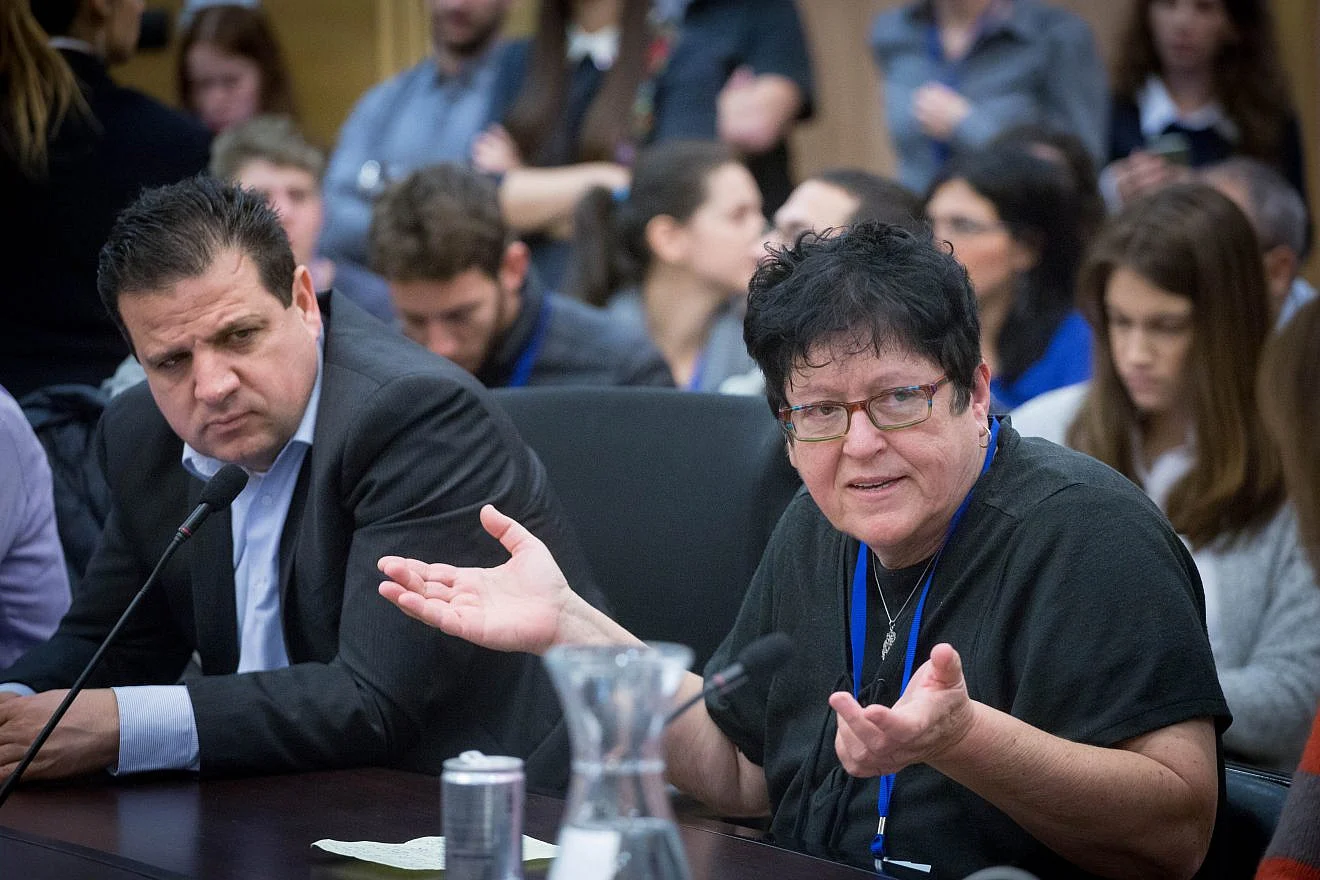
Sheffi Paz during a Knesset Interior Affairs Committee meeting on the deportation of African illegal aliens, at the legislature in Jerusalem, Jan. 29, 2018. Photo by Miriam Alster/Flash90.
Q: What is the position of left-wing groups?
A: People on the left say give them status, invest more money, make them feel like they belong, that they’re part of society. They already invest in every Eritrean child about 10 times what they invest in an Israeli child. I tell them, “Look at France, all the rioting anti-French youth setting fires. They were given status as citizens.”
Q: What do you think of the government’s response?
A: The state hasn’t put enough effort in finding a solution, although we are currently working on a Basic Law: Immigration. Bu it is going very slowly. A law was passed according to which anyone identifying as a supporter of their country’s regime [meaning they are not an “asylum seeker”] can be repatriated. The law has been in place for six months, but they only deported one individual.
When [then-Prime Minister] Arik Sharon decided to immediately remove illegal foreign workers, he kicked out 200,000 within six months. It can be done.
We end up depending on self-deportation; that they’ll decide the situation isn’t good for them here, and that their children have no future here.
Q: What will it take for the government to become more serious?
A: The problem won’t be solved until the state understands that immigration is an internal danger. Right now, it doesn’t want to get mixed up in it. We pay the price. Not just we in south Tel Aviv, but those in similar neighborhoods, which are poor and weak.
Something really serious will happen. Something serious already did happen. There was a case two years ago when a guy was knifed in the back on Rothschild Boulevard [in central Tel Aviv]. And we’re just seeing the start of the gangs. One day a kid in north Tel Aviv could get knifed, or a young girl raped. Then the government will intervene. I really hope it doesn’t come to that. But these immigrant kids are dangerous.