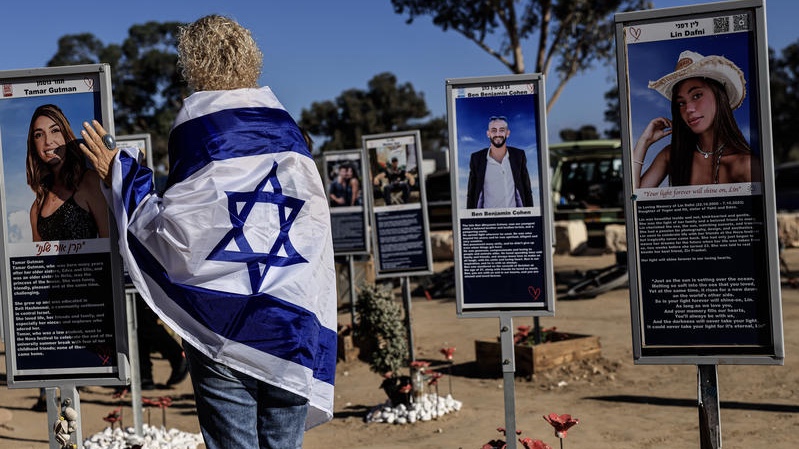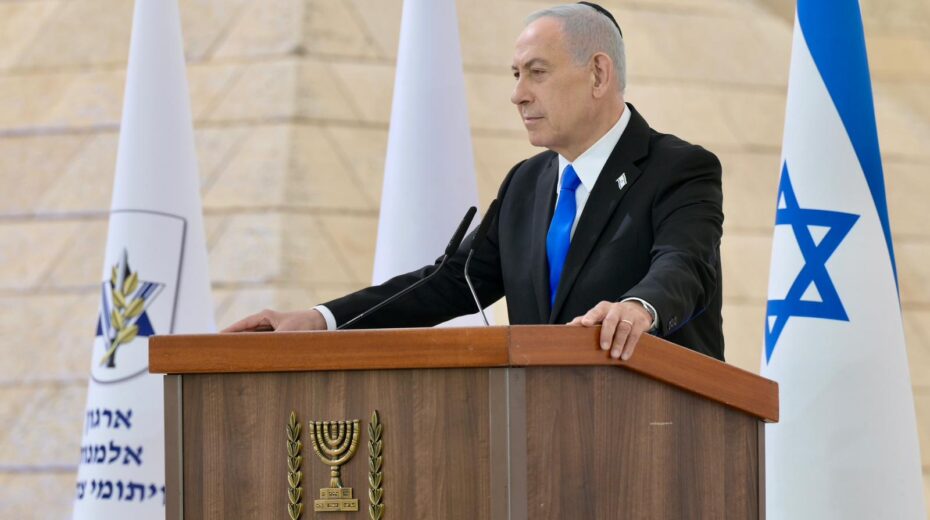

On Israel’s Memorial Day for fallen soldiers and victims of terrorism, Prime Minister Benjamin Netanyahu delivered the central address in Jerusalem. Before bereaved families and representatives of the state, he honored the sacrifices of past decades while also placing today’s security challenges at the forefront.
At the beginning of his speech, Netanyahu spoke about the pain of the bereaved. “The wound is deeper than time itself,” he said. The years, he added, cannot erase memory. On a personal level, he also recalled his brother Yoni, who was killed in the Entebbe rescue operation. The longing remains—“the arms long to embrace once more, the eyes long to see the smile again.”
At the same time, he emphasized the unifying force of the day. “The nation remembers, the nation bows its head,” Netanyahu said. Memorial Day, he noted, is not marked only by grief, but is also an expression of national unity.
In this context, he also drew on biblical language. Referring to the prophet Isaiah, he painted a picture of hope that the people of Israel would dwell in Zion and weep no more.
A striking example of the link between past and present was the story of a grieving mother who brought soil from the grave of her fallen son to Poland and placed it on the graves of Jewish soldiers there. This gesture, he said, reflects the continuity of Jewish history—from the Holocaust to the defense of the modern State of Israel.
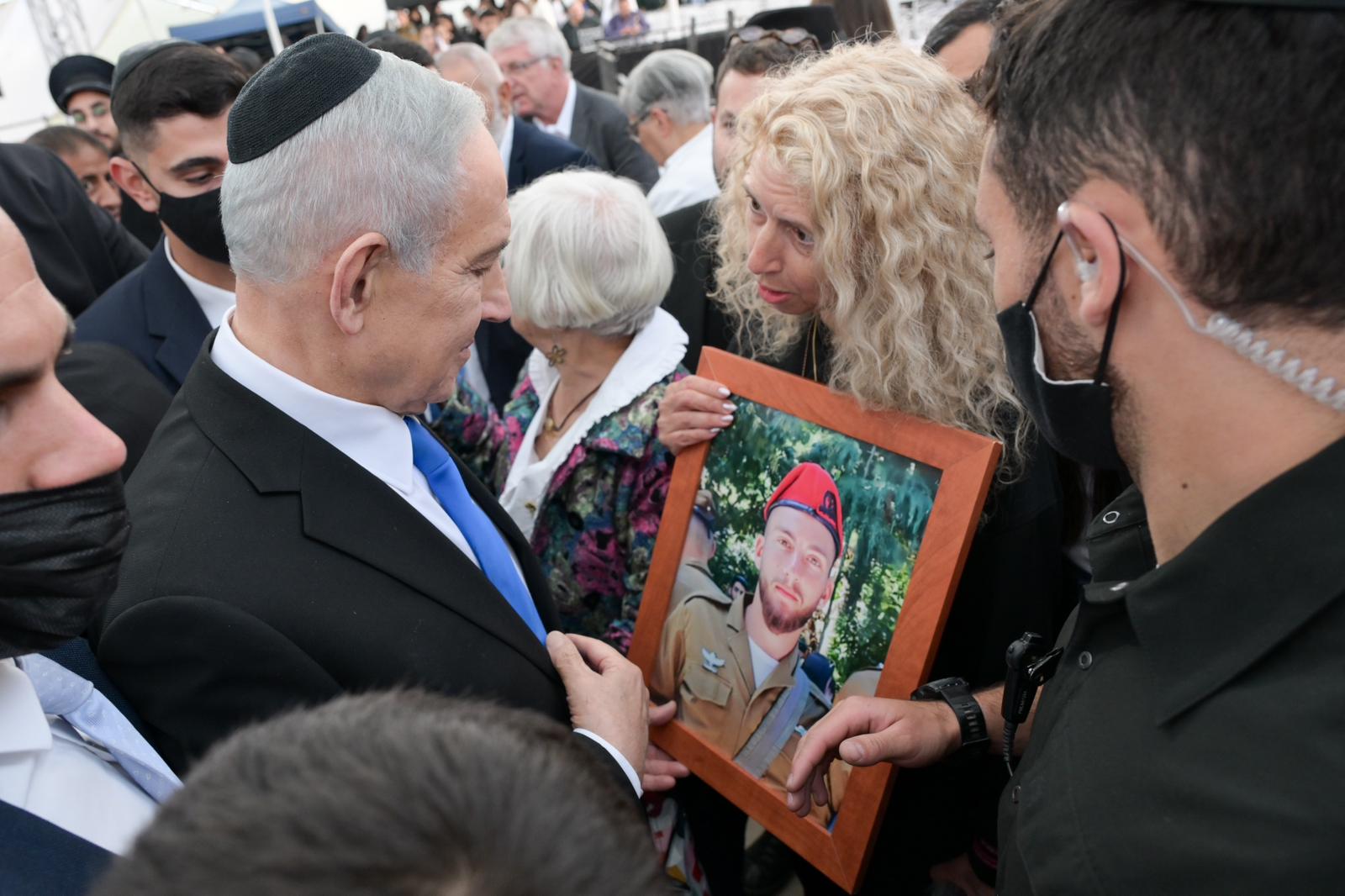
Photo: Ma’ayan Toaf/GPO
Later in the speech, the prime minister invoked a central biblical image. Quoting Numbers 23:24, he described Israel as a people that “rises like a lion.” He cited the verse directly: “Behold, a people shall rise like a lion.” This image, he said, represents strength and determination in times of threat.
Addressing the current situation, Netanyahu said that Israel remains in the midst of an extraordinary conflict. “We have not yet finished the work,” he said, while also pointing to Israel’s military achievements so far.
He also issued a stark warning about Iran. Netanyahu said that without Israel’s intervention, places such as Natanz or Fordow might one day have been added “to the names of the death camps like Auschwitz and Treblinka.” Israel, he said, had thwarted that plan.
The prime minister also stressed the fundamental difference between the Jewish people’s past in exile and the reality of today. “Today we have a home, and we must defend it with all our strength,” he said.
He gave particular emphasis to the fallen, noting that they come from every part of society. Their sacrifice, he said, forms the foundation of Israeli independence. At the same time, he honored the wounded and their extraordinary inner strength.
In closing, Netanyahu placed the unity of the nation at the center of his remarks. “We are one great family,” he said, speaking of a shared responsibility that binds together every part of society.
“May their memory be a blessing,” he concluded.
Want more news from Israel?
Click Here to sign up for our FREE daily email updates