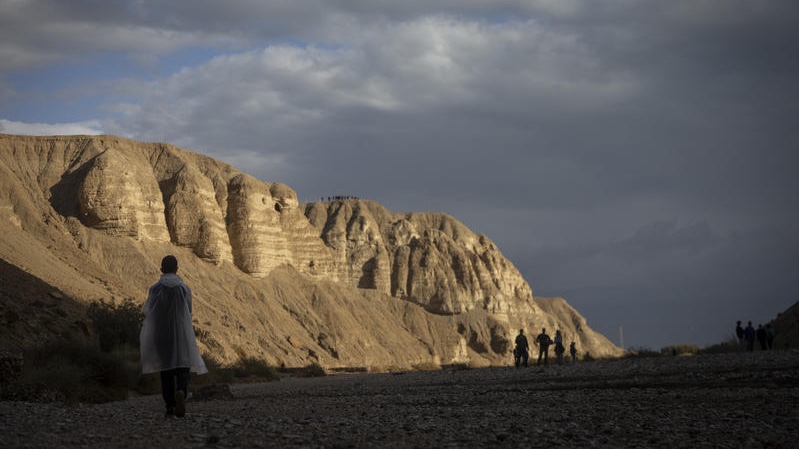

In our Torah weekly portion, Chukkat, we read about an unusual request the Israelites made to the Edomites: they asked for permission to pass through their territory. The Edomites were descendants of Esau, Jacob’s brother, and lived south of Israel. They were, therefore, a kind of brother nation—perhaps distantly comparable to Germany and Austria, or England and Australia.
Accordingly, Moses also calls them brothers when he asks them for passage through their land:
“Afterward, Moses sent messengers from Kadesh to the king of Edom: ‘This is what your brother Israel says to you: You know all the hardship that has befallen us—that our fathers went down to Egypt; that we lived in Egypt for a long time; and that the Egyptians mistreated us and our fathers; and we cried out to the Lord, and He heard our cry and sent an angel to lead us out of Egypt. And behold, we are in Kadesh, a city at the very edge of your territory. So now let us pass through your land! We will not go through fields or vineyards, nor will we drink water from the wells. We will travel on the king’s highway and will not turn to the right or to the left until we have passed through your territory!”
But the king of Edom replied, “You shall not pass through my land, or I will come out against you with the sword!” And although Israel emphasized once more that they intended to travel only on the main road and were even willing to pay for water, Edom remained adamant. In the end, it says: “So Edom refused to allow Israel to pass through its territory. And Israel went around it.”
(Numbers 20:14–21)
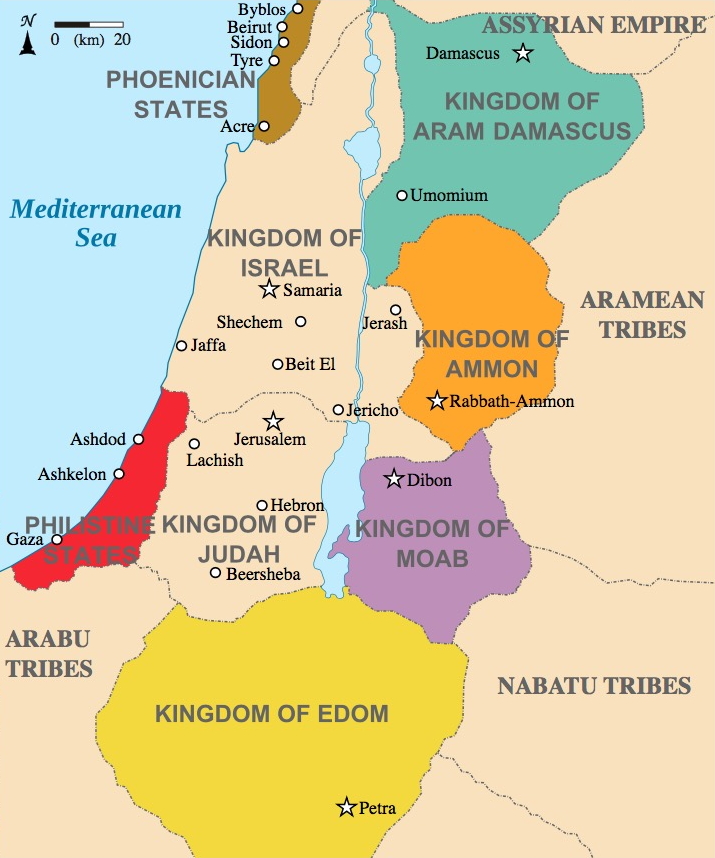
One can’t entirely blame the king of Edom for not being thrilled to suddenly see his long-lost relatives at his border after more than 200 years. We’re talking about a people numbering about two million.
Could he trust Moses when he said that Israel wanted to pass peacefully through the land? Perhaps Israel would attack as soon as its warriors were deep inside Edom.
On the other hand, it wasn’t just an army passing through the desert. The entire people were there: women, children, livestock, and even the gold that Israel had taken from Egypt. That suggests a lack of hostile intent.
As a precaution, the king of Edom rejected the Israelites’ request. In doing so, he forfeited the friendship of a people who had just been miraculously rescued from Egypt by the Creator and had survived in the desert in an equally miraculous way.
The Next King and the Next King
In the next chapter, we witness a similar scenario once again. Moses asks Sihon, the king of the Amorites, for permission to pass through his land. He, too, refuses. What’s more, he even attacks Israel.
“And Israel sent messengers to Sihon, the king of the Amorites, and had this message conveyed to him: ‘Let me pass through your land! We will not turn aside into the fields or the vineyards, nor will we drink water from the wells; we will travel on the king’s highway until we have passed through your territory!
But Sihon would not allow Israel to pass through his territory; and Sihon gathered all his people and went out to meet Israel in the wilderness. When he came to Jahaz, he fought against Israel. But Israel struck him down with the edge of the sword and took possession of his land.”
(Numbers 21:21–24)
Sihon probably knew that Israel had not fought against Edom. He could therefore have assumed that Israel would have passed through his territory peacefully as well. Nevertheless, he attacked.
The next king, Og of Bashan, did not even speak to the Israelites. He immediately marched out to meet them with his army. He, too, was defeated.

Then as now?
There is much to learn from this story. As an Israeli, it strikes me as strangely familiar.
Israel repeatedly makes peace offers, but people accuse us of having evil intentions. Yet our history has shown that we are willing to live peacefully with our neighbors. Anyone who spends even a little time on social media today, however, quickly gets the impression that Israel is the root of all evil in the world. Hardly anything could be further from the truth.
Time and again, nations wage war against Israel instead of realizing that this struggle is destroying them. Shouldn’t Og of Bashan have chosen peace instead? Couldn’t Sihon have simply said, “Pass through, pay for your water, and move on”? And shouldn’t Iran also realize today that the struggle against Israel ultimately harms its own people above all else?
In this weekly Torah portion, one senses a hostility toward Israel that has no real justification. It stems from mistrust, fear, and hatred—and in the end, it leads to the ruin of Israel’s enemies.
The Jewish sages called such hatred “Sinat Chinam”—groundless hatred. But this hatred is not only groundless; it is also self-destructive.
The difference is this: Back then, Israel defeated its enemies once and for all and was left in peace afterward. Today, the enemies come in new forms, with new weapons, new ideologies, and new excuses. But the pattern is alarmingly old, and as long as Israel does not completely defeat its enemies, it will be attacked again and again.
Israel is not asking to be loved. Often, it would be enough if people would simply let us pass.