
For Christians, the Second Temple period is one of the most pivotal eras in biblical history. Jesus ministered in Jerusalem, his disciples preached there, and just a few decades later, the Jewish revolt against Rome shook the land of Israel. With the destruction of Jerusalem and the Temple in 70 CE, not only did an era of Judaism come to an end, but the historical backdrop of the New Testament also fundamentally changed. Hardly anyone described these dramatic events as comprehensively as Flavius Josephus. But was he a traitor who betrayed his own people to the Romans, or a historian who, by switching sides, preserved the history of Israel for posterity? Researchers offer surprising answers to the age-old question of his credibility. Of particular interest to those who believe in the Bible: Did Josephus himself understand his historical writing as part of a divine plan?
For nearly 2,000 years, few Jewish historians have been the subject of such bitter debate as Flavius Josephus. For some, he was a traitor who betrayed his fighting brothers to the Romans. For others, he is the most important witness to the destruction of Jerusalem and the Second Temple. For Christians, he is a crucial extra-biblical source documenting that Jesus actually lived and ministered, as Flavius Josephus mentions Jesus twice in his late first-century work “Jewish Antiquities”: in a passage known as the “Testimonium Flavianum,” and in a brief mention of his brother James.
Without the historian’s writings, we would know far less about the Jewish War and the destruction of the Temple. Now, researchers using artificial intelligence have offered a new perspective on arguably the most controversial chronicler of Jewish history, one that could fundamentally change the judgment of his credibility.
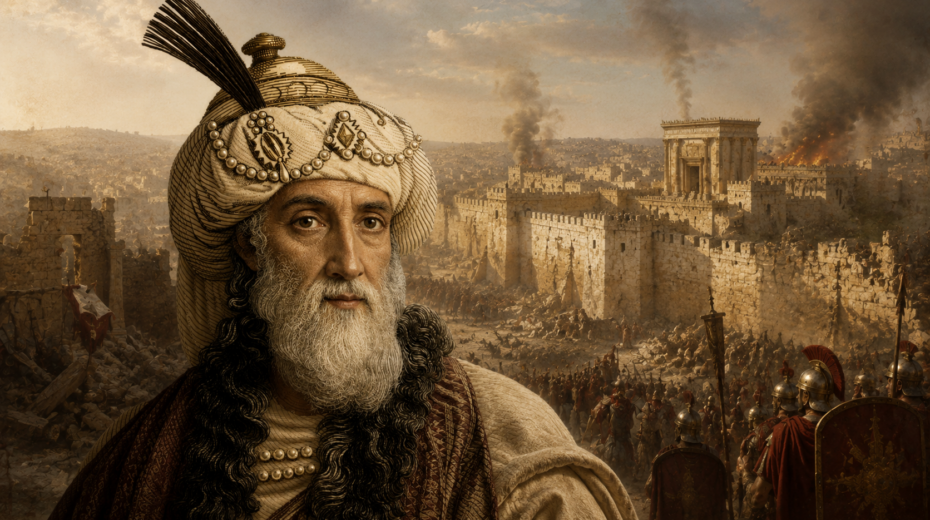
Yosef ben Matityahu, better known by his Roman name Titus Flavius Josephus, is one of the most fascinating and contradictory figures in Jewish history. Born into a respected priestly family in Jerusalem, he led the Jewish forces in Galilee against the Roman legions during the Great Jewish Revolt. When his last stronghold fell, he and his officers hid in a cave. The men chose death over surrendering to the Romans. Josephus was the last to survive and surrendered to the Romans. We will take a closer look at this place, called Yodfat, and the exciting events of that time in an upcoming Israel Today series titled “Israel for Insiders – Hidden Gems in the Land of the Bible.”
What followed is one of the most extraordinary life stories of antiquity: The Jewish military leader first became a prisoner, later a close confidant of the Roman emperors Vespasian and Titus. Under their protection, he wrote the works that are still considered the most important historical sources on the destruction of Jerusalem and the Second Temple.
It was precisely this change of sides, however, that made him the most controversial figure in Jewish historiography for centuries. Was Josephus a traitor who abandoned his own nation? Or did he recognize earlier than others that the military struggle against Rome was lost and therefore choose to at least preserve the history of his people for future generations?
A new scientific study could fundamentally change this centuries-old debate. Stay tuned to discover the key finding that surprised even the scientists themselves. What implications do these new insights have for us, and what can we learn from history?
This and more – in our upcoming Israel Today series!
Want more news from Israel?
Click Here to sign up for our FREE daily email updates