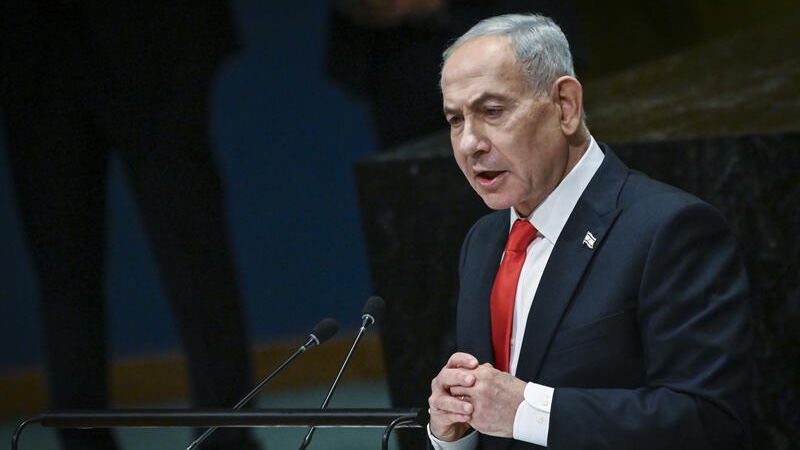

After last night’s election in Israel, no clear governing majority has emerged as of Wednesday morning. The camp of Prime Minister Benjamin Netanyahu is leading in the ongoing count, but falls short of the required majority of 61 seats in the Knesset. The first partial results also show how the initial lead of the incumbent governing camp narrowed over the course of the night.
According to the latest partial results published Wednesday morning, the Netanyahu camp is projected to hold 55 seats, the opposition 49, and the Arab parties 16 seats. This does not yet represent the final seat distribution.
Netanyahu’s Likud party remains the strongest political force with 20.81 percent of votes counted. It is followed by Gadi Eisenkot‘s Yashar party with 17.06 percent. This puts the former chief of staff, who has positioned himself as Netanyahu’s replacement, in second place.
The progression of the count shows how open the race remains. In the early morning hours, the governing camp had temporarily held a larger lead. However, as more polling stations were recorded, this lead gradually diminished.
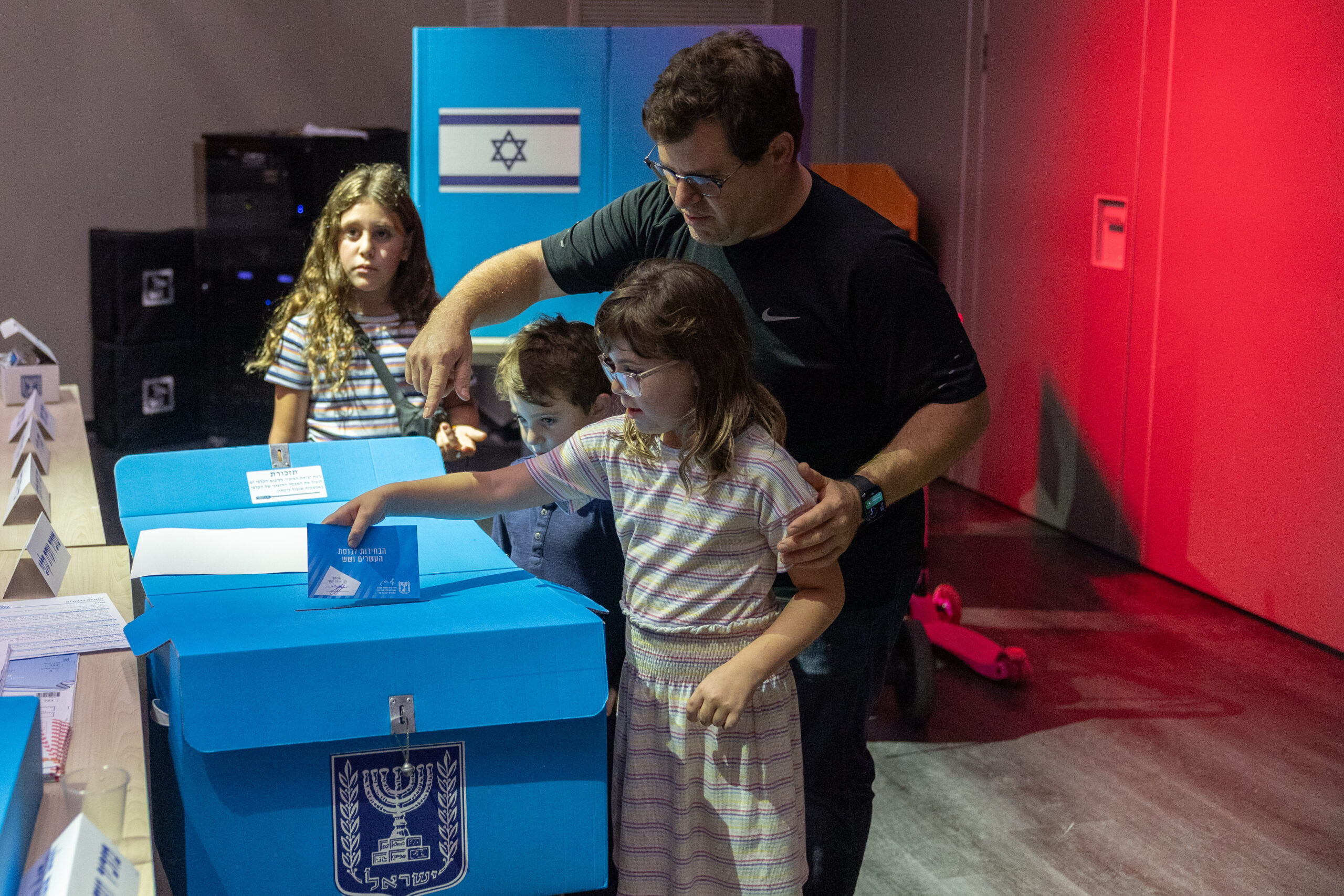
A father with his children casting their ballots at a polling station in Jerusalem on October 27, 2026. Photo: Yonatan Sindel/Flash90.
Highest voter turnout since 1999
Tuesday’s election was marked by an exceptionally high turnout. According to the Central Elections Committee, 77.7 percent of eligible voters went to the polls. This is the highest voter turnout since 1999 and an increase of around seven percentage points compared to the last Knesset election in 2022.
Particularly notable was the strong mobilization of the Arab population. According to initial figures, voter turnout there was around 80 percent. The Arab parties could thereby significantly expand their parliamentary representation and play an important role in the formation of a new government.
However, there are considerable differences between the political camps regarding possible cooperation with the Arab parties. Netanyahu has explicitly rejected a government that would depend on their support.
Exit polls varied widely
On Tuesday evening, Israeli television channels had already published differing projections after the polls closed. While Channel 12 and Channel 13 initially saw a narrow lead for the opposition camp, Channel 14 and i24News reported more favorable results for Netanyahu’s allies.
Throughout the night, the exit polls were updated several times. Some projections ultimately showed both political camps tied at 51 seats each.
The actual count so far paints a different picture. However, polling stations are not counted in a representative order. For this reason, no reliable conclusions about the final seat distribution can yet be drawn from the votes recorded so far.
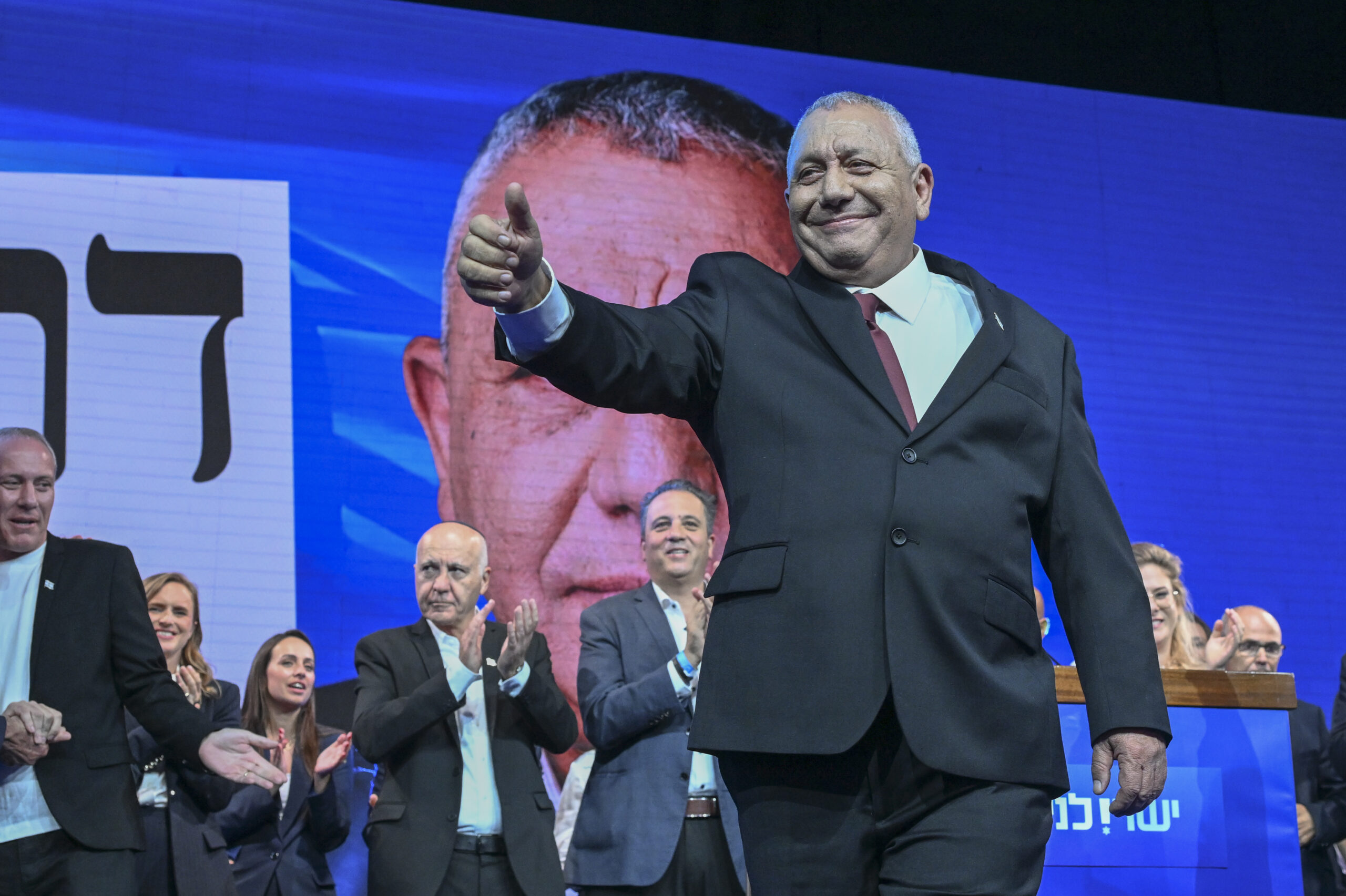
Gadi Eisenkot, chairman of the Yashar party, with party members at the election headquarters in Tel Aviv after the announcement of the first exit polls on October 28, 2026. Photo: Avshalom Sassoni/Flash90.
Netanyahu and Eisenkot claim the leading role
Both Netanyahu and Eisenkot expressed confidence on election night that they would be able to form a new government.
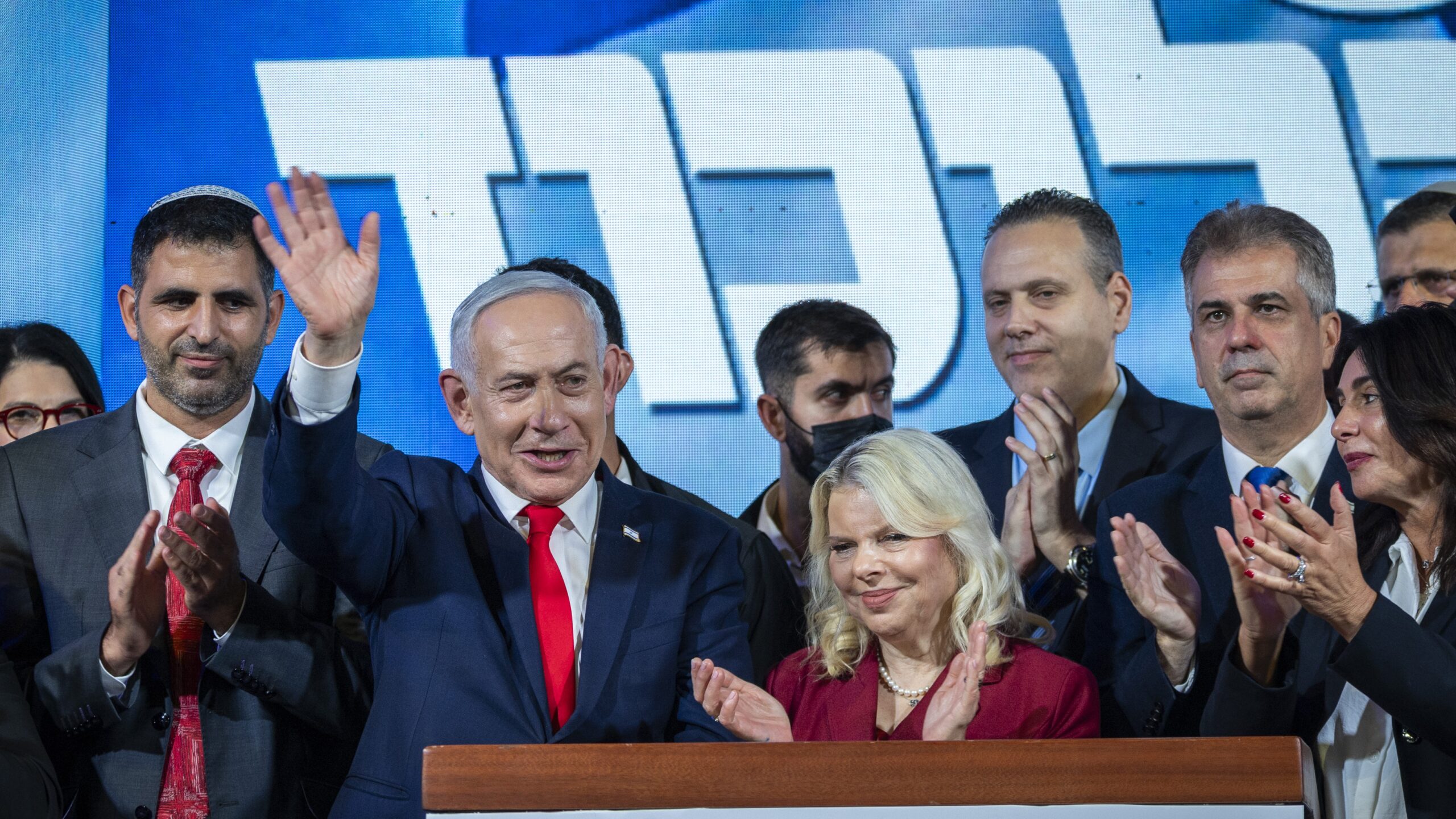
Netanyahu told his supporters in Jerusalem that Likud would emerge from the election as the strongest party. He called for the formation of a strong national government of the right-wing camp.
Eisenkot, in turn, told his supporters in Tel Aviv that voters had spoken in favor of political change. He promised a government that would strive for national unity.
The decisive factor will be which candidate can secure the support of a majority of Knesset members once the count is complete. Should neither camp reach at least 61 seats, difficult coalition negotiations could be ahead.
In addition, the votes from so-called double envelopes have yet to be counted. These include, among others, the votes of soldiers, diplomats, and hospital patients. These too could still alter the final seat distribution.
The vote count will continue throughout Wednesday. The current results are being published by the Israeli Central Elections Committee. Additional analyses and projections are provided by the independent election portal Votes26.
Want more news from Israel?
Click Here to sign up for our FREE daily email updates