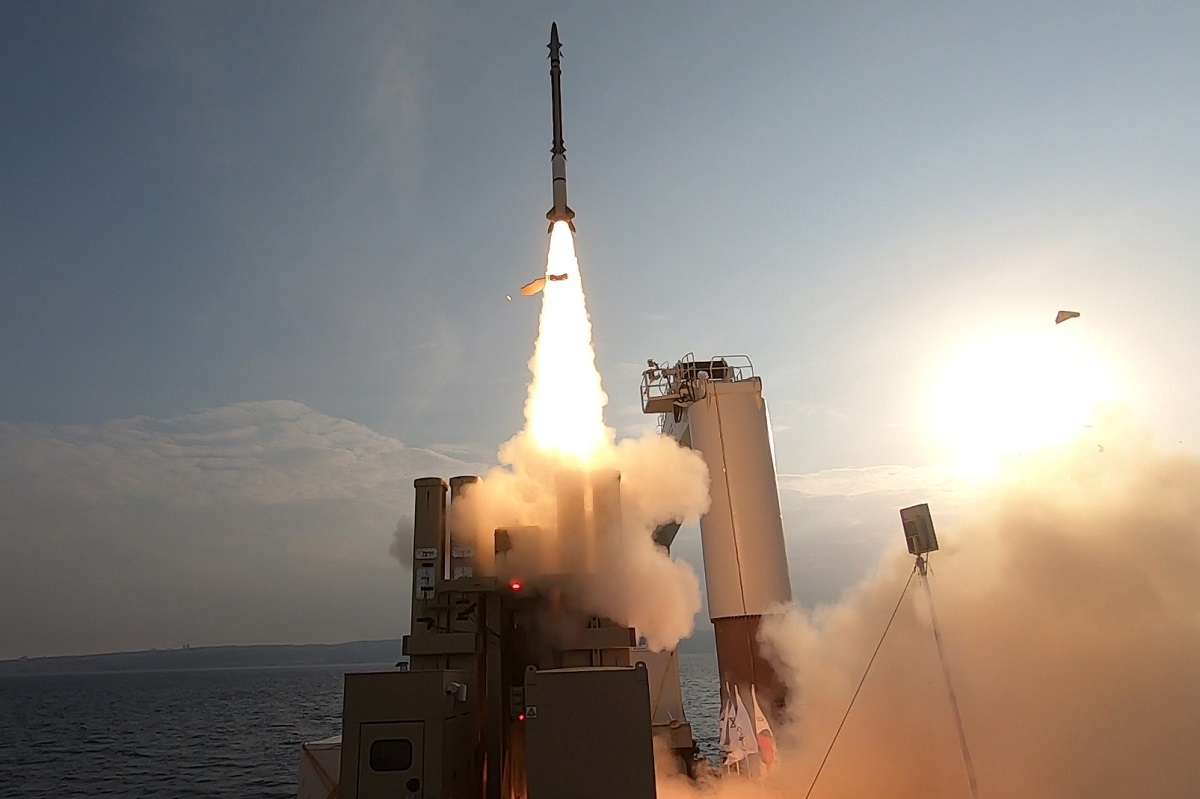

Israel has further developed its David’s Sling missile defense system to be better prepared for the growing threat from Iranian missiles. The improvements are designed to enable the interception of a broader range of ballistic missiles and to maintain the system’s operational capability even during weeks-long waves of attacks.
As Bloomberg reported on Friday, citing a senior Israeli Air Force officer, the technical innovations are intended to strengthen Israel’s air defense particularly against sustained missile attacks from Iran.
Another important aspect is the consumption of costly interceptor missiles. Both the war with Iran and the war between Russia and Ukraine have clearly demonstrated the importance of adequate ammunition stockpiles for modern air defense systems.
Less expensive than the Arrow system
David’s Sling forms an important component of Israel’s multi-layered missile defense. The system, developed jointly by Israel and the United States, is primarily designed to counter missiles and other threats that fall outside the typical operational range of the Iron Dome system.
According to Bloomberg, one David’s Sling interceptor missile costs around one million US dollars. By comparison, one Arrow 3 interceptor missile, developed primarily to counter ballistic missiles outside the Earth’s atmosphere, costs approximately three million dollars.
The ability to intercept a wider range of ballistic missiles with David’s Sling in the future could therefore also offer Israel economic advantages. Particularly during prolonged attacks, the efficient use of available interceptor missiles plays a crucial role.
Successful tests with American involvement
In early November, the Israeli Ministry of Defense had already announced the successful completion of a series of tests of the modernized David’s Sling system.
The trials were conducted jointly with the American Missile Defense Agency (MDA) and the Israeli defense company Rafael Advanced Defense Systems. The goal was to further enhance the system’s capabilities in light of future threat scenarios.
The modernization is part of Israel’s efforts to adapt its multi-layered air defense to the lessons learned from recent military conflicts. Given Iran’s missile arsenals, not only the technical performance of the defense systems but also their long-term operational readiness are of particular importance.
Want more news from Israel?
Click Here to sign up for our FREE daily email updates